

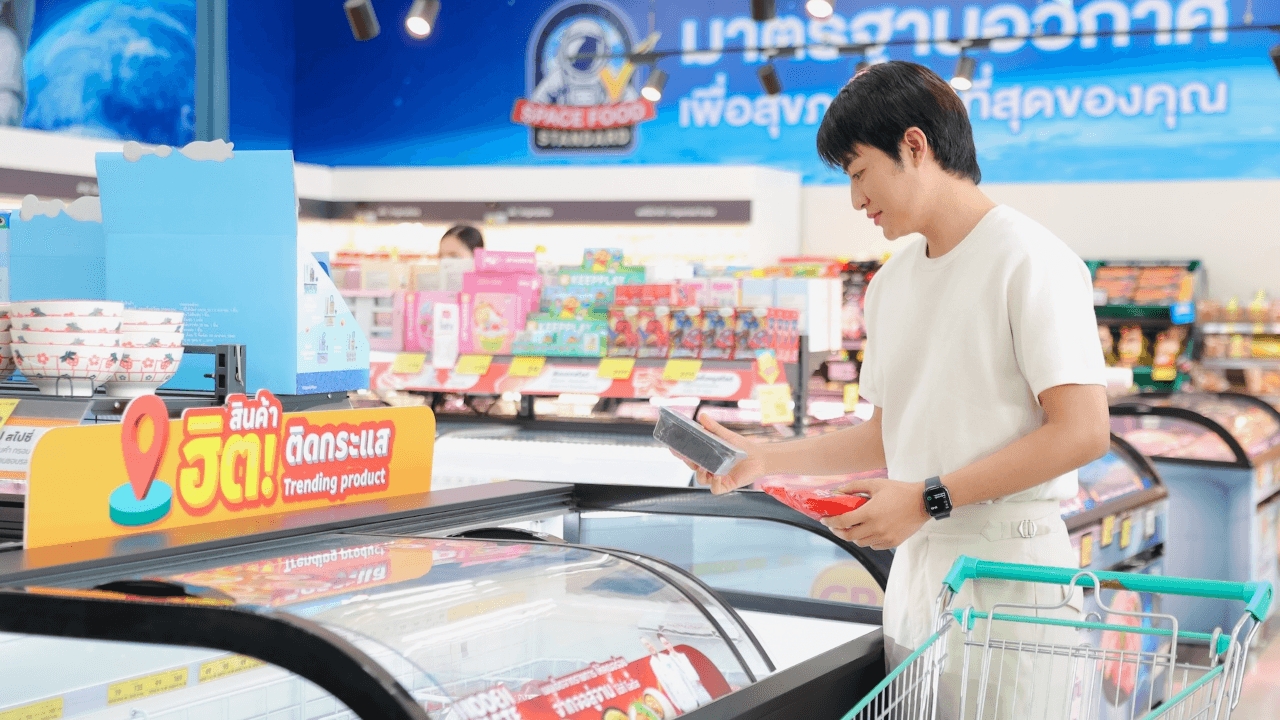
Journalists report that CP Axtra Public Company Limited is moving forward with adjusting the retail business model for Lotus’s in response to changing consumer behavior. The focus is on developing Lotus’s Go Fresh stores to match the size and format appropriate to each community's potential. Originally centered on convenient neighborhood shopping, the role is expanding to stores that better meet the full range of fresh food and household shopping needs.

The new approach abandons a one-size-fits-all store format nationwide. Instead, it considers location size, environment, and consumer demand before determining store size and product assortment. This results in some branches increasing their footprint and adding a wider selection of fresh foods, vegetables, fruits, frozen meals, ready-to-eat food, and consumer goods.

These changes shift Go Fresh's role from a store catering mainly to quick visits to one supporting comprehensive home shopping, especially for fresh food and cooking ingredients. These categories require more selling space and complex inventory management compared to smaller retail outlets.
Currently, Go Fresh serves as the main network for Lotus’s, with 2,079 branches by the end of 2024 out of a total 2,483 Lotus’s stores. Therefore, tailoring branch formats by area is crucial to the overall retail strategy of CP Axtra.

The company has implemented this concept in various branches such as Soi Suphapong in Bangkok, Soi Rewadee 38 in Nonthaburi, Phra Pok Klao Road in Chiang Mai, Srithat in Udon Thani, Phuket FantaSea in Phuket, and Prachasuk Sawang Road in Chonburi. These examples illustrate adapting store formats to local area characteristics and community needs.
Simultaneously, store adjustments are not limited to physical locations but extend to online channels through Lotus’s Shop Online and delivery services, allowing customers to purchase via both branches and digital platforms, thus creating a more integrated shopping experience.

Competition among neighborhood retail stores is therefore not just about expanding branch numbers but about adjusting store size and product mix to suit each area, reflecting the differing needs of local customers. Increasing fresh food and household products helps customers shop more comprehensively and provides stronger reasons to visit the stores.

However, CP Axtra has yet to disclose details on how many existing Go Fresh branches have been remodeled, how many larger format stores will be added, or the specific investment budget for these changes. Consequently, the full scale of network transformation cannot be assessed at this time.
What the company has revealed so far is directional rather than financial: CP Axtra is restructuring its retail business toward an ecosystem approach that links stores, products, and online channels, while deploying varied store formats tailored to each area's potential.
The Go Fresh model originated from Lotus’s Express, a small-format convenience store focused on quick shopping. It evolved into Go Fresh, emphasizing fresh food such as vegetables, fruits, meats, frozen foods, and essential household items, making it more akin to a community supermarket than a typical convenience store.
CP Axtra’s next challenge is to manage the Go Fresh portfolio in terms of the proportion of each store format and to determine how far the model adjustment can expand. Details on branch numbers, investments, or plans to close or renovate existing stores remain undisclosed at this time.