

The era of 18 consecutive years of growth in Thailand's Japanese restaurant market has come to a turning point. According to a 2025 survey by the Japan External Trade Organization (JETRO) Bangkok, the total number of Japanese restaurants in Thailand has decreased for the first time since data collection began in 2007, now totaling 5,781 outlets. This is a decline of 135 outlets, or 2.2%, compared to 2024, with contraction seen nationwide, including a 2.3% drop in Bangkok, 3.1% in the five surrounding provinces (Nakhon Pathom, Nonthaburi, Pathum Thani, Samut Prakan, and Samut Sakhon), and 1.9% in other provinces.
Despite the overall market contraction, a notable 'rising star' segment defies the trend: the ramen market, valued at over 8 billion baht. JETRO data shows 823 ramen outlets in Thailand, representing one of the few segments growing by 2.6%, in contrast to other Japanese restaurant types such as 1,398 general Japanese restaurants, 1,250 sushi outlets, and 480 izakaya bars, all of which are slowing down.
A deeper look into consumer pricing behavior reveals that the largest market share for Japanese restaurants in Thailand is within the 101-250 baht per person price range, with 2,116 outlets. This is followed by the 251-500 baht range with 1,490 outlets, under 100 baht with 784 outlets, and 501-1,000 baht with 689 outlets. These figures clearly indicate that the mass market segment priced from around 100 baht up to 250 baht is the main battleground, as it is affordable and aligns with current consumer purchasing power.
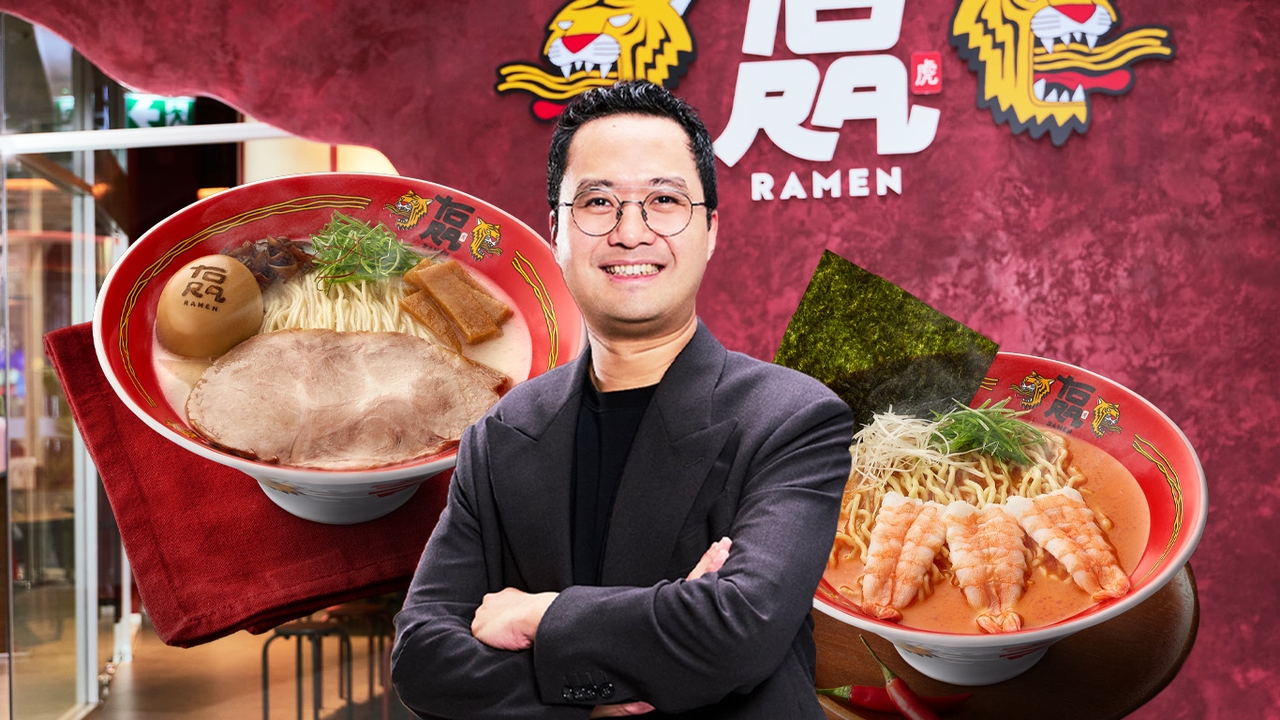
These factors have attracted major players eager to aggressively compete for a large share of the ramen market. Recently, the giant MK GROUP decided to introduce a new brand in its portfolio, TORA RAMEN, immediately targeting the critical price segment of the market.
The concept of “Everyday Ramen” offers authentic Japanese ramen starting at 89 baht, created by two master chefs specializing in noodles and soup from Fukuoka. This aims to attract customers to dine frequently every day. The first branch opened at True Digital Park, targeting office workers and young consumers.

Theer Theerakomen, CEO of MK Restaurant Group Public Company Limited. As the second-generation heir, he revealed that although the overall Japanese food market has matured and become saturated, ramen remains one of the segments with ongoing growth potential. Despite intensifying competition, brands that can grow sustainably must have distinctive characteristics, a clear stance, and truly differentiate themselves—even though the group already owns the Hakata brand.
“The 89 baht pricing strategy is not solely intended for price competition but designed to align with Thai consumer behavior. Market research found that ramen has become a regular meal for Thai people, typically eaten about once a week. This price level encourages frequent repeat purchases and expands the customer base to cover all groups, from working adults to families and children.”
Regarding investment and expansion plans, each branch requires about 7 million baht, which is highly flexible because it can leverage MK’s existing infrastructure, including central kitchens and logistics systems. For the remainder of this year, one pilot branch will open, with plans to expand to 15 branches by 2027 in Bangkok and surrounding provinces.

The “Tiger’s Den” concept is reinterpreted in a Modern Loft style, combining raw, edgy aesthetics with a distinct Japanese atmosphere. It features an open kitchen allowing customers to closely observe the ramen preparation process, complemented by a simple, efficient Japanese-style counter bar.

A key selling point is the meticulous attention to two main elements: noodles and soup. The ramen soup recipe, a rich pork broth with distinctive flavor, was developed in collaboration with Kosuke Yoshimura, the master chef of the famous Hakata Ikkousha ramen restaurant.
Additionally, ramen noodle expert Ryota Ishimatsu, who owns a major ramen noodle manufacturing business in Fukuoka producing over one million portions monthly and supplying renowned ramen shops across Japan, also contributed to the noodle design. This embodies the concept of 'two tigers under one roof' at TORA RAMEN.
This move reflects the management vision of the MK Group’s second-generation heir, focused on building upon the strong foundation established over the past 30 years. Since consumers cannot repeatedly eat the same brand daily, introducing new brands into the portfolio helps secure more customer stomach share and supports sustainable growth amid intensifying competition in the restaurant industry.
In Q3 2026, MK Restaurant Group Public Company Limited and its subsidiaries reported total sales and service revenue of 4.217 billion baht, growing 8.6% year-on-year. This growth was driven mainly by branch expansion of “Bonus Suki,” which enhanced the business portfolio and created new growth opportunities for the group.
For the first nine months of 2026, total revenue reached 12.46 billion baht, up 11.1%, reflecting business expansion despite ongoing challenges related to purchasing power and competitive pressures in the restaurant market. The group continues to pursue growth strategies through branch expansion, international market penetration, and launching the new ramen brand, TORA RAMEN.