

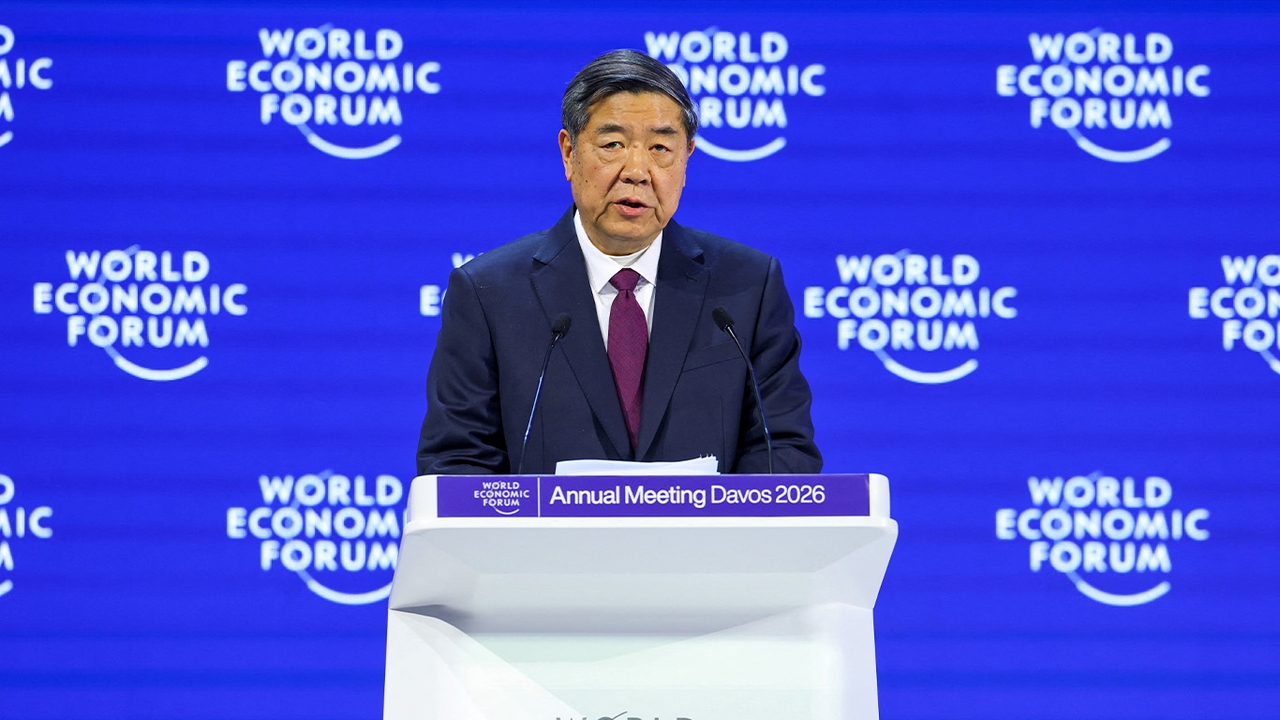
Amid a global atmosphere fraught with geopolitical tensions, China used the platform of the World Economic Forum (WEF) 2026 in Davos to clearly signal two key points: welcoming investment from foreign private sectors and maintaining neutrality in not intervening in Western power conflicts, especially sensitive issues like Greenland that are shaking US-Europe relations.
This move reflects China's strategy at a critical economic turning point, as the real estate sector, once a main engine of growth, faces a prolonged crisis and can no longer generate income for the country as before.
During the WEF meeting, China's Vice Premier He Lifeng, who is also a senior trade representative, held informal meetings with top multinational executives such as Apple CEO Tim Cook, JPMorgan Chase CEO Jamie Dimon, Bridgewater Associates founder Ray Dalio, and CEOs from FedEx and Mastercard, alongside engagements with the business community.
He Lifeng delivered a speech at Davos expressing a clear openness, stating that China welcomes foreign companies to invest and grow alongside the Chinese economy. He emphasized that if foreign investors face business challenges, the Chinese government is ready to listen and address them seriously. Previously, many foreign businesses in China complained about intense competition from local firms, market discrimination, delays in permits and approvals, and increasingly strict export control regulations.
This statement comes as China faces pressure from foreign investors who have been steadily reducing investments due to regulatory concerns, domestic competition, and geopolitical risks.
Structurally, China's economy is facing a significant gap as the real estate sector and related activities, which once accounted for 20–25% of GDP, have contracted due to the debt crisis among major developers, slowing home sales, and still-weak consumer confidence.
Relying solely on government investment and domestic consumption is insufficient, forcing China to accelerate attracting foreign private capital, technology, and markets to fill the growth gap while supporting the economy’s transition to new models like advanced technology, clean energy, and digital industries.
On another front amid ongoing conflicts, China is trying to distance itself from the US-Europe tensions after former President Donald Trump expressed intentions to control Greenland from Denmark, causing shocks to NATO and European security.
Guo Jiakun, spokesperson for China's Ministry of Foreign Affairs, stated that China does not intend to compete for influence with any country and affirmed that China conducts international relations based on mutual respect. China aims to be a positive force and stabilizer on the global stage. Meanwhile, Chinese state media used this moment to express strategic views, urging Europe to reconsider its security dependence on the US and to accelerate independent strategies and diversify cooperation with a wider range of partners.
The overall picture from Davos clearly shows that China chooses a strategy of avoiding direct confrontation and uses the uncertainty in the Western world as a backdrop to build economic credibility. While the US applies trade and political pressure, China positions itself as a predictable, business-friendly option ready to welcome investment.
Thus, Davos 2026 is not a stage for confrontation but a platform signaling that China needs capital, markets, and trust as much as it seeks to maintain an image of not being a divisive player in the current world order.
Follow the Facebook page: Thairath Money at this link -