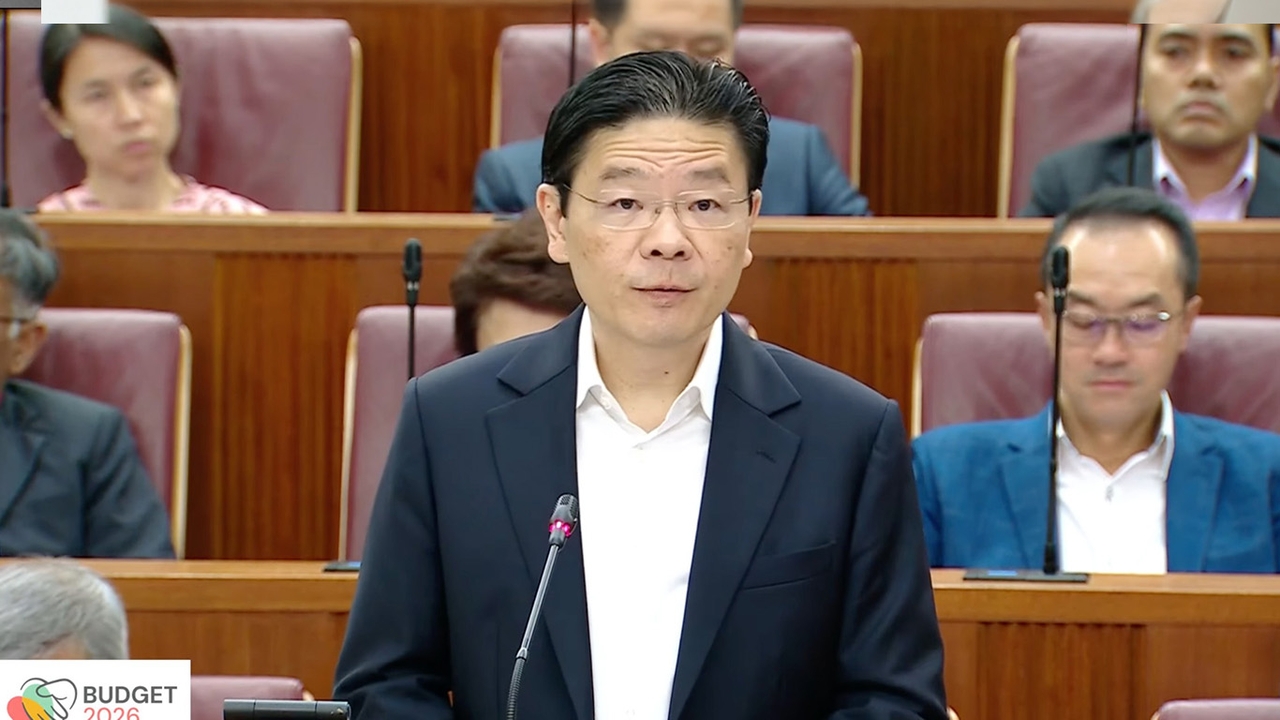
Images from the annual budget plan announcement by Lawrence Wong, Prime Minister and Minister for Finance of Singapore, have once again drawn global attention to Singapore. In a speech lasting over an hour, Wong outlined a national strategic roadmap and plans to increase budget allocations in key sectors to help the country navigate multiple challenges.
These challenges range from cost of living issues, business tax reductions, welfare programs, special cash support to ease living expenses, heavy investments in education and low-income workers, to substantial investments in technology—especially AI—which will drive business and economic growth, paving the way for Singapore's next stage of development.
A summary of five key policy directions covering livelihoods, security, and AI from Singapore's Prime Minister's speech.
1. Acknowledge the new reality: the old global order has ended.
Wong is among the first national leaders to openly address changes in the free trade system and global order following President Trump's tenure, amid trade barriers and tariff pressures. He candidly acknowledged that the era of global stability under U.S. leadership has ended, global trade rules are being disregarded, and the world is entering a more fragmented and dangerous phase. Standing still is not an option; adaptation is essential for survival in this new global order.
- Singapore must protect itself. Wong spoke about maintaining defense spending at around 3% of GDP, with readiness to increase it if necessary, enhancing cyber capabilities to counter threats from state and private actors,
- building partnerships with the private sector to safeguard critical infrastructure, and investing in modern warfare technologies.
Although many countries are turning inward, Wong believes globalization is not over but evolving into "re-globalization," characterized by selective partnerships prioritizing security over cost-effectiveness. Singapore plans to expand connectivity to new markets such as Latin America, Africa, and the Middle East, while strengthening ties with neighboring countries.
2. Betting on AI as the nation's core.
Wong clearly stated that AI deployment will be a strategic advantage to address structural constraints like lack of natural resources, a rapidly aging population, and a tight labor market.
- The focus is on applying AI rather than developing the largest models globally. Singapore aims to be a trusted hub for developing, testing, and deploying AI solutions quickly and efficiently compared to other countries.
- He established "National AI Missions" to drive transformation across four key sectors: advanced manufacturing, connectivity and logistics, finance, and healthcare.
- A "National AI Council," chaired by the Prime Minister, will set strategies and coordinate research and regulatory frameworks to ensure all sectors move cohesively.
- Financial measures were introduced to enable businesses of all sizes to access AI, including the "Champions of AI" program supporting companies seeking comprehensive AI-driven business transformation, covering organizational restructuring and workforce skill development.
- Tax incentives support AI investments, such as the Enterprise Innovation Scheme, allowing a 400% tax deduction on AI expenses up to $50,000 annually, and the Productivity Solutions Grant (PSG) to help SMEs access AI-powered automation tools.
- The government is investing over $37 billion in the RIE 2030 (Research, Innovation and Enterprise) program focusing on advanced technologies like Quantum Technology and Semiconductors.
- Higher education institutions are being reformed to integrate AI skills training alongside strong academic programs, adjusting curricula and granting free access to premium AI tools for graduates of designated AI courses.
3. Business tax cuts and funding injections to boost overseas growth.
To support the business sector, the government focuses on short-term cost reductions alongside capital injections to stimulate growth.
- A 40% corporate income tax rebate is offered for the 2026 tax year. Companies employing at least one local worker will receive a minimum cash payout of $1,500 and up to $30,000 to improve liquidity.
- An additional $1 billion is allocated to the Startup SG Equity fund to extend investment coverage to growth-stage companies.
- Another $1.5 billion is added to the Anchor Fund to attract high-quality firms to list on the Singapore Exchange (SGX).
- Funding support for companies expanding abroad has been increased, with SMEs eligible for up to 70% and other companies up to 50% of qualifying costs.
- The cap on double tax deduction for overseas activities is raised to $400,000 from the previous $150,000.
4. Raising wages, supporting low-income workers, and attracting foreign talent.
Labor support policies emphasize income enhancement alongside lifelong learning system reforms.
- The Local Qualifying Salary (LQS) minimum wage for local full-time employees in companies hiring foreigners is raised from $1,600 to $1,800.
- The Progressive Wage Credit Scheme (PWCS) is expanded, with the government covering 30% of wage increases this year and extending the program through 2028 to help employers raise salaries.
- SkillsFuture Singapore and Workforce Singapore agencies are merged into a single entity to provide one-stop services for skills training and job placement.
- The "Level-Up" program offers financial support for mid-career workers to learn new skills, including AI.
- The Senior Employment Credit program is extended through 2027 to incentivize employers to retain older workers.
Additionally, foreign worker screening is tightened to maintain labor market quality and balance. Minimum salary thresholds for foreign workers are increased to ensure only highly qualified individuals enter, aligned with rising local wages—for example, Employment Pass (EP) minimum raised to $6,000 and S Pass to $3,600.
5. Introducing conditional welfare, supporting cost of living, and combating inflation.
Regarding economic stimulus for citizens, Wong acknowledged ongoing cost pressures. Although inflation is slowing, prices remain high. The government thus focuses on short-term relief measures, including conditional welfare programs to help people cope amid uncertainty.
- The ComLink+ model offers conditional additional support (a "social contract") to low-income families who meet targets such as job stability or regular school attendance for children, providing combined cash and CPF contributions up to $10,000 annually.
- Cash assistance of $200-$400 is given to Singaporeans earning up to $100,000 and owning no more than one property.
- CDC Vouchers worth $500 will be distributed to 1.4 million households in 2027 for use at supermarkets and community stores.
- Utility bill discounts (U-Save) of up to $570 are provided to HDB households.
Support for families and children aims to build confidence among younger generations to start families, including additional $500 Child Life SG credits into Child Development Accounts for children under 12, retirement savings top-ups of up to $1,500 for Singaporeans over 50 with low savings, and increased CPF contribution rates for older workers to boost their retirement funds.
Wong emphasized that despite extensive cost of living assistance, the government maintains fiscal discipline. The 2025 budget is projected to have a slight surplus of 1.9% of GDP. These defense and financial self-reliance measures must be revenue-backed and avoid burdening future generations.
Ultimately, the 2026 budget is more than a spending plan; it is a commitment to strengthen social bonds, invest in security and the future, and build a safe, sustainable, and equitable nation for generations to come, Wong concluded.
“Despite global uncertainties—from geopolitics and cyber threats to climate risks—we will confront these challenges with resilience. Singapore's true strength lies not only in policy but in the spirit of its people. We have overcome crises before because we stand united as one,” Wong said in closing.
Follow the Facebook page: Thairath Money at the link below -