

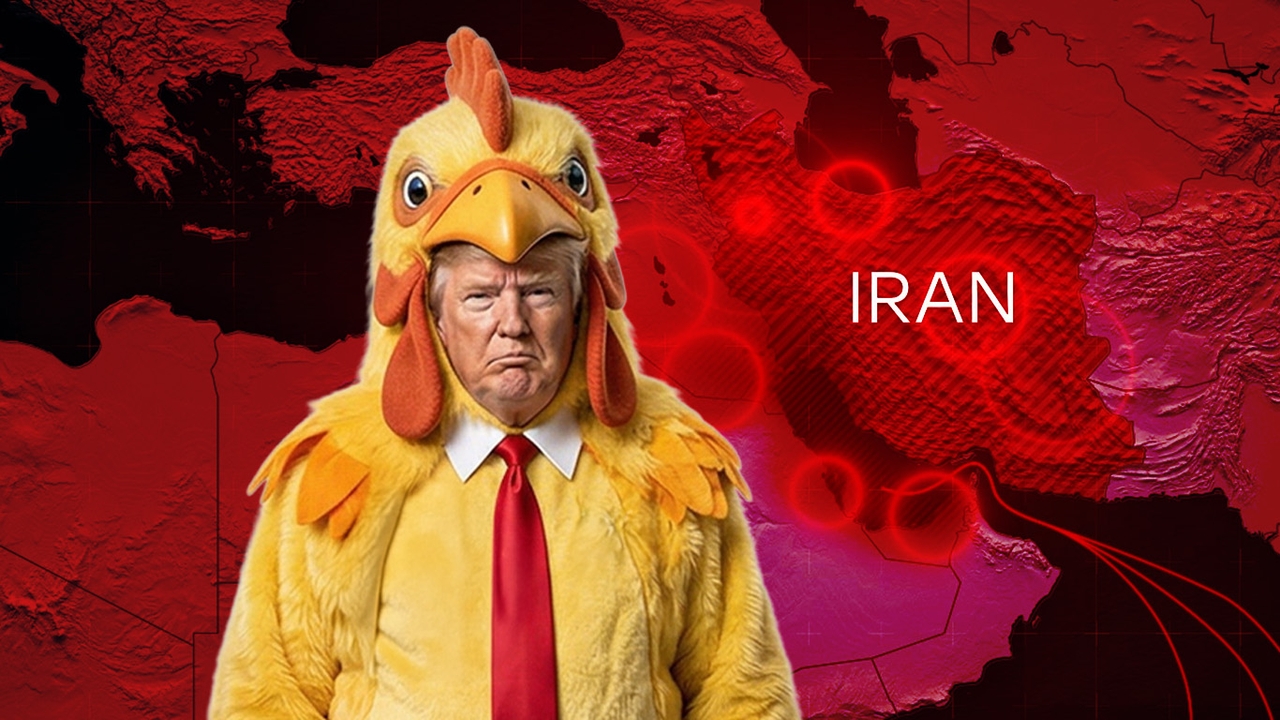
In recent weeks, the term “TACO” or “Trump Always Chickens Out” which means Trump backs down every time, has become a popular expression among global media. This term is not merely a joke but reflects a behavioral pattern of U.S. President Donald Trump that analysts from various fields have begun to recognize, especially after the recent event when Trump announced a temporary two-week ceasefire with Iran at the last moment following a severe threat of civilization-level destruction.
Although Trump escalated his threats using some of the harshest rhetoric ever as a U.S. leader—setting a specific attack date and using language implying massive destruction—these threats were viewed as close to violating the laws of war and potentially constituting serious international crimes. Ultimately, about 90 minutes before the April 7 deadline, Trump announced a delay in the attack.
Following this, Brent crude oil prices fell by as much as 16%, WTI crude plunged 19%, both dropping below $100 per barrel, while stock markets surged, with the S&P 500 and Nasdaq Composite closing higher during regular trading hours. This reflected investor relief rather than panic and reinforced the prior belief that Trump’s final move would be to back down.
The term TACO has become Trump's policy hallmark over the past two years. Coined by Robert Armstrong from the Financial Times, it describes Trump's behavior as “big threats → market turmoil → eventual retreat.”
This pattern has repeated many times, from the 2018-2019 trade war where Trump threatened heavy tariffs before extending negotiation deadlines, to the TikTok ban policy which began with a nationwide ban order followed by relaxations, as well as multiple rounds of tax and trade pressure measures used for bargaining with other countries but eventually withdrawn due to strong resistance.
The world has shifted to a mode of disbelief towards this leader as the behavior repeats. Some investors view the U.S. leader’s threats as no longer effective, leading to markets no longer panicking because they have learned to read Trump's ups and downs.
However, despite markets rebounding every time Trump backs down, the real economy has not strengthened accordingly. These retreats exacerbate strategic weaknesses more than Trump’s prior criticisms of other leaders and clearly reflect that this behavior may be increasing long-term risk. Many analysts see the greatest danger not in Trump’s threats and retreats themselves, but in the systemic uncertainty the world may face.
This behavior severely undermines the U.S.’s credibility on the global stage, potentially opening the door for leaders of other countries like Russia or China to perceive U.S. weakness and pursue more aggressive policies. At the same time, other countries may view the U.S. as an unpredictable threat.
On another front, although Trump retreats, Iran cannot remain passive because failure to respond might be seen as weakness, risking escalation of regional conflicts. In Iran’s case, despite the ceasefire, risks remain because this may only be a delay in negotiations, and ultimately financial markets could be caught off guard.
Going forward, financial markets will move on expectations rather than facts. Investors and governments worldwide will become more cautious of the U.S. as international negotiation mechanisms and cooperation weaken. Ultimately, Trump's pattern of “threatening every time but backing down every time,” as the leader of the world's economic hub, may become a trigger that deeply and enduringly destabilizes global financial and economic stability beyond any past crises.
Read more
Sources Financial Times , Business Insider , The Independent
Follow the Facebook page: Thairath Money at this link -