

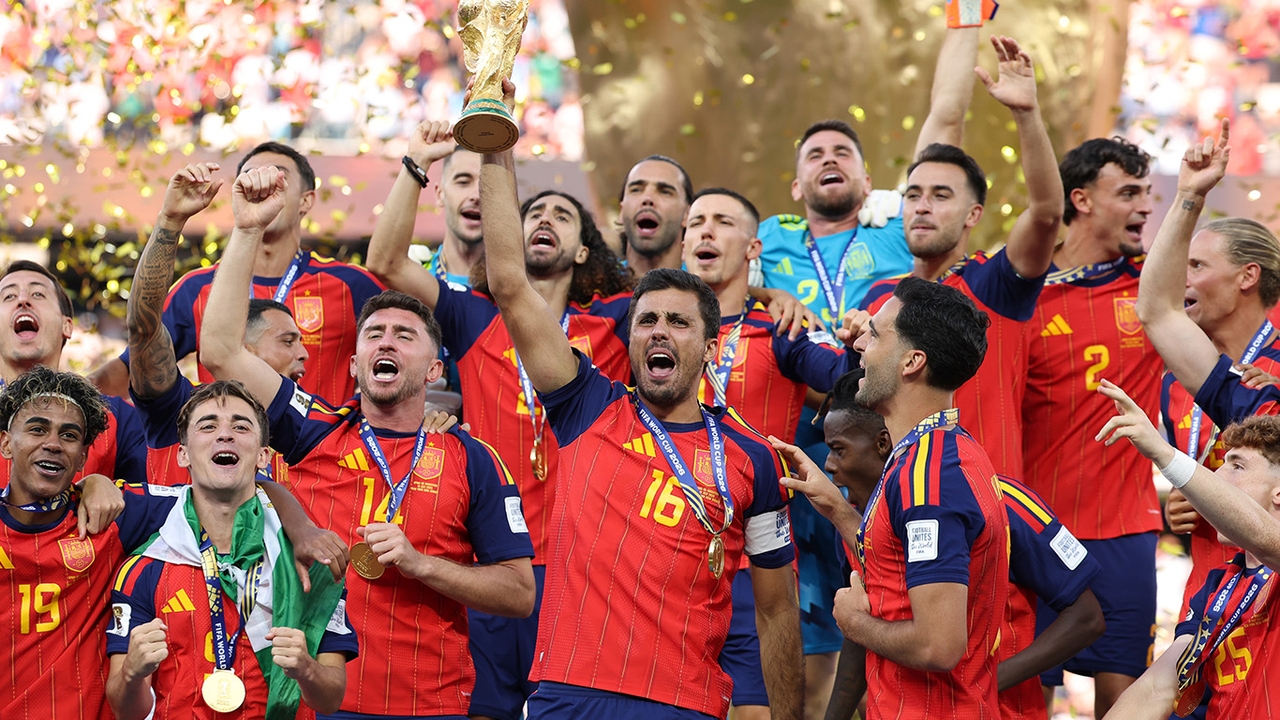
As the final whistle blew at the 2026 World Cup, images of the "La Roja" squad triumphantly lifting the world championship trophy after a 1-0 victory over Argentina spread across all media. People worldwide celebrated the team’s superior football skills and the captivating charm of the game from the Iberian Peninsula.
However, stepping off the football pitch and looking through an economic lens reveals an interesting truth: football serves merely as a "storefront" or excellent springboard that strengthens Spain’s national brand and image, driving substantial underlying economic growth.
Remarkably, this same country is home to legendary football clubs like Real Madrid and Barcelona, while also being the origin of global fashion empires such as Zara (Inditex), Mango, and luxury brand Loewe.
Thairath Money invites you to explore behind Spain’s world championship trophy: what generates the country’s wealth and how it has propelled Spain to become Europe’s fifth-largest economy?
While winning the World Cup brings joy to the nation, from a business perspective, Spanish football—both the national team and the popularity of La Liga—is the country's most powerful promotional tool. Worldwide, people recognize cities like Madrid or Barcelona through the cheers for their clubs.
These factors translate directly into economic value. It is estimated that in 2026, Spain will welcome around 100 million foreign tourists, generating substantial income and becoming one of the world’s top three travel destinations. Tourism accounts for 12-13% of GDP, with many football fans traveling to soak up the atmosphere, visit stadiums, and buy souvenirs before spending more broadly in the country.
Data from the Department of International Trade Promotion reports that Spain’s tourism focuses on offering unique experiences, especially in culture, nature, and activity tourism—the fastest-growing segments. Tourists spend an average of 1,382 euros per person.
Beyond football jerseys, Spain sets global fashion trends. Many wear Zara’s fast fashion innovations or dress in Mango without realizing these are Spanish brands, alongside high-end leather brand Loewe, which generates massive profit margins and international brand value.
This strength is further supported by the intangible cultural asset of the Spanish language, now spoken natively by over 500 million people worldwide. Widely used across Latin America and North America, Spanish not only boosts global sales of Spanish media, literature, and series but also lowers trade costs and attracts concrete multinational investment.
Turning to production, anyone thinking Spain’s strengths lie only in tourism and entertainment must reconsider. Spain is Europe’s "breadbasket," leading the world in olive oil exports, as well as producing fine wine, fresh fruit, and premium Iberico ham.
Spain is also Europe’s second-largest rice producer, after Italy, and a major rice exporter, with approximately 656,250 rai (about 260,000 acres) under cultivation.
The innovative agricultural area known as "Mar de Plástico" (Sea of Plastic) in southern Spain’s Almería region, visible as white patches from space, demonstrates how technology transformed arid land into greenhouses producing fruits and vegetables for the European market.
Structurally, Spain is Europe’s second-largest car producer (after Germany), serving as a key production base for leading brands. It also boasts the second-longest high-speed rail network in the world (AVE), second only to China.
Moreover, in an era demanding sustainability, Spain has heavily invested over many years in solar and wind energy, proudly emerging as a European leader in renewable energy and green infrastructure.
Clearly, Spain’s success extends beyond football fields. It results from smart strategic planning and a transition from a traditional economy to one based on knowledge, technology, and cultural products as guiding forces.
Sources: Department of International Trade Promotion, IMF, OECD, CaixaBank Research, Instituto Cervantes
Follow economic and government policy information with ThairathMoney athttps://www.thairath.co.th/money/economics/thai_economics
Follow the Facebook page: Thairath Money at this linkhttps://www.facebook.com/ThairathMoney