

The IMF points out that the world is facing three major shocks: the rapid emergence of AI, persistently high energy prices, and record-high public debt. The key issue is not just sustaining economic growth, but the urgent need for global leaders to restore fiscal space before a new crisis arrives.
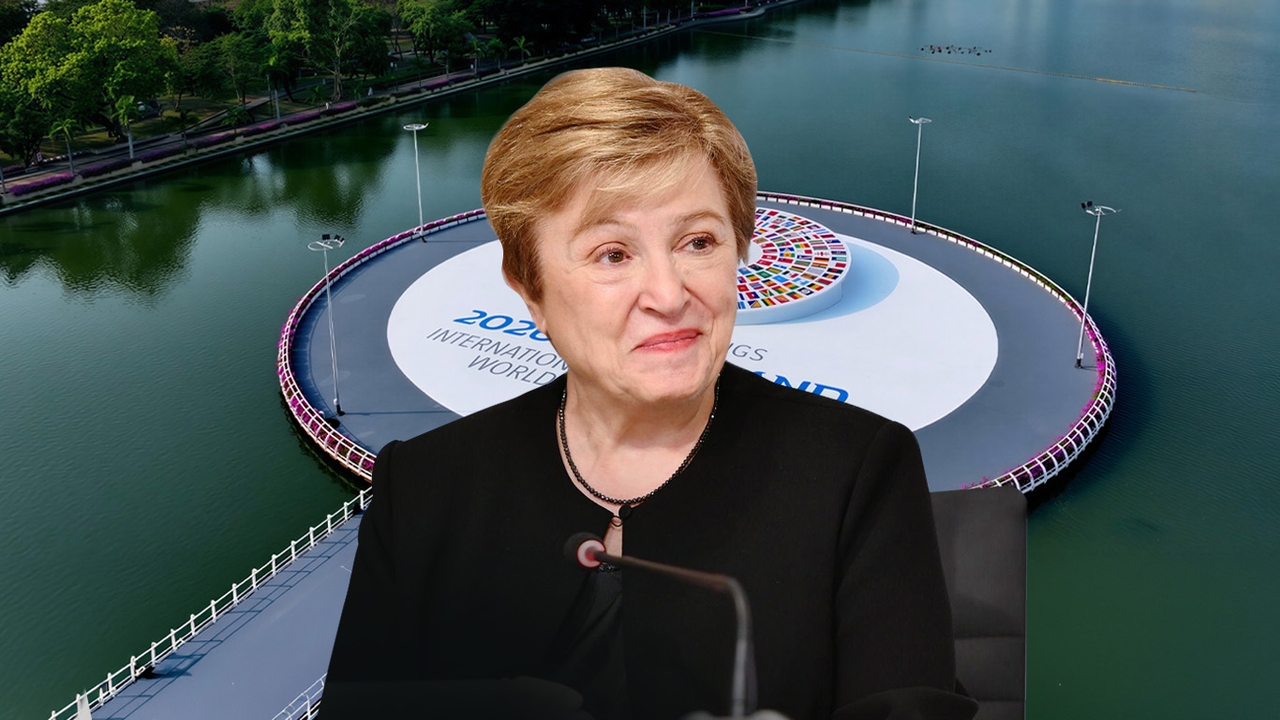
This comes ahead of the IMF and World Bank Group Annual Meetings, which Thailand will host from 12-18 October 2026. Kristalina Georgieva, Managing Director of the International Monetary Fund (IMF), delivered a Curtain Raiser keynote address titled “Outlook for the Global Economy and Policy Priorities” in Singapore, setting the agenda for global economic challenges policymakers will discuss in Bangkok.
Georgieva stated that this meeting occurs amid a period of high global economic uncertainty and rapid change. While global growth continues, there is significant divergence among countries.
The determining factor for whether the world can maintain resilience and improve what has been a disappointing growth rate this decade depends on addressing what she calls Three Major Crosscurrents or "three crosscurrents" pulling the global economy in different directions, namely:
1. The rapid arrival of AI,
2. Persistently high energy prices,
3. Record-high public debt levels.
Georgieva described the current global economy as being pulled in two directions simultaneously: supply shocks from rising energy prices and demand stimulus from AI investments. The impact varies widely, especially affecting economies directly impacted by war, energy-import-dependent countries, and those with limited policy space, making them more vulnerable.
Meanwhile, some countries show prospects for stronger growth driven by AI investment and expansion. AI is no longer just a technology issue; it has become a critical factor determining countries' competitiveness and economic fate.
Georgieva noted that AI investments relative to global GDP may reach or exceed levels seen in past major infrastructure buildouts, such as railways, power grids, and telecommunications. AI hardware and related technology products account for over one-tenth of global goods trade.
If well managed, AI could become a key engine for long-term growth. IMF research estimates AI could boost global growth by up to 0.5% annually.
However, AI is one of the crosscurrents the IMF is closely monitoring. Georgieva observed that current AI investment growth benefits are unevenly distributed globally. If most countries cannot participate in AI production and technology chains, economic disparities between nations may widen.
Currently, AI investment centers remain concentrated in a few countries, led by the U.S., China, and India. These countries import AI hardware to build infrastructure and develop into major AI providers. Many other Asian countries participate in supply chains covering microprocessors, memory, chip manufacturing machinery, and robotics.
She emphasized that real benefits come not just from building data centers or AI infrastructure but from productivity gains when AI is integrated into the economy.
Therefore, countries must prepare digital infrastructure, workforce readiness, and regulatory frameworks. AI also poses risks, including major labor market disruptions, cybersecurity threats, risks from advanced AI models that may become difficult to control, and increased energy demand.

Another risk that Georgieva highlighted is that AI may pose risks not only to labor markets but also to financial markets. Currently, profits from technology and AI companies are driving stock prices and creating wealth, boosting investor confidence.
However, if future earnings fall short of market expectations, combined with high debt levels in large tech firms and increased U.S. stock holdings by global investors, AI-related disappointments could trigger widespread financial shocks.
Thus, financial regulation and oversight are the first line of defense. At the same time, countries need to prepare for AI to harness its benefits while mitigating negative impacts.
Regarding rising energy prices, Georgieva said impacts extend beyond fuel costs to fertilizers, food, and key industrial raw materials. Food security risks are also increasing due to extreme weather events.
Although the global economy has absorbed some shocks through improved energy efficiency, diversified fuel sources, oil reserve releases, and supply chain adjustments, she warned that pressures are not over.
Oil prices remain near $100 per barrel. Refining capacity shortages raise processed product costs, and risks to liquefied natural gas transport through the Strait of Hormuz further pressure energy prices. Europe and Asia are regions to watch closely.
Even if Gulf conflicts subside short-term, energy prices could remain elevated longer. This pressure cascades, pushing inflation, interest rates, and financing costs higher. This is increasingly problematic as 10-year government bond yields in the U.S., Germany, and Japan are at their highest since 2007, 2008, and 1996 respectively, with upward pressure continuing.
The final crosscurrent is the high fiscal deficits, record public debt, and rising debt service costs. Georgieva noted that global public debt is near post-World War II highs and expected to exceed 100% of GDP. The key issue is that historically many countries benefited from interest rates below economic growth rates, easing debt management. Today, the situation has reversed: interest rates are rising while economic growth underperforms expectations.
Georgieva
warned that the world cannot rely solely on growth to escape the fiscal trap. Without serious fiscal efforts, returning to fiscal sustainability is not possible. What is needed is restoring fiscal space so governments have tools to face the next crisis. "Fiscal Policy" as the Urgent Challenge Before the Next Crisis Of the three crosscurrents,

elevated fiscal policy as an urgent issue where pressures from AI, energy, inflation, and interest rates converge. Her key message to policymakers globally was: "The world can no longer delay necessary policy actions. The tools exist; what is needed is the wisdom to use them." For advanced economies with high debt, the IMF seeks credible medium-term fiscal consolidation plans and actionable fiscal measures to ease pressure on monetary policy. Emerging markets must manage rising borrowing costs and volatile capital flows by expanding fiscal space and building foreign exchange reserves. Low-income countries face capital constraints, small tax bases, and reduced aid, risking cuts to development budgets essential for their economies and populations. She acknowledged that fiscal consolidation is difficult since repeated crises have accustomed people to government support. Thus, fiscal consolidation is both an economic and political challenge.Georgieva suggested policymakers explain to the public why fiscal consolidation is necessary and beneficial, accepting some short-term pain to enable future growth.
Simultaneously, policies should minimize impact on future growth, protect vulnerable groups, and be paired with structural economic reforms such as labor skills development, flexible labor markets, ease of business entry and exit, access to long-term finance, energy security, and removing outdated regulations to unleash entrepreneurship.
Georgieva
also warned of fiscal dominance risks over monetary policy. High government debt and reduced fiscal space may shift crisis burdens to central banks. If economic downturns or rapid AI investment reversals occur with no fiscal room to respond, central banks may need to lower interest rates or resume quantitative easing.
This could lead to interest rates below appropriate levels, increased debt, and ultimately diminished credibility of monetary policy. Therefore, she emphasized the need to protect central bank independence and focus on price stability mandates. Bangkok: The Next Stage for Global Economic Challenges
Ultimately, her address indicated that the global economy may not yet be in crisis but is accumulating pressure from the three crosscurrents:
"AI, Energy, and Debt." AI is attracting massive investment and has potential to increase productivity but carries risks to labor markets, energy, and financial stability. High energy prices are pushing inflation and financing costs higher, while public debt limits governments' crisis response capacity. Fiscal policy thus becomes the key challenge the IMF urges serious action on—not just deficit reduction but restoring fiscal space through efficient spending, structural reforms, protecting vulnerable groups, and creating conditions for long-term growth.
All these issues will be central to the IMF-World Bank Annual Meetings 2026 in Bangkok from 12-18 October, gathering finance ministers, central bank governors, business leaders, and policymakers worldwide to find ways to manage new global economic shocks.
https://www.thairath.co.th/money/economics/thai_economics Follow the Facebook page: Thairath Money at the link https:// www.facebook.com/ThairathMoney
