

AI could be a “True Abundance Machine,” a mechanism that creates wealth and expands human capabilities like never before. However, whether it becomes a major opportunity or a trigger for economic disruption depends on how humans choose to use and regulate the technology.
We are now clearly seeing AI move from a futuristic technology to a key driver of the global economy, transforming everything from business operations, investment, and production to labor markets and the competitiveness of nations.
However, an important question raised during the discussion “AI and the Global Economy: From Risk to Opportunity” at the IMF-WBG Annual Meeting 2026 is how much the world can turn technological advances into real productivity gains and wealth.
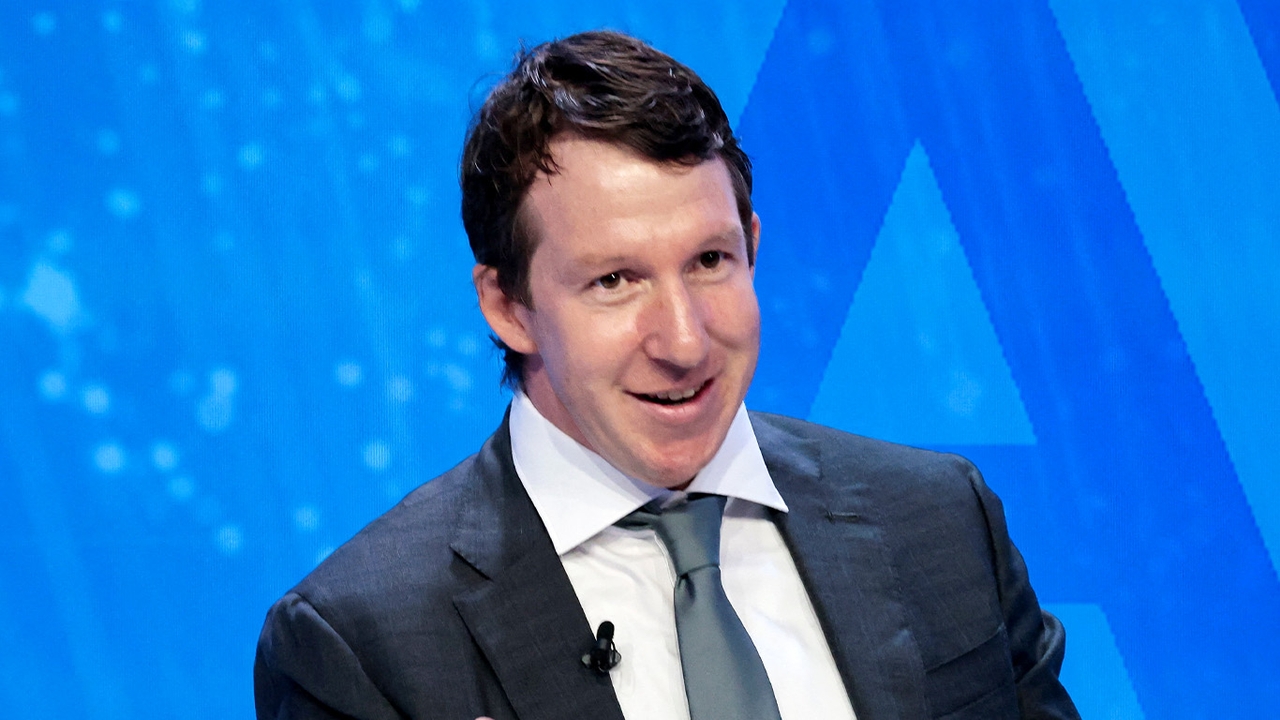
The panel included perspectives from global economic policymakers and leading AI developers, featuring Kristalina Georgieva, Managing Director of the IMF, and Jack Clark, Co-founder and Head of Policy at Anthropic. They exchanged views on the opportunities and risks arising from the transition to an AI-driven economy.
The discussion reflected two simultaneous futures: on one hand, AI has the potential to boost productivity, accelerate scientific discovery, and create new economic opportunities. On the other hand, if change outpaces the readiness of businesses, workers, and regulatory systems, the same technology could increase inequality, pressure labor markets, and expand economic and financial risks.
Jack Clark pointed out that simply adopting AI in organizations does not automatically lead to productivity gains. Even if employees work faster using AI Copilots, if overall workflows remain unchanged, benefits may be limited to individual levels.
The more significant change lies in organizations’ ability to redesign workflows, using AI agents and automation to handle multiple steps, integrate with databases, and support real-time decision-making.
This concept reflects that competitive advantage in the AI era is not about who accesses the technology first, but who can use it to transform work processes and create real business value. For the global economy, if such organizational changes occur broadly, AI could become a key engine for long-term productivity growth.
Anthropic’s key vision is that AI could become a True Abundance Machine—a mechanism that amplifies human ability to create knowledge, solve problems, and produce goods and services.
If AI can accelerate scientific research, advance software development, enhance production efficiency, and expand access to expertise, the benefits could go beyond cost reduction or time saving to include innovation and economic opportunities previously limited by resources and personnel.
However, “Abundance” does not mean wealth will arise automatically just because AI capabilities improve. Turning technological potential into economic outcomes requires investment, business restructuring, skill development, and broad access to technology.
Kristalina Georgieva emphasized that AI’s greatest benefits will come when the technology spreads from large tech companies to various business sectors and industries, because productivity underpins economic growth and higher living standards.
Despite rapid AI investment growth, increasing productivity at the overall economic level takes time, and uncertainties remain about returns on investment and organizations’ ability to deploy technology effectively.
The IMF also highlighted the risk that benefits may concentrate in countries and companies with greater readiness, while developing countries and some worker groups may have limited access. Structural inequalities in infrastructure, skills, and capital could determine who benefits most from the AI economy.
Another major challenge is employment impact. AI might create new jobs and increase demand for specialized skills, but it could also reduce demand for repetitive or automatable tasks.
If workers cannot adapt quickly, or training does not match business needs, productivity gains may not translate into higher income or better quality of life for most people.
Both Anthropic and IMF stress the need to link technology development with labor policies—from reskilling, encouraging business process adaptation, to using data to assess AI’s impact on jobs and industries.
The goal is not to preserve every existing job indefinitely but to enable workers to adapt and access new opportunities created by technological change.
As AI advances rapidly, risks extend beyond labor markets to cybersecurity, misuse of technology, economic power concentration, and investment risks that may exceed actual returns.
Jack Clark supports safety testing, third-party assessments, and international standards to ensure responsible AI development and build user trust.
The IMF emphasizes that risk management requires cooperation among businesses, governments, and international institutions, as no single organization can fully address AI’s impacts.
The key challenge is not choosing between accelerating innovation and regulation, but establishing rules that allow technology to grow safely without letting risks undermine long-term economic benefits.
In summary, the forum highlighted a global issue: AI could either be a tool for transformative productivity and wealth creation or a trigger for economic and social disruption if the transition is not managed properly.
Ultimately, how much wealth AI creates depends not just on how smart the technology becomes, but on how humans choose to use it, design economic systems, and regulate it.
If the world can translate productivity gains into broad opportunities, income, and improved quality of life, AI may herald a new era of abundance. But if technological progress outpaces society’s ability to adapt, expected wealth could come with social costs the world is unprepared to handle.
Read more about technology, innovation, and digital transformation at ThairathMoney to help you "Better Finances, Better Life" at https://www.thairath.co.th/money/tech_innovation
Follow the Thairath Money Facebook page at this link - https://www.facebook.com/ThairathMoney