

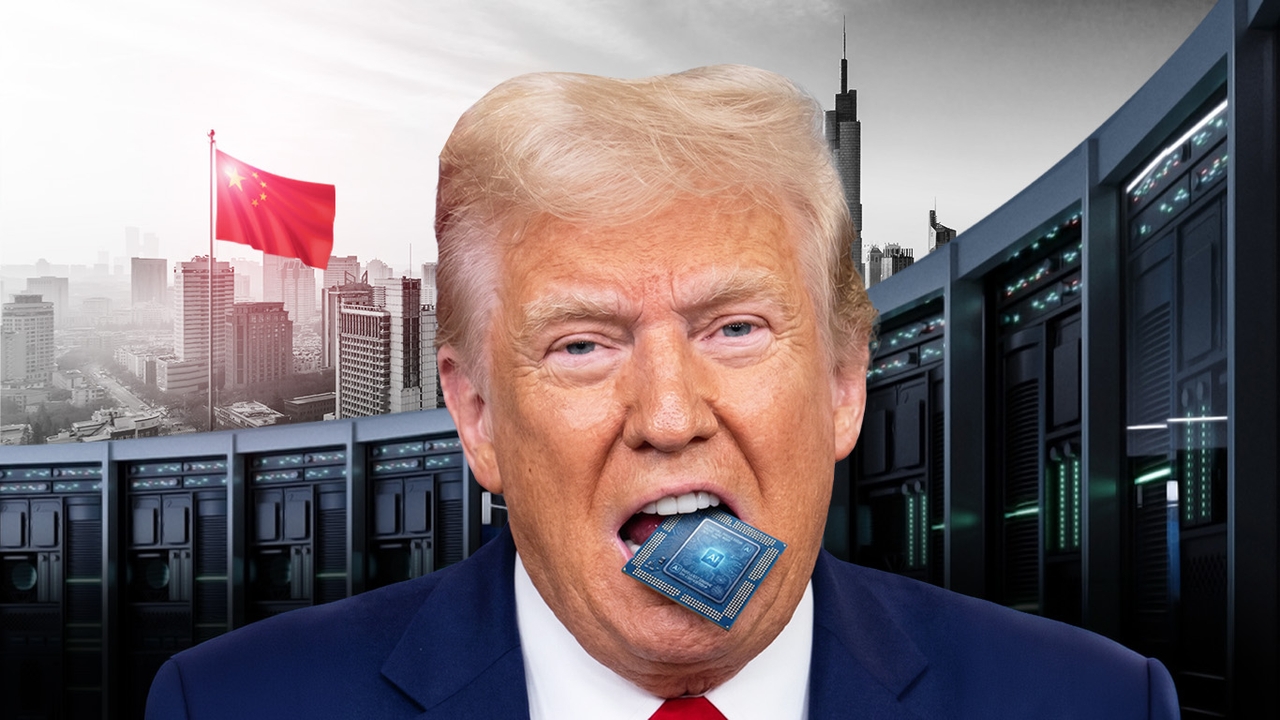
The U.S. is advancing its controls on exports of advanced AI chips by adding licensing requirements for shipments of chips and servers to five countries, including Thailand, aiming to close loopholes whereby Chinese companies might remotely access U.S. AI computing power through Data Centers located in third countries.
Concerns have arisen that these measures could affect digital infrastructure investment in Southeast Asia and exert short-term pressure on Data Center stocks.
On 16 Nov 2026 GMT+7, the U.S. Department of Commerce under President Donald Trump announced a new temporary rule requiring export licenses for re-exports of advanced AI chips and servers using U.S. technology to five countries—Singapore, Malaysia, Thailand, Indonesia, and Brazil—subject to case-by-case government approval.
The measure aims to prevent China and other restricted countries from circumventing existing controls by renting computing power from Data Centers in other countries instead of importing AI chips directly.
The U.S. Department of Commerce stated that advances in Cloud Computing technology have made it easier for foreign firms to remotely access advanced AI processing, necessitating updated controls to address this risk.
/ The new rule does not impose an outright "ban on exporting AI chips to all five countries." Instead, it introduces enhanced verification and licensing requirements, with exceptions for companies headquartered in the U.S. and certain uses such as commercial product recommendation and content systems.
This announcement came just days after Nvidia co-founder Jensen Huang resigned as CEO on 12 Nov 2026 GMT+7 amid reports of personal ties to Alice Huang, a former executive at Singapore's Megaspeed International, which U.S. authorities suspect has links to Chinese intelligence. Megaspeed is under investigation for allegedly re-exporting Nvidia's advanced AI chips to China, though the company denies wrongdoing.
This case heightened concerns about vulnerabilities in AI chip export controls and increased pressure from U.S. Congress members for the Trump administration to investigate companies potentially using Southeast Asian Data Centers to bypass export restrictions to China.
These developments have pressured technology stock markets: Nvidia shares dropped over 4%, while the Philadelphia Semiconductor Index, tracking semiconductor stocks, fell 5.3%, reflecting investor worries about regulatory risks and AI chip business prospects.
Previously, U.S. export controls focused on directly limiting sales of advanced AI chips to China, but the growth of third-country Data Centers is changing how technology access occurs.
Chinese companies no longer need to import Nvidia chips physically if they can rent computing power from Data Centers abroad to train or run AI models.
Southeast Asia has thus become a key focus for the U.S., especially Singapore, Malaysia, Thailand, and Indonesia, which are attracting global tech investment and seeing demand from Chinese firms like Alibaba and ByteDance.
Earlier, Bloomberg reported in May 2026 that U.S. authorities suspect a company involved in Thailand’s national AI project may have smuggled Nvidia-chip servers worth billions of dollars to China. However, this remains under investigation without confirmed wrongdoing.
The expansion of controls to ASEAN countries reflects the U.S. focus not just on export destinations but also on where chips are installed, who uses them, and whether restricted countries gain access to processing power.
In Thailand, these measures come amid rapid Data Center industry growth driven by AI infrastructure and Cloud Computing investments from global tech firms, making Thailand an attractive market for foreign investors.
According to the Board of Investment (BOI) as of April 2026, Thailand has 57 approved Data Center projects: 17 operational, 20 with construction permits and under development, and 20 in investment preparation stages.
This indicates that over 40 Data Center projects are in development, some of which may need to import AI chips, servers, and processing equipment from abroad to support future operations.
The new U.S. licensing requirements could become a factor for operators to consider regarding equipment procurement timelines, operating costs, and investment certainty, especially for projects relying heavily on advanced AI chips.
Additionally, these measures coincide with Thailand’s recent regulatory updates establishing a One Stop Service (OSS) system to screen Data Center investments, assess power and water readiness, and evaluate economic benefits for the country.
Data Center investment in Thailand thus faces dual regulatory challenges: complying with domestic investment criteria and accessing advanced foreign processing technology.
From a capital market perspective, Kasikorn Securities Public Company Limited estimates that the U.S. export restrictions on AI chips may create short-term negative sentiment for Data Center-related stocks in Southeast Asia, including Thailand.
Investors may worry that the new rules complicate equipment procurement or cause foreign tech firms to delay investment decisions pending regulatory clarity.
However, the economic impact on Thailand’s imports, exports, and private investment is unclear since the measures do not ban all advanced AI chip imports but require licensing and additional scrutiny.
U.S. regulations include exceptions for chips sent to companies headquartered in the U.S. under reporting conditions, while Data Centers providing large processing capacity to restricted countries face extra checks. Thus, impacts vary by operator depending on ownership, chip types, client base, and service purposes.
If operators can prove that chip and server imports comply with conditions and are not used to circumvent export controls to prohibited countries, the impact on related Data Center investment stocks may be limited. The stock price dip might represent a buying opportunity for long-term investors.
Read more
Source information Bloomberg
Follow economic and policy news with ThairathMoney to help you achieve "Good Finance, Good Life." Available at
Follow the Facebook page: Thairath Money at the link www.facebook.com/ThairathMoney