

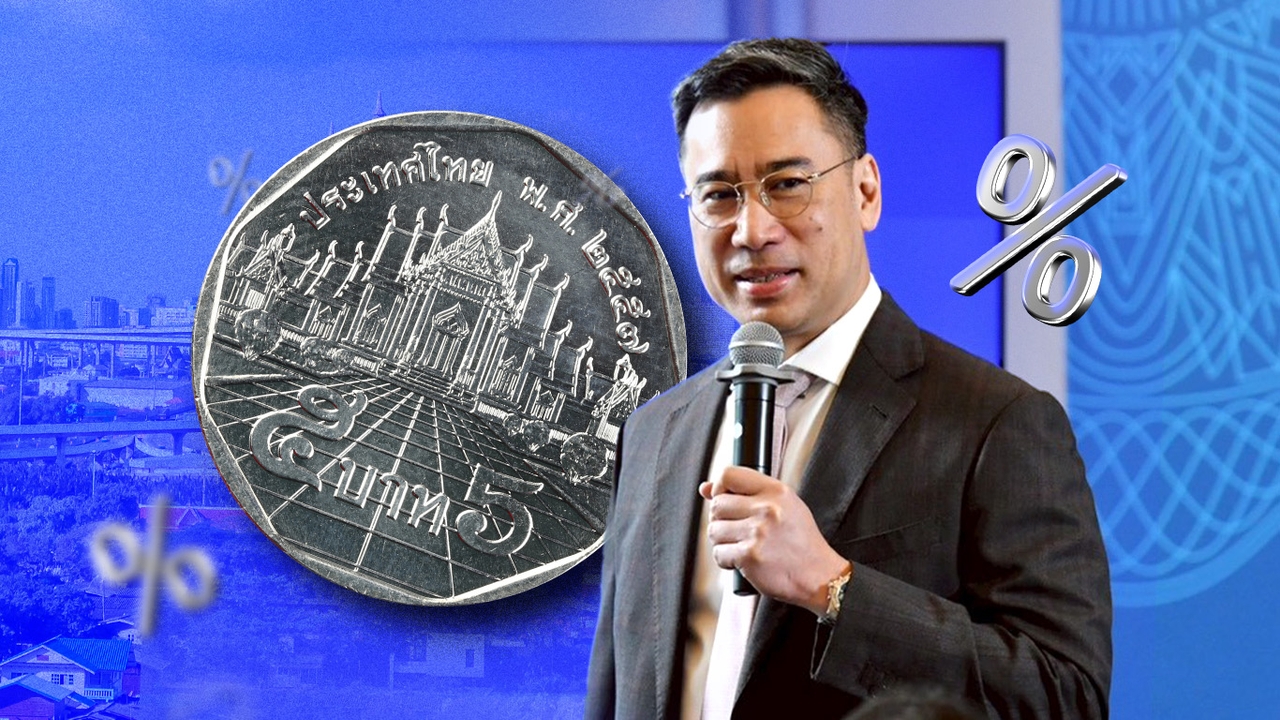
With just 14 days remaining, the Bank of Thailand (BOT) is preparing for a leadership transition. Yet, many questions remain about issues such as the sharp appreciation of the baht, the role of gold as a potential root cause, and how well the BOT has managed policy interest rates over this period.
Here we review the perspectives of Dr. Sethaput Suthiwartnarueput, the 24th Governor of the Bank of Thailand, summarizing lessons from the past five years and answering all outstanding questions, including which issues Thailand must urgently address for a better future.
Governor Sethaput explained that the baht’s 7% appreciation in early 2025 mainly stems from the weakening US dollar, as the US Federal Reserve (Fed) signals potential interest rate cuts. Another key factor directly impacting the baht is gold trading, which is popular among Thais in baht currency, leading to large baht-dollar exchanges that strengthen the baht. Recently, discussions with relevant parties have explored various approaches, such as gold taxation and conducting gold transactions in US dollars.
Nevertheless, regarding the baht, the BOT has continuously managed to reduce volatility that could adversely affect exports and trade. The BOT emphasizes it does not seek to intervene to direct the exchange rate but aims to moderate fluctuations.
Dr. Sethaput views the monetary policy over the past five years as appropriate and flexible, effectively responding to evolving circumstances. In the first phase (2020–2021), Thailand suffered severely from the COVID-19 crisis, leading to a policy interest rate cut to 0.5% per annum, aligning with the need to support recovery from the slow economic rebound.
In the second phase (2022), the policy rate was raised to 2.5% per annum. Many questioned whether Thailand should pause rate hikes following global trends concerned with high inflation. However, we saw this rate level as moving toward a suitable neutral rate for Thailand, which varies by country, and I consider this approach effective.
In the third phase (2023–2024), we chose to preserve policy space or keep monetary ammunition available, anticipating possible shocks from uncontrollable global factors. When appropriate, we began gradually lowering the policy rate from 2.5% per annum.
Up to the fourth phase (2025), the policy rate has been gradually reduced to the current 1.5% per annum. Given global headwinds, including trade policies and slower-than-expected economic recovery, the current interest rate is seen as appropriate, although market participants believe the pace of rate cuts is too slow.
Overall, in 2025, the BOT still forecasts Thailand’s GDP growth at 2.3%, maintaining stability. This projection is based on 3% growth in the first half of the year, with over 1% expected in the second half. Looking ahead to 2026, the greatest concern is risks related to the 2026 budget disbursement process, which could again cause economic stagnation, as previously experienced.
When asked about the new government’s four-month tenure, Governor Sethaput observed that although the short term might focus on immediate policies, the government must also address Thailand’s structural challenges with medium- and long-term strategies to resolve the ongoing economic slowdown. For example, the tourism sector has yet to fully recover due to perceived safety concerns among foreign tourists, an issue requiring urgent attention.
Regarding the 'Khon La Khrueng' (Half-Half) project, the Governor noted that while additional economic stimulus policies might be necessary, they must align with medium-term fiscal stability. Measures to generate revenue alongside government spending are essential, representing a significant challenge.
The BOT Governor affirmed that overall banking liquidity remains normal and denied any bank run rumors circulating. Increased withdrawals or cash usage at certain branches are isolated incidents. Banks are prepared to supply sufficient cash to branches as needed. He also apologized that some legal measures have caused discomfort among innocent citizens.
Recently, efforts have accelerated to address the issue of mule accounts, requiring clear management policies that minimize adverse effects on legitimate account holders.
Governor Sethaput highlighted three major lessons from his tenure, especially managing during two major crises: the 1997 economic crisis and the COVID-19 pandemic.
These points reflect just part of Sethaput Suthiwartnarueput’s insights, highlighting Thailand’s macroeconomic challenges and structural problems. He emphasized the necessity of fostering understanding and trust between the government and the public, and of crafting comprehensive policies to navigate future uncertainties.
For more economic information and government policy updates, follow ThairathMoney athttps://www.thairath.co.th/money/economics/thailand_econ
Follow the Facebook page: Thairath Money at this linkhttps://www.facebook.com/ThairathMoney