

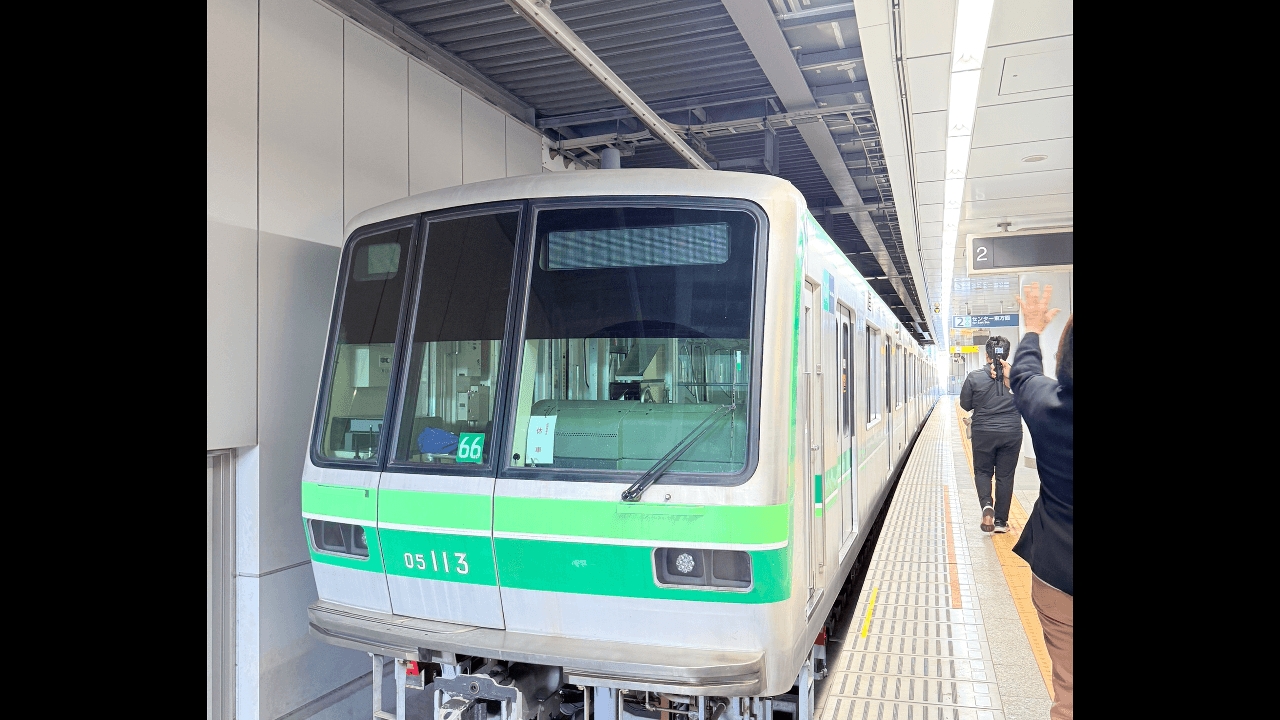
Mr. Phatthanapong Pongsuphasmit, Deputy Governor for Administration of the Mass Rapid Transit Authority of Thailand (MRTA), revealed after leading a media delegation to Tokyo, Japan, to study and observe rail system management and strategies for Transit-Oriented Development (TOD) that this trip not only highlighted commercial area development around train stations to generate income but also offered new insights through a visit to the Tokyo Metro training center, known as Tokyo Metro Academy. This center trains personnel for Japan's rail transport industry and serves as a model to elevate Thailand's rail industry standards.

As a global leader in rail mass transit and a highly successful example of integrating rail systems with commercial and residential development—known as TOD—Japan’s large-scale Takanawa Gateway City project visit reinforced the concept that sustainable transport development requires additional revenue streams beyond just fares.
Mr. Phatthanapong emphasized the importance of this concept, noting that recent amendments to Thai rail-related laws, including MRTA’s regulations, now allow MRTA to expand commercial area development. This creates new income sources, which are crucial to strengthening the rail system financially, easing the public’s financial burden, and reducing reliance on government subsidies, especially for key government projects like the Purple Line fare policy capped at a maximum of 40 baht per day.
Huai Khwang as pilot for TOD concept
Following this study of Japan’s development model, MRTA has crafted a master plan to develop commercially viable areas based on TOD principles. MRTA sees the Huai Khwang area as a high-potential pilot site because it is a large, centrally located urban area and a key connection point within the rail network. It is MRTA-owned land, previously used for building the Blue Line maintenance center, which can also support real estate development.
Mr. Phatthanapong added that the Huai Khwang development concept is not new but has been planned for over 10 years. However, legal limitations had hindered progress. Recent reinterpretations of the law now allow the use of land for "mutual benefit"—serving both rail operations and public interests—enabling the plan to move forward, particularly in areas adjacent to Rama IX Road, focusing on high-level commercial development.

MRTA has outlined diverse land-use plans, starting with developing healthcare facilities as the first phase. This involves the Metro-Medical project, integrating mass transit with medical services at the Orange Line Huai Khwang station along Rama IX Road. Pending approval by the MRTA board in December 2025, development could begin in 2026.

Beyond TOD, another key purpose of the Tokyo trip was to visit Tokyo Metro Academy, the rail training center of Tokyo Metro Co., Ltd., a major organization managing comprehensive, internationally standardized rail operation training courses. The center also offers online courses for trainees worldwide.
Mr. Phatthanapong compared this with Thailand’s own rail personnel training center under MRTA at Khlong Bang Phai on the Purple Line, which has operated for over six years since March 2019. It offers diverse courses covering MRTA staff, rail professionals, instructors, and interested members of the public. Training includes train operation control, maintenance, incident management, and foundational system knowledge such as station systems, communications, and escalator/elevator systems. Instructors come from MRTA experts and academic partners.

Although MRTA’s training center shares similar concepts with Tokyo Metro’s, the visit highlighted Japan’s comprehensive scope and significant investment. MRTA aims to adopt Tokyo Metro Academy’s approach to upgrade Thailand’s rail training center standards, especially for driver training, which under forthcoming laws will require licensing. This will ensure graduates possess internationally recognized expertise and can perform effectively in rail service organizations.
Thus, the study visit to Japan reaffirmed MRTA’s commitment to aligning with world-class best practices, focusing on two main goals: first, achieving financial sustainability through commercial development (TOD) to generate revenue that stabilizes the overall mass transit system; and second, ensuring workforce sustainability by enhancing the training center into Thailand’s central rail personnel development hub.