

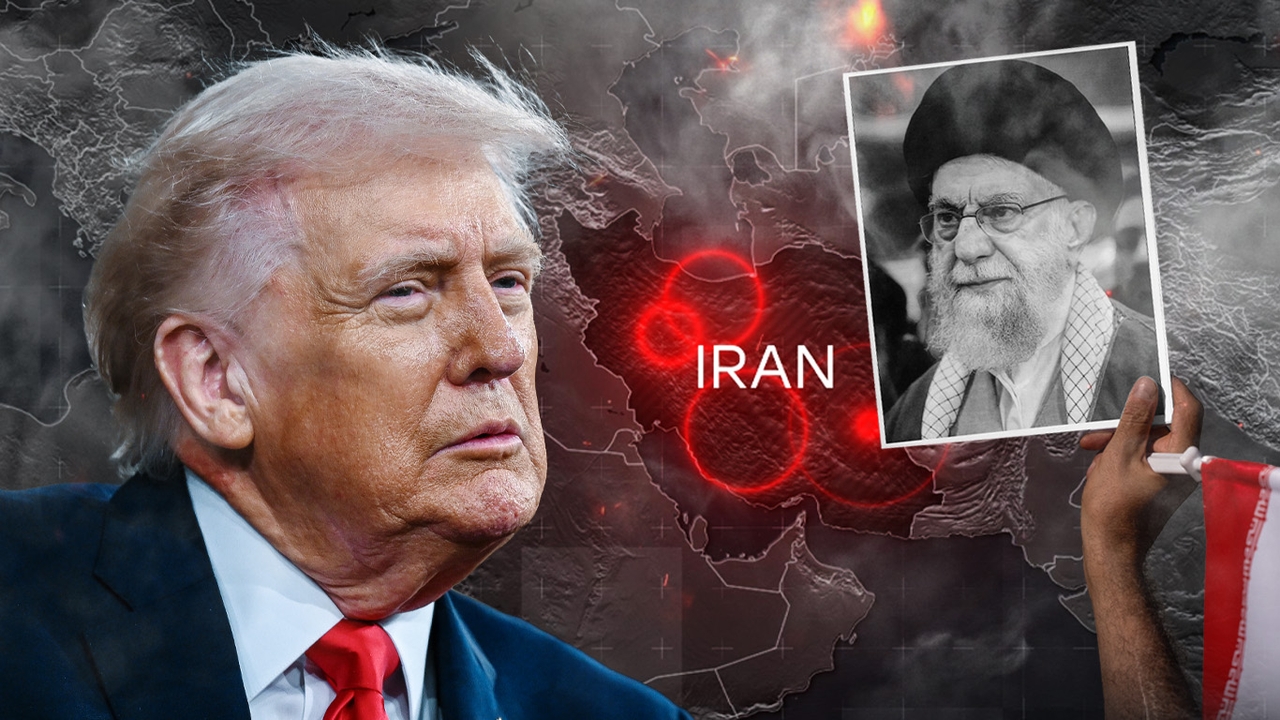
The death of Ayatollah Ali Khamenei, Iran’s Supreme Leader, from attacks by the U.S. and Israel, is no longer just a televised war scenario. Analysts believe this is a "giant domino" about to topple, impacting the global economy including Thailand inevitably.
After 28 Feb 2026, the world entered a "war" phase as the U.S. and Israel jointly launched the largest attack on Iran in decades, turning the conflict into a high-stakes game risking lives and livelihoods worldwide.
Recently, U.S. President Donald Trump confirmed in an interview with British media that the military operation against Iran could last up to 4 weeks.
Under the "nightmare" scenario analysts hope to avoid, Iran might activate a "Shockwave" by closing the Strait of Hormuz as retaliation against Western allies, immediately halting over 20% of the world’s crude oil transit.
However, although Iranian authorities have been ambiguous about officially closing the strait, Iran’s Foreign Minister has denied any intent to close the Strait of Hormuz despite the ongoing intense conflict. Yet, Tehran has threatened for years to block this narrow shipping route if attacked, turning this global energy artery into a "red zone" no one dares to risk.
All these developments reflect that the war news is closer to us than expected, shaking the cost structures of Thai people's lives. Here are 20 key points about the “Iran War” that Thais need to know and prepare for, based on analyses by domestic economists and investment advisors.
1. Declaration of Economic Warfare: The closure of the Strait of Hormuz may occur, not only as a defensive measure but as a severe retaliation for the assassination of the Supreme Leader and to weaken the economic power of U.S. allies in the region.
2. "Actual Closure," Not Just a Threat: Reports from the commercial fleet indicate that the Iranian Revolutionary Guard Corps (IRGC) has broadcast warnings forbidding all vessels from passing through the area, causing many oil tankers to halt or turn back immediately.
3. Power Vacuum in Iran: Despite the Supreme Leader’s death, scholars observe that Iran’s Security Council remains unified in pressing back through the tactic of closing the strait to pressure the global community to act against the U.S.
4. Risk of War Escalation: Iran’s missile attacks on U.S. bases in several countries (Qatar, UAE, Saudi Arabia) indicate the conflict is no longer confined to Iran but may escalate into a full-scale "regional war."
5. China’s Role as a Variable: China imports massive oil volumes through this route; if the closure is prolonged, China may intervene to protect its interests, potentially changing the course of the conflict.
6. Oil Price Storm: Analysts predict Brent crude oil prices may surge to test $100-$110 per barrel short-term due to panic, with Brent prices recently up 9% to $79.42 per barrel.
7. Thailand’s Oil Reserve Gauge: The Ministry of Energy confirms Thailand has total oil reserves of 7,795 million liters (enough for 61 days), but the issue is whether prices will rise along with global markets starting 4 March.
8. LNG Supply Disruption: Qatar exports nearly 20% of liquefied natural gas (LNG) through this route; closure would undoubtedly cause an energy crisis extending to electricity supply.
9. Electricity Tariff (Ft) Poised to Rise: Thailand imports high amounts of LNG, about one-fifth from Qatar, used for power generation. Rising LNG import costs will inevitably increase electricity charges for Thai consumers in the next billing period.
10. PTT’s Adaptation: Attention should be paid to plans to source alternative energy supplies from other regions such as Africa or America, which will have significantly higher transportation costs.
11. Inflation Surges: Oil prices are the "initial cost" for everything, from fresh vegetable transport to airline tickets. Expect widespread price increases, making it harder for the Bank of Thailand to lower interest rates.
12. Thai Exports Stuck: The Middle East is a key market for Thailand. Thai goods destined for Jebel Ali port (UAE) will be disrupted, affecting the country’s income.
13. Thai Baht Depreciation: More expensive oil imports worsen Thailand’s trade balance, likely weakening the baht to 36.50 - 37.00 baht per dollar.
14. Emergency National Security Council Meeting: The Thai government convenes security and economic meetings to plan for "impact mitigation," possibly including renewed oil price subsidies.
15. "Panic Buying" Psychology: Fears of prolonged war may lead to stockpiling of essentials in Thailand, further driving prices upward.
16. Sell on Fact in Oil Stocks: Although oil stocks surged with this morning’s news, analysts advise "profit-taking" on strong rallies since global oil supply remains in surplus in 2026; if tensions ease, prices will drop sharply.
17. Gold as a "Protective Shield": Gold might reach new all-time highs. Analysts recommend holding 10% of portfolios in gold for hedging but caution against buying at peak prices (latest global gold price at 10:00 a.m. is $5,350 per ounce).
18. Avoid Airline and Transportation Stocks: In the short term, energy-intensive stocks will be heavily sold off; it’s prudent to delay purchases until oil prices stabilize.
19. Watch the Dollar Index: The U.S. dollar will strengthen as a safe haven, pressuring risky assets worldwide, including Thai stocks (SET Index).
20. Broker Recommendations: They suggest using sharp price rebounds to "reduce exposure" in commodities and focus on holding cash or short-term bond funds while assessing the situation.
Source: Finnomena, KAsset, analysis by Dr. Amorntep Javala, Ministry of Energy
Read stock, gold, investment, and financial news with Thairath Money at
Follow the Facebook page: Thairath Money at this linkhttps://www.facebook.com/ThairathMoney