

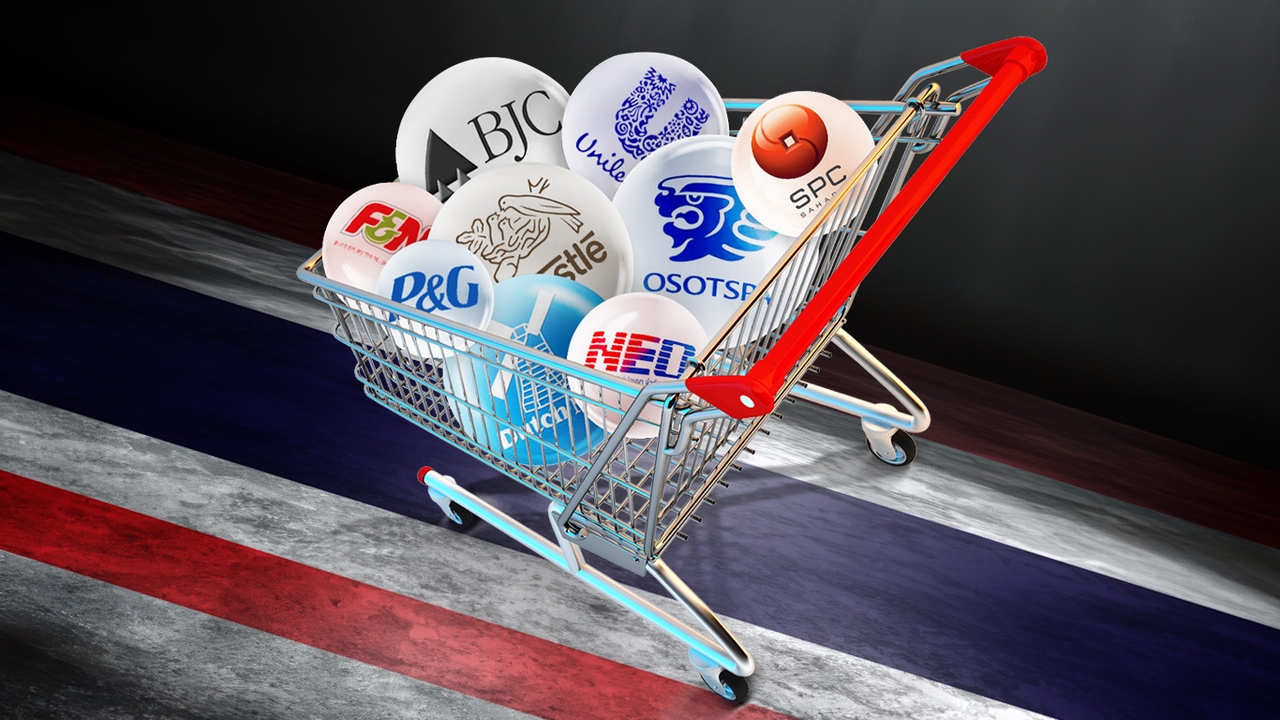
Signs of Price Hikes in April 2026: Consumer Goods Prices Poised to Rise, Meet 9 Major Companies Driving Household Costs

Amid tensions in the Middle East, especially the Iran-Israel conflict, many see only distant clashes, but for Thailand, this issue is causing serious concern as it "flows through" into the real economy.
One clear sign is the global crude oil price rising from under $80 per barrel to between $95 and $130 per barrel. Since energy is the "source of all costs," almost all product costs are rising simultaneously. Household goods prices are quietly pressured by production costs, while packaging, plastics, and plastic bottles face shortages in April, with the Ministry of Commerce reporting supply at only 50% of demand.
Signals from producers as the giants begin to "shift."
A few days earlier, major consumer goods producers such as Unilever, Berli Jucker, F&N Dairies, and Saha Pathanapibul sent letters to partners with a common message emphasizing rising costs due to energy and raw material uncertainties. The key shared points were:
- Cost pressures are becoming increasingly clear.
- Some items may be affected starting from "April 2026."
- They are "increasing stock" in advance.
- It remains uncertain how long the situation will last.
Although this is not a direct price hike announcement, it is a "preliminary signal" that costs are tightening and may soon be passed on to consumers.
Nine FMCG giants: Why slight shifts feel like the whole household is affected.
Recently, the government convened major operators to discuss price stabilization. The group, known as the "Big 9" of the FMCG sector, if they raise prices simultaneously, could cause a "price hike across the board" phenomenon since their products permeate daily life, effectively setting the "cost of living" for Thai people. These companies include:
- Unilever, the number one FMCG business in Thailand, with 99% of 24.7 million households using their products three times daily, including Breeze, Sunsilk, Dove, Knorr, and Vaseline, covering everything from bathrooms to kitchens.
- Saha Pathanapibul, a company with over 80 years of history, with more than 76 nationwide distribution centers and 16 subsidiaries managing 200 brands, with a combined market cap of about 178 billion baht (as of 2025). Products include Mama noodles, Pao detergent, Shokubutsu soap, Essence, Lipon F dishwashing liquid, and Wacoal lingerie.
- P&G, a giant in the industry influencing consumer goods markets, with products such as Pantene, Head & Shoulders, Downy, Gillette, Pampers, and Rejoice.
- Neo Corporate, with revenues in the billions, manufactures and distributes household products including Fineline, Dnee, and Bnice, strong Thai brands in laundry and personal care.
- Osotspa, a Thai business empire with diverse products including beverages like M-150 and C-Vitt; personal care products such as Twelve Plus, Baby Mild, and Exit; health and confectionery items like Banner, Ole candies, Kilen Four-Brand antacid, and Uthai Thip herbal medicine.
- BJC (Big C), a publicly listed company with vast assets, part of the Charoen Sirivadhanabhakdi business group, producing many familiar consumer products like Testo snacks, Dozo, Party, Campus, household items such as Cellox tissue paper, Pruksa Nok Kaew soap, and also a major manufacturer of packaging like glass bottles and cans for this industry.
- F&N, a market leader in food and beverage consumer goods, with brands like Mali condensed milk, Tea Pot, Bear Brand, and Magnolia.
- Nestlé, the world's largest food and beverage manufacturer, covering 25-30 brands such as Nescafé, Milo, Bear Brand, Maggi, Nestlé bottled water, and Pure Life.
- Dutch Mill, a producer of fermented milk, yogurt, and fresh milk products commanding a large market share. Other products in the Dutch Mill group include D'Na, Demalt, Arabus, and Naturie.
Why is April 2026 a "litmus test"?
The Ministry of Commerce indicates that if the Middle East situation prolongs affecting shipping and petrochemical prices, the impact will go beyond "oil prices" and spread into hidden cost structures as follows:
- Packaging: Plastic pellets used for shampoo bottles, instant noodle sachets, or food preservation films rely on oil as a raw material. When oil prices rise, packaging costs increase accordingly.
- Logistics: Transporting goods from factories to department stores nationwide depends heavily on diesel fuel costs.
- Shortages: If domestic oil distribution is problematic, stock shortages (out of stock) may occur, usually followed by market-driven price adjustments.
A "new round of inflation" that is not far from everyday life.
The government's invitation to the nine major companies to discuss reflects a "strategic point" for living costs. If these giants cannot absorb costs and begin raising prices as predicted in April 2026, it won't be just a 1-2 baht increase per item but a rise across the entire "shopping basket."
When "everything in the household" becomes more expensive simultaneously, it is not just about saving money but a sign of deep structural inflation. As energy costs become the main driver of food and personal care prices, we may need to start preparing for a "New Normal" where prices may not return to previous levels.
What remains to be seen is how long government measures and cost management by these nine giants can delay this impact amid Thailand's fragile economy and incomes not growing in line with living costs. Should a new round of cost-push inflation occur, the pressure will hit "purchasing power" directly and affect Thailand's economic outlook in the near future.
Follow economic news and government policies with ThairathMoney at