

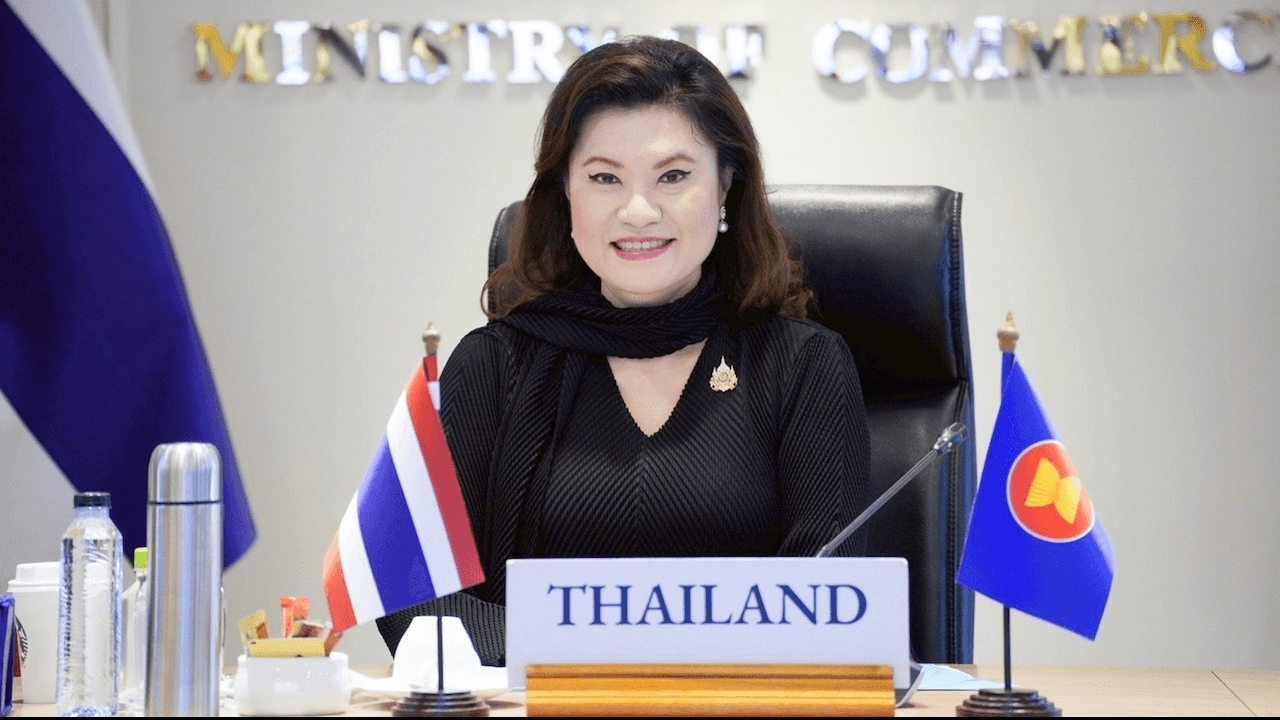
Ms. Kirida Phaopijit, Assistant Minister at the Ministry of Commerce, revealed that recently she participated in a special meeting of the ASEAN Economic Community Council. ASEAN members issued a joint statement addressing the regional economic impact of the situation in the Strait of Hormuz, emphasizing cooperation on food and energy security to mitigate rising energy costs affecting agriculture, especially fertilizer prices and risks to crop yields. They also supported regional mechanisms such as the ASEAN Plus Three Emergency Rice Reserve (APTERR) and the ASEAN Food Security Information System (AFSIS) to strengthen reserves and monitor situations, while promoting sustainable agriculture to manage long-term risks.
At the same time, ASEAN will explore joint regional energy reserves, accelerate diversification of energy sources, and enhance infrastructure connectivity such as the ASEAN Power Grid and the ASEAN natural gas pipeline network. This will be pursued alongside key frameworks including the ASEAN Petroleum Security Agreement and the ASEAN Energy Cooperation Plan of Action for 2026-2030. The crisis is also seen as an opportunity to develop alternative energy sources, aiming to build a stable and sustainable energy system.
Furthermore, ASEAN must rapidly build long-term resilience and adaptability. Thailand proposed elevating ASEAN’s role to become a "region with a stable and reliable economy in the world" amid current global volatility. This would be achieved through an open trading system, adherence to international rules, and refraining from unnecessary trade barriers. Member states must deepen regional economic connectivity by accelerating the implementation of pending economic agreements to enhance trade facilitation, reduce barriers, ensure continuous movement of essential goods, diversify trading markets, and expedite concluding the ASEAN Digital Economy Framework Agreement (DEFA) within this year to create new trade opportunities.