

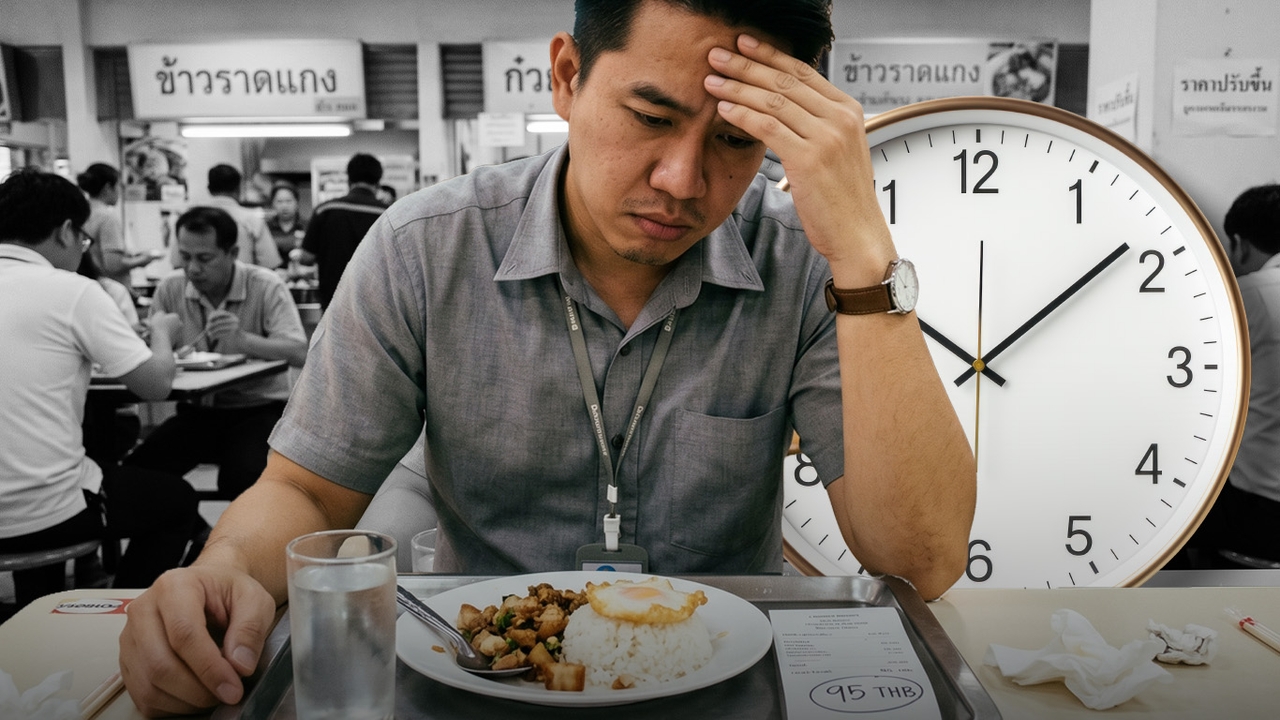
"One plate of rice" might be the most straightforward measure of quality of life.
Because no matter how much the economy grows, stocks rise, or GDP expands, if workers must spend increasing amounts of time to buy the same meal, it could mean life is actually regressing.
In labor economics, there is an index that clearly reflects our "real purchasing power": the "time cost of consumption." Simply put, it measures how many minutes of work we must exchange to afford one plate of rice to sustain life. Thus, looking only at income figures in currency terms cannot tell if urban residents today have a better or worse quality of life.
The latest data from the Thai Real Estate Research and Valuation Center of Agency for Real Estate Affairs (AREA) shows a long-term study of single-dish meal prices (curry rice and noodles) at over 30 shops in the Silom-Sathorn area—the central business district (CBD) for office workers—spanning 14 years (from 2012 to 2026), revealing a startling picture of Bangkok's cost of living crisis.

Looking back at comparative figures between 2012 and now (2026) shows a stark divergence between stagnant incomes and soaring food prices.
May 2012: the average price of curry rice was 31.0 baht.
May 2026: the average price of curry rice surged to 65.3 baht.
Over the past 14 years, curry rice prices have increased by 110.6%, while the minimum wage rose only 33.3%, forcing workers to spend an additional 40 minutes working—more than doubling (+105.3%) the time needed to earn enough for the same meal.
It's not only minimum wage workers who are affected; office workers and recent bachelor's degree graduates also suffer as salaries fail to keep up with rising living costs.
Thus, "starting salaries rose 20%, but rice prices rose 110%, resulting in 208 fewer plates affordable per month," meaning the purchasing power of new graduates has nearly halved.
A deeper analysis shows that recent 5-10 baht price hikes in single-dish meals are driven by cost-push inflation factors beyond vendors' control.
Comparing Bangkok's economy with other ASEAN capitals reveals a worrying reality: the quality of life and work conditions for Bangkok residents face some of the highest pressures.
According to the 2026 South-Eastern Asia Cost of Living Index by NUMBEO, Bangkok ranks second highest in cost of living within ASEAN, yet its real purchasing power is lower than cities with cheaper costs like Ho Chi Minh City and Jakarta.
Simply put, Bangkok residents pay more for ready-made food than those in Ho Chi Minh City and Jakarta, despite average Thai salaries not differing greatly.
The crisis of "doubling the effort to afford one plate of rice" in Bangkok may represent a structural failure in labor value management: wages grow sluggishly, but purchasing power shrinks alarmingly.
It appears that the warning from Thammasat University academics—that street food prices in Bangkok might soon reach 120 baht per plate—is not unrealistic.
If this problem persists without clear structural government intervention, inequality and household debt will accumulate, ultimately leading to economic collapse.
Follow the Facebook page: Thairath Money at this link.https:// www.facebook.com/ThairathMoney