

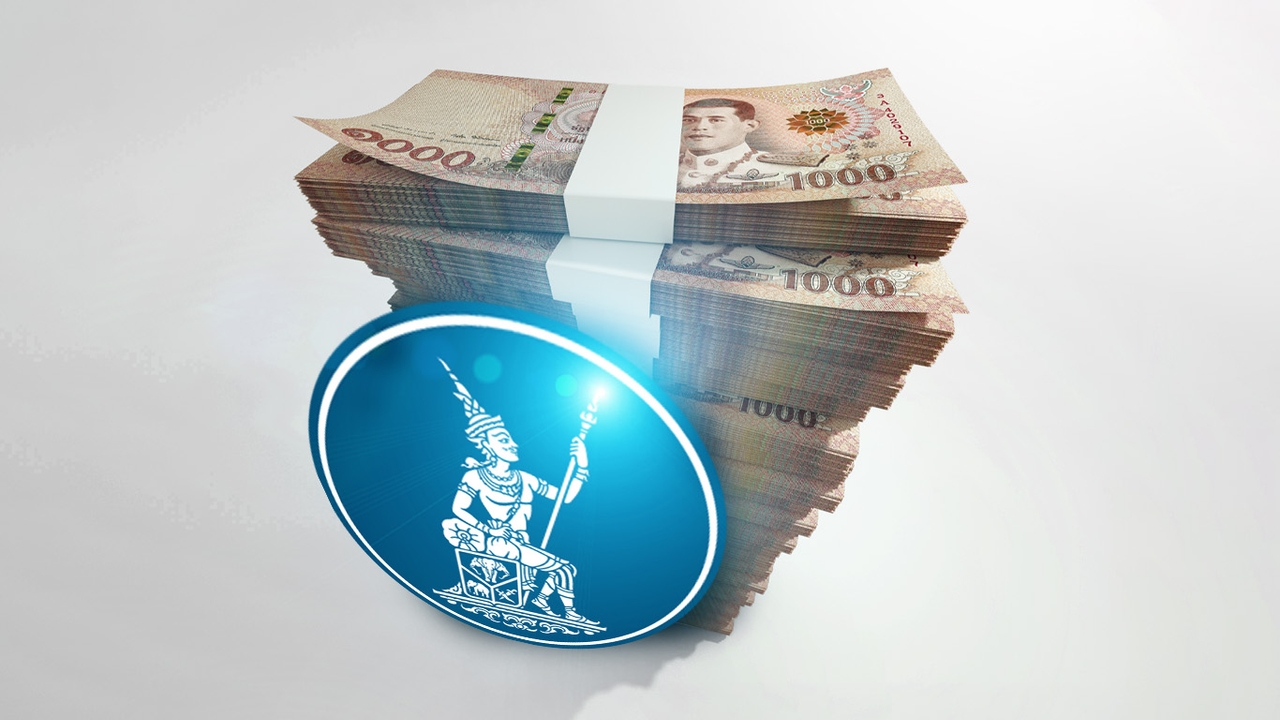
Previously, the Bank of Thailand (BOT) implemented measures to monitor cash withdrawals of 5 million baht or more, requiring customers to declare the purpose of the funds to the bank.
Recently, the BOT is preparing to extend these measures to include cash deposits of 5 million baht or more, where depositors must explain the source and origin of the cash. The regulations are currently being developed and are expected to be enforced by October 2026.
Additionally, Vichai Ratanakorn, the BOT Governor, stated that exchanging large amounts of banknotes—such as swapping 10 million baht in 1,000-baht notes for 500- or 100-baht notes—will also require justification for such transactions, explaining why large sums of cash are needed.
The BOT’s rationale is that cash transactions are harder to trace than transfers through the banking system, posing risks of being used for money laundering, moving proceeds of crime, using mule accounts, or concealing the origin of funds.
This aligns with reports that Thailand has become a primary target for grey and illicit funds flowing in globally for laundering. Popular assets for laundering include cash purchases of luxury real estate or gold. The underground economy in Thailand has surged to nearly 50% of GDP without taxation.
This upgrade aims to prevent financial institutions from being used as conduits for illicit funds and to enhance the efficiency of tracking money flows.
The existing measure in effect covers cash withdrawals of 5 million baht or more.
Transaction parties must
If unable to explain or provide necessary information, banks have the right to refuse the transaction.
The new measure will expand scrutiny to cash deposits, overseeing both cash inflows and outflows in the banking system.
For most people, the answer is hardly any direct impact, since depositing or withdrawing 5 million baht or more in cash is not common in everyday transactions.
Meanwhile, bank transfers or crossed checks into accounts can continue normally, as these transactions allow clear tracking of money flows.
Who should prepare?
These measures concern those conducting high-value cash transactions, such as
Currently, many countries are gradually reducing the role of cash in high-value transactions and promoting payment systems that allow money flow tracking to strengthen anti-money laundering, financial crime, and tax evasion measures.
For example, Europe is much stricter than Thailand; cash payments are prohibited for purchases over 2,000 euros, requiring card or check payments for traceability. Singapore is equally strict; foreigners buying condominiums must clearly prove the source of funds. In contrast, Thailand still allows purchasing homes worth hundreds of millions of baht in cash without difficulty.
This BOT move indicates Thailand is aligning with global trends by beginning to tighten controls over high-value cash transactions.
Currently in effect
[Cash withdrawals of 5 million baht or more]
Under development
[Cash deposits of 5 million baht or more]
[Large banknote exchanges]
Will require justification for the exchange.
Even if you currently do not have 5 million baht in cash for transactions, it is wise to be aware of these changes, as high-value cash transactions will undergo increased scrutiny in the future. Being prepared with information and documents will ensure smooth processing when such transactions arise.
Source: Bank of Thailand.
Follow economic and government policy updates with ThairathMoney athttps://www.thairath.co.th/money/economics/thai_economics
Follow the Facebook page: Thairath Money at this linkhttps://www.facebook.com/ThairathMoney