

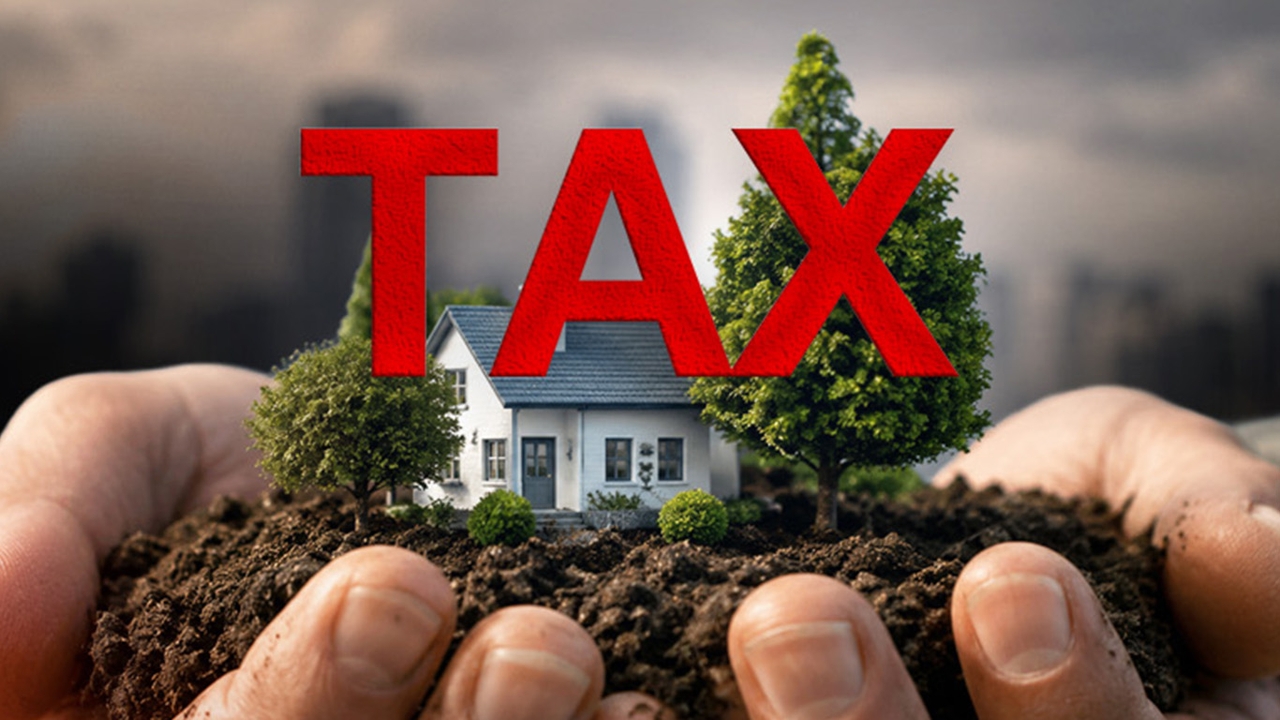
As the city grows, the old "tax rules" with loopholes are about to change the real estate ownership landscape in Bangkok forever.,
Looking back to 2019, the enactment of the Land and Building Tax Act marked a major milestone. However, over the past seven years, the tax system based on "appraised property value" has left Bangkok with significant revenue losses compared to the previous house and land tax system.
The familiar practice among city residents of "disguised agriculture"—transporting bananas, limes, or coconuts to plant on prime urban land solely to convert idle land into "agricultural plots" to pay lower taxes—is quietly coming to an end.
Recently, Bangkok is compiling data to propose a restructuring of land and building tax collection under the authority of Section 37, paragraph six, of the Land Tax Act, to be submitted to Governor Chadchart Sittipunt, the Bangkok Metropolitan Council, the Ministry of Finance, and the Ministry of Interior.
Here is a summary of the three main pillars of the new legislation that Bangkok is vigorously promoting.
According to real estate experts like Surachet Kongchip from Cushman & Wakefield and the Property DNA page, if this policy passes the council and is enforced, it will immediately create domino impacts across four main groups in the real estate sector.
1. Genuine farmers: minimal impact (but with caution points).
For real farmers working in suburban areas like Nong Chok and Min Buri, land values are typically appraised below 20 million baht, so they remain exempt under the new criteria. However, traditional farmers owning large plots whose appraised values rise with urban expansion may unintentionally face increased tax burdens. Bangkok may need to implement zoning-based taxation measures in the future to help screen these cases.
2. High-value landowners (Landlords): significantly increased burden.
The era of "urban banana plantations" will no longer be viable! Previously, idle land was taxed at 0.3–0.7% (increasing by 0.3% every three years up to 3%). Planting crops to avoid tax reduced the burden to 100 baht per million. With agricultural tax rising to 300 baht per million, a lowered exemption ceiling at 20 million baht, plus management costs such as fertilizer, labor, and irrigation, the return on holding idle land will become significantly negative.
3. Rental condos/apartments: increased costs, shrinking net yield.
Passive income investors owning condos or apartments for monthly rent face a big challenge. Changing the property classification to "commercial" will cause tax burdens to jump from 200 baht per million to 3,000 baht per million.
4. Land investors awaiting sale & tenants: may need to adapt quickly and bear some burdens.
From Bangkok's perspective, this tax restructuring is not about targeting or penalizing anyone but about "closing legal loopholes" to create fairness in local fiscal systems.
Under the old house tax system (12.5% of rental income), Bangkok collected full revenue from large department stores and office buildings. But since switching to the 2019 Land Tax Act based on appraised value and depreciation, some large department stores saw tax payments drop from 10.7 million baht to just 1.08 million baht, and some headquarters reduced payments from 11.49 million to only 3.72 million baht.
Bangkok aims to collect 17.5 billion baht in land and building tax revenue in fiscal year 2026 and 17.6 billion baht in fiscal year 2027. These additional funds will be crucial for supporting:
Thus, land tax will act as a "catalyst" encouraging efficient land use consistent with urban planning, reducing idle land in city centers, and curbing unplanned urban sprawl, ultimately lowering government utility infrastructure costs sustainably.
For anyone in the real estate chain—whether landowners, condo investors, or tenants—this is a clear warning that "holding costs are about to change," and proactive financial planning is essential to adapt in this new environment.
Follow economic and government policy updates with ThairathMoney at:https://www.thairath.co.th/money/economics/thai_economics
Follow the Facebook page: Thairath Money at this link:https:// www.facebook.com/ThairathMoney