

Have you ever seen street vendors or small restaurant shops with monthly sales of several million baht?
In Thailand, many small to medium-sized businesses have grown significantly, yet fewer pay taxes. Especially, businesses aiming to grow must consider registering for value-added tax (VAT), which may be a key issue causing many Thai businesses to delay growth. Why is this?
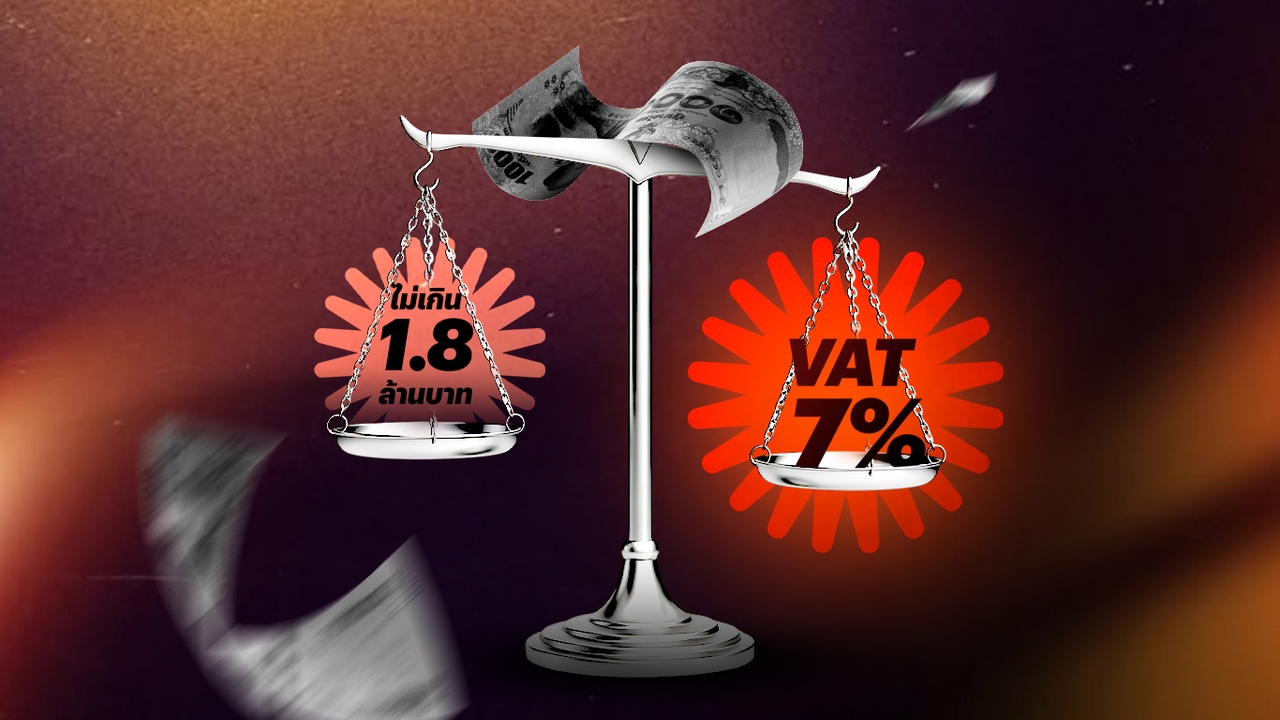
Paying taxes is a citizen's duty. If income reaches the threshold, taxes must be paid, whether individuals or juristic persons. For businesses, if annual income exceeds 1.8 million baht, the Revenue Department requires VAT registration within 30 days from the date the taxable base reaches the threshold; failure to comply results in fines. Businesses applying for VAT registration must prepare income documents, establishment documents, owner’s documents, maps showing the location, etc. Some products, like fresh vegetables and meats, are exempt from VAT.
After registering for VAT, SMEs or shop owners must file VAT returns monthly (tax month) within 15 days of the following month (23 days if filing online). Filing is required every month regardless of whether VAT is payable to the government.

But if asked about the benefits of registering for VAT, according to iTAX, they summarize that businesses can claim input tax credits, for example, VAT paid on purchases for operations or sales can be reclaimed; businesses become more systematized by maintaining monthly accounts; and credibility increases as they are audited by the Revenue Department.
Though VAT registration procedures are clear and can be done online or offline, for SMEs and small operators, dealing with government paperwork is a major concern. Many worry that making mistakes could lead to audits or retroactive fines. What other concerns do SMEs have?
Prof. Dr. Athiphat Muthitacharoen from the Faculty of Economics, Chulalongkorn University, explains entrepreneurs' concerns such as whether prices must increase, what to do if income slightly exceeds the threshold, and how much additional paperwork and workload will arise.
These concerns are reflected in research analyzing Thai tax filing data, finding an abnormal clustering of businesses just below 1.8 million baht, known in economics as 'Bunching,' indicating businesses adjust behavior to avoid crossing the VAT threshold.
The reason is that VAT is not just a 7% tax but also a "cost of being in the system" that may make entrepreneurs feel more burdened or complicated, such as
In a detailed study of businesses near the threshold this year, looking 1-3 years ahead, it was found that those just below 1.8 million baht tend to keep reporting similar revenue levels in subsequent years.
Prof. Dr. Athiphat emphasizes caution in interpreting this, as it is unclear what these business owners are doing behind the scenes. Some may genuinely delay expansion, others adjust income reporting, or restructure or separate business entities.
Therefore, this evidence does not say "VAT stops business growth," but the 1.8 million baht threshold is significant enough that businesses try to stay on one side of the rule. This behavior persists over years and reflects how tax rules influence incentives regarding tax system participation, investment, and growth ambitions.
Tax economics should not only ask how much tax revenue increases but also how people adapt to tax rules. The key challenge is how to streamline VAT application, reduce paperwork, simplify procedures and costs of moving from informal to formal systems to create a tax system that does not force businesses to choose between "growth" and "survival."
Follow economic and government policy updates with ThairathMoney athttps://www.thairath.co.th/money/economics/thai_economics
Follow the Facebook page: Thairath Money at this link https://www.facebook.com/ThairathMoney