

To achieve Thai economic growth, we must maximize the benefits of foreign capital. Recently, foreign investment applications in Thailand have soared to hundreds of billions and even trillions of baht. However, a deeper examination is needed into the "core" of these investments—how much money actually reaches Thai people and how to select investments that sustainably benefit Thailand.
Thairath Money summarizes key insights from Growth FORUM #1: Renewable Thailand, organized by the Economic Development Committee of the House of Representatives, in Session 2: Renewable Economy—how to revive Thailand's old economy for success in the new world.
Saroj Athivitwattana, advisor to the Economic Development Committee of the House of Representatives and to the Thai Small and Medium Enterprise Council, illustrated that while the inflow of investment money from large businesses or global megatrends into Thailand is positive, we need to look closely at the details of each project and how beneficial it truly is for Thailand.
For example, imagine a "noodle shop" opening in Thailand that uses local water, electricity, and land, but imports all its meatballs, pork, other ingredients, and labor from abroad. This scenario shows that such investments generate very little local content—meaning minimal domestic growth and circulation—and therefore limited income reaches local businesses and Thai people.
Many businesses in Thailand grow, such as e-commerce platforms, social media, and OTAs, but often their revenues flow back to their countries of origin. Similarly, although new sectors like AI or Data Centers invest here, income tends to concentrate within large enterprises, leaving small players with little participation.
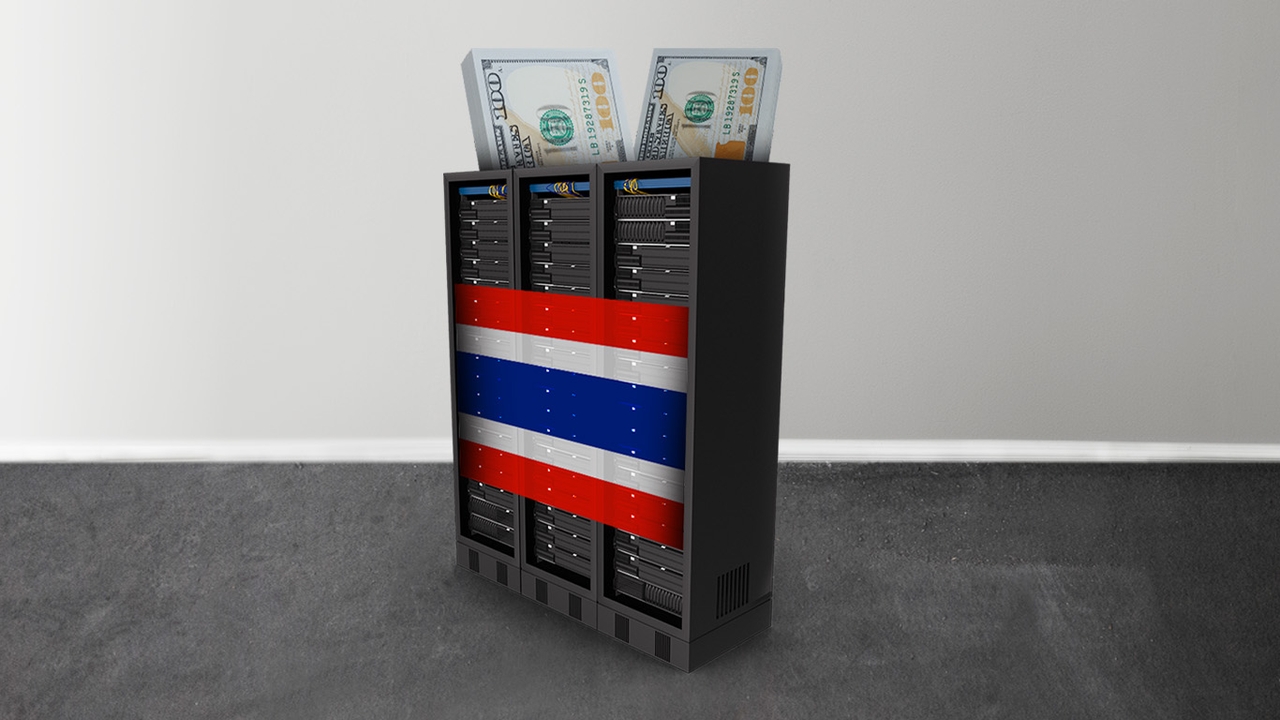
Regarding Data Centers, Isariya Phairipairit, member of the Economic Development Committee of the House of Representatives, added that on the submarine cable map, Thailand is a "dead end," so there is no compelling reason for foreigners to use Thailand as a Data Center hub. Observations over the past year suggest companies applying to the Board of Investment (BOI) may be using Thailand only as a GPU support base to evade U.S. sanctions.
, Natt Luengnarumitchai, advisor to the Economic Development Committee of the House of Representatives, commented that some Chinese firms are establishing companies in Thailand and importing goods to conduct business—though often exporting more. He emphasized closely monitoring the impact on resource use, especially water and electricity, particularly in agricultural areas where Data Centers might require water restrictions during El Niño years with higher risk.
Since these issues require well-designed government policies, Saroj proposed that the government start by revising the BOI's key performance indicators (KPIs). Past administrations often focused on investment figures in the tens or hundreds of billions but neglected how much of that money actually reached Thai people.
Therefore, approval of projects like Data Centers must consider their internal impacts—how these projects can further develop Thailand's economy. Clear conditions should be set and rigorously enforced to ensure companies comply.
Dr. Manisara Barameechaithong, dean of the Faculty of Engineering at University of the Thai Chamber of Commerce and advisor to the chairperson of the Economic Development Committee, stated that one sector the government must urgently support is agriculture, a vital part of Thailand's economy. Currently, government policies are misaligned and lack systematic integration of data, technology, and knowledge.
Agriculture can apply AI in many ways, but due to Thailand's longstanding problems—lack of systems for value addition, human resources, etc.—it is time for the government to create policies supporting group formation and systems to help farmers improve and access higher-value markets.
One industry bringing foreign funds to Thailand is automotive manufacturing, which historically grew through internal combustion engine (ICE) production. At this critical turning point, how should it adapt? Isariya said the automotive industry was once Thailand's "backbone," employing hundreds of thousands. However, with global trends shifting toward EVs, Chinese EV capital entering Thailand may bring their own supply chains, including engines, labor, and logistics.
Thus, Thailand must accelerate adaptation. Four main proposals are:
1. Increase Thai involvement in Chinese EV supply chains. The government should study and adjust policies and measures to boost Thai companies’ participation in the EV ecosystem, including tax incentives or international agreements that currently favor foreign supply chains. These changes should support Thai SMEs to develop and compete with foreign firms.
2. Produce cleaner, more efficient ICE vehicles. Thailand has a strong ICE production base but lacks capability in complex parts manufacturing. To lead this sector, Thailand should enhance collaboration with Japan to shift from a Japan-design/Thailand-production model toward greater Thai participation and long-term business development.
3. Expand into future mobility, such as autonomous driving and nitrogen-powered vehicles. Thailand currently has little presence in these markets and must accelerate partnerships.
4. Transition toward producing medical devices, rail systems, and agricultural machinery. Thai technicians and workers have skills that can be transferred from ICE supply chains to these three industries effectively.
Ultimately, transitioning from old industries to new requires thoughtful analysis of desired growth paths. This will enable businesses to prepare, adapt, and seize new opportunities, benefiting Thailand’s overall economy.
Follow economic and government policy updates with Thairath Money athttps://www.thairath.co.th/money/economics/thai_economics
Follow the Facebook page Thairath Money here: https://www.facebook.com/ThairathMoney