

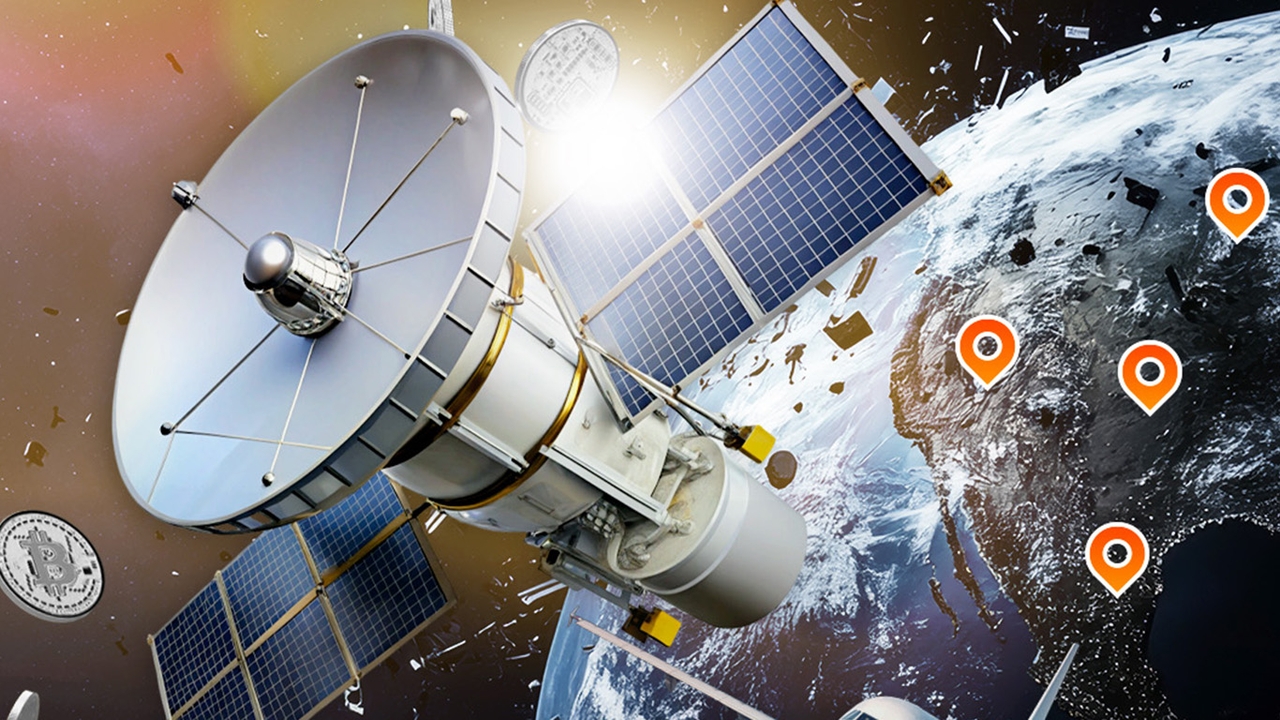
When discussing the global warming crisis, most people picture heatwaves, hurricanes, rising sea levels, and severe flooding. However, a recent analysis by Bnomics by Bangkok Bank reveals a deeper and more far-reaching impact. It points out that accumulated carbon dioxide is now affecting the thermosphere—the upper atmospheric layer where tens of thousands of commercial satellites orbit—and this could soon have broad economic consequences.
The analysis adds that a common misconception is that greenhouse gases warm the air at all atmospheric levels. In reality, the uppermost atmosphere experiences the opposite: carbon dioxide in the thermosphere radiates heat out into space, causing temperatures there to drop and the atmospheric layer to contract.
This phenomenon greatly reduces air density, weakening atmospheric drag—the natural 'brake' that slows space debris and defunct satellites so they burn up in the atmosphere. As a result, space debris that would normally disintegrate remains in orbit for decades longer, creating a dense accumulation prone to accidents at any time.
Tracking growth and congestion statistics above the atmosphere (data referenced from NASA and ESA ESOC)
From an economic perspective, low Earth orbit (LEO) is not empty space but an invisible wireless infrastructure supporting hundreds of billions of U.S. dollars annually. The 2009 collision between the Iridium 33 and Cosmos 2251 satellites, which generated thousands of debris fragments, exemplifies the Kessler Syndrome—a chain reaction where one collision creates debris that damages other satellites like dominoes.
This risk is now inevitably disrupting eight key business sectors.
As orbits become cluttered and risks rise, global services will inevitably become more expensive through three main channels.
Ultimately, providers will pass these higher costs to terrestrial businesses—airlines, shipping companies, telecom operators—which will be reflected in internet fees, shipping charges, airline ticket prices, and everyday consumer goods.
Therefore, solving the space debris problem today is not only a technological mission for NASA, ESA, or private firms like SpaceX developing debris removal and satellite self-destruction technologies. It is a matter of managing global economic and financial risks. Addressing global warming is thus not only about preserving Earth’s lower atmosphere but also about safeguarding the stability of space infrastructure—the backbone of the digital economy we rely on every second.
Source: Bangkok Bank
Read economic and government policy news with ThairathMoney to help you "Better Finance, Better Life" at
Follow the Facebook page: Thairath Money at this linkhttps:// www.facebook.com/ThairathMoney