

"Middle-income trap, slowing Thai economy, aging population before wealth." This phrase summarizes key economic challenges Thailand faces.
Many have seen headlines like this and wonder what Thailand must do to overcome these issues, which remain significant challenges for the government.
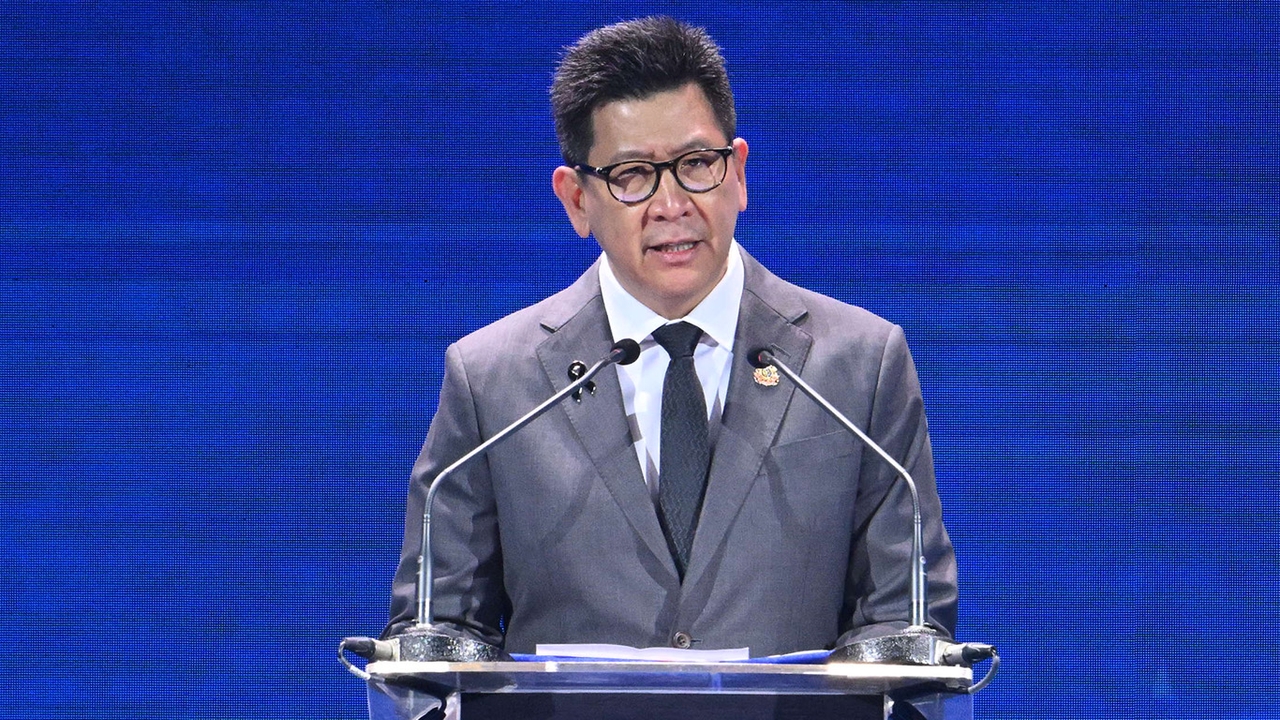
Dr. Ekniti Nitithanprapas, Deputy Prime Minister and Minister of Finance, summarized the closing remarks at "The Bangkok Business Summit 2026," stating that policy momentum begins with understanding WHY. The government and private sector have collaborated extensively, supported by World Bank data, revealing clear new horizons. Despite geopolitical risks, ongoing ASEAN cooperation will help Thailand manage risks and seize opportunities.
He added that the WHAT involves setting clear shared goals, such as making Thailand a high-income country by 2037 (B.E. 2580), aligning with the World Bank’s vision. Achieving this requires investment led by the private sector, with joint planning on how to reach the target. The government must support this by adjusting regulations to attract new investments and establish continuous progress monitoring.
Dr. Ekniti compared this to a football team: the forwards are the private sector and the Joint Public-Private Committee (JPC), which selects seven key growth industries: Smart Agriculture, Food Processing, Smart Electronics, Digital, Modern Automotive, Wellness Medical Hub, Trade and Investment, and High-Value Modern Tourism.
The government acts as midfielders, quickly delivering supportive policies. The Ministry of Finance leads investment initiatives; the Ministry of Commerce manages trade and SMEs; the Ministry of Higher Education, Science, Research and Innovation handles human development. Meanwhile, defenders—the Ministry of Finance and Bank of Thailand—maintain financial and fiscal stability, reflected in continued foreign investment inflows to Thailand’s stock market, indicating confidence in fiscal discipline.
Another key aspect is monitoring progress. Recently, the joint public-private committee (JPC) was established to address economic issues, reporting on actions every two months and actively driving Thailand’s economic advancement.
Finally, Thailand will no longer be seen as before on the global stage and is ready to promote its agenda and policies. The 2026 IMF–World Bank Group Annual Meetings will be held from 12–18 October 2026, where as host, Thailand will present case studies demonstrating impactful changes and positive outcomes to the world. This also ties into Thailand’s upcoming ASEAN chairmanship in 2028, following Singapore’s in 2027. Thailand has discussed with Singapore how ASEAN can collaboratively address and solve global economic challenges.
For more economic and government policy updates, follow ThairathMoney athttps://www.thairath.co.th/money/economics/thai_economics
Follow the Facebook page Thairath Money at this link: https://www.facebook.com/ThairathMoney