

Although recent news about gangs of scammers and grey money has lessened, damage from these threats continues, especially through criminals covertly transferring money through accounts or converting cash into other assets. Therefore, solving this problem requires cooperation from all parties.
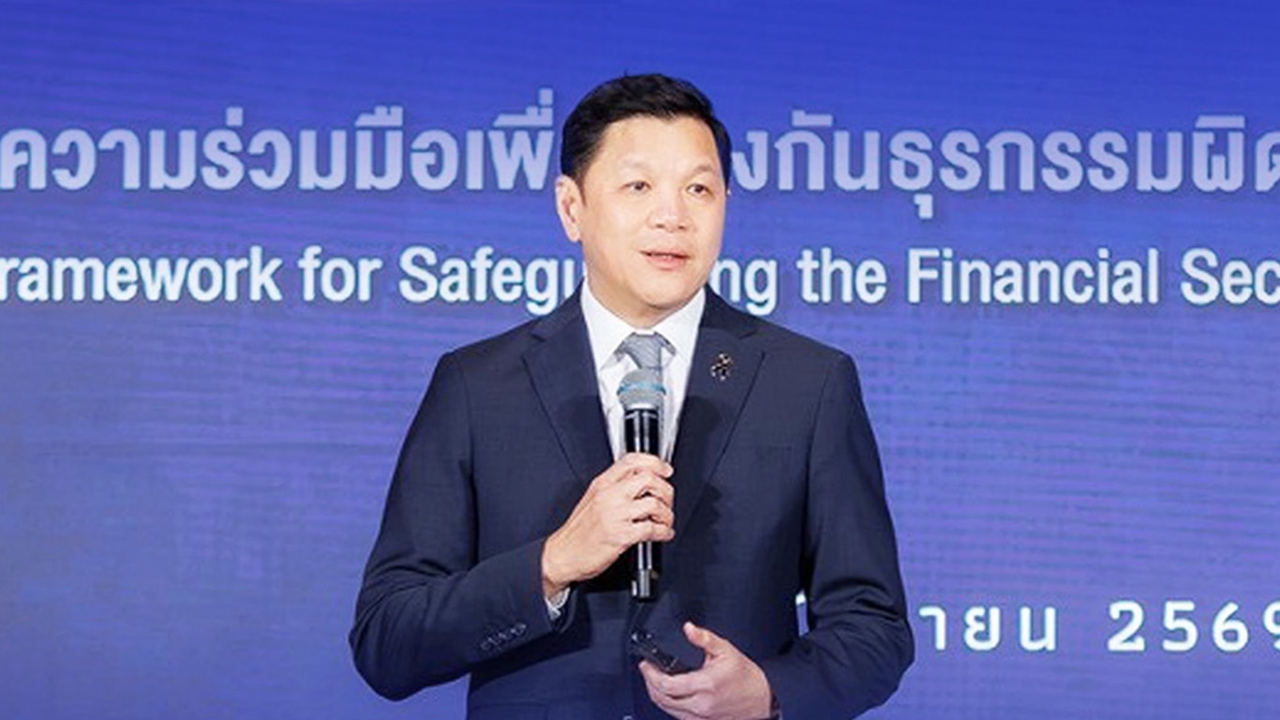
This intention has led to the "Cooperation Framework to Prevent Illegal Transactions in the Financial Sector," where the Bank of Thailand (BoT) will collaborate with 11 agencies to tackle hidden issues within the Thai financial system.
Starting with “Vithai Ratanakorn,” Governor of the Bank of Thailand (BoT) explained that previously, grey money problems were addressed separately, piece by piece. However, as criminals adapt rapidly, the financial sector and related agencies must collaborate to close old loopholes. This cooperation framework between BoT and 11 agencies aims to reinforce the goal of preventing the financial sector from being used as a tool, passage, or channel supporting illegal activities and corruption.
Although the central bank lacks direct authority to detect or stop incidents from occurring, it can create obstacles for grey money seeking financial services, forcing criminals to face "bottlenecks" when transferring or converting assets.
“Making money transfers in and out more difficult, cash withdrawals harder, and converting into other financial assets more challenging, with the hope that illegal transactions will gradually decline,” Vithai said.
This enhanced management of grey money will cover all financial institutions, including commercial banks, state banks, payment gateway providers, currency exchangers, non-bank financial institutions, and both credit and non-credit sectors to ensure uniform standards.
Additionally, BoT will act as a data-sharing intermediary. If wrongdoing is detected, information may be shared with other financial institutions and agencies such as the Anti-Money Laundering Office, the SEC, the National Anti-Corruption Commission, and the police to create obstacles for grey money networks.
Regarding “Payong Srivanich,” Chairman of the Thai Bankers' Association and CEO of Krungthai Bank (KTB) stated that the Thai Bankers' Association (TBA) and member banks have continuously complied with laws and regulations to reduce financial threats and the risk of bank accounts being used for illegal transactions, including nominee impersonation, by establishing industry standards.
However, to combat financial crime and illegal financial channels, coordination between public and private sectors is necessary. He identified four areas currently underway:
1) BoT’s recent measures controlling online gold trading and other areas.
2) The Securities and Exchange Commission (SEC) developing the Travel Rule.
3) The Anti-Money Laundering Office (AMLO) enforcing rules requiring immediate reporting of suspicious transactions.
4) The Department of Business Development (DBD) involved in verifying nominee identities.
Meanwhile, “Yod Chinsupakakul,” President of the Thai Electronic Payment Association (TEPA) believes that payment systems must raise standards based on three key principles: enhancing verification standards, creating obstacles for malicious actors, which will help reduce misconduct, and ensuring timely actions such as data sharing and system upgrades to keep up with criminals’ new tactics.
These principles apply to merchants who must improve Know Your Merchant (KYM) processes, customers who require greater transparency, and importantly, payment networks that need to provide useful data for analysis and linkage.
This year marks a significant turning point for Thailand’s financial sector, as BoT has partnered with many agencies to issue regulations in several areas. Governor Vithai outlined three initiatives introduced this year:
Cash deposit and withdrawal measures, implemented in 2026, have shown clear results. Withdrawals of 5 million baht or more, which previously totaled 100 billion baht per month, have now dropped to 40 billion baht per month.
Regarding cash deposits, it is expected that by October this year, depositors depositing over 5 million baht in cash will need to provide evidence or explain the source of funds. Currently, businesses mainly use transfers or checks, and if the cash source is clear, deposits can proceed normally.
Measures applied to high-value gold purchases, such as using 10–15 million baht in cash to buy gold, require buyers to explain why cash is used and where it came from. Since these measures began, large gold bar withdrawals have fallen by 70%.
Regarding USDT, numerous transactions have involved transferring USDT from anonymous foreign wallets into Thailand and selling immediately or buying USDT and transferring it abroad, resembling money smuggling. Although BoT is not the primary regulator, it has collaborated continuously with the SEC, which is currently holding public hearings and is expected to soon announce regulations regarding USDT and the Travel Rule.
“This is a structural national issue. Grey money may be unable to deposit large sums into banks, forcing it to operate off the system. Authorities are gradually intercepting and closing these loopholes one by one,” Vithai said.
For economic news and government policies, visit ThairathMoney to help you "Better Finance, Better Life" at
Follow the Facebook page: Thairath Money at the linkwww.facebook.com/ThairathMoney