

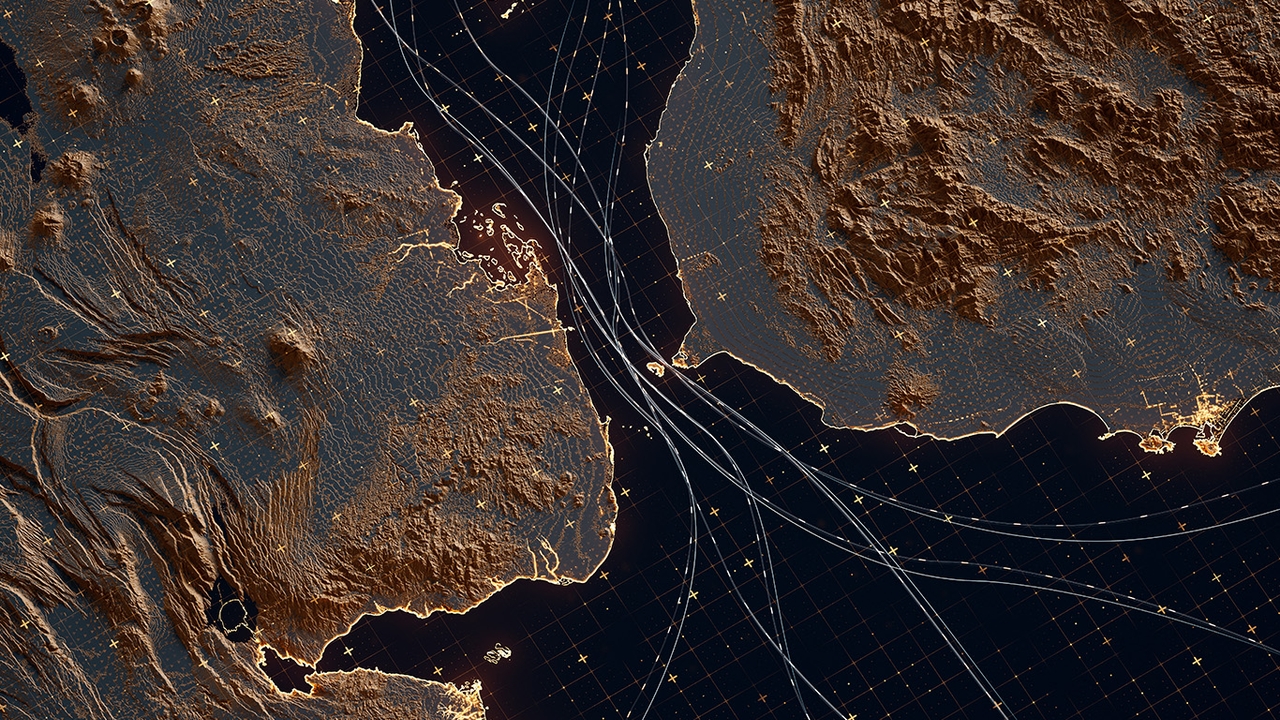
The world has closely monitored the Strait of Hormuz all year, but now the energy risk is expanding to Bab el-Mandeb, the passage linking the Red Sea to the Gulf of Aden, whose name means "Gate of Tears."
Recent moves by Yemen's Houthi group, combined with the shutdown of a key Saudi Arabian oil pipeline, are pressuring Middle Eastern oil export routes at three points simultaneously, potentially reducing global oil supply by as much as 4%.
Reuters reported today that Saudi Arabia's East–West oil pipeline was forced to stop operations after a drone attack originating from Iraq. This pipeline is crucial amid Strait of Hormuz uncertainties, as it transports oil from eastern Saudi Arabia across the country to Red Sea ports, allowing exports without passing through the Strait.
With the pipeline halted, export capacity along this alternative route immediately declines. Reuters estimates that if the disruption persists, it could impact up to 4% of global oil supply.
Tensions escalated further after reports that a ship in the Strait of Hormuz was attacked, caught fire, and its crew evacuated. Iran stated that one of its commercial vessels was attacked offshore, resulting in one death and four injuries.
Dr. Phiphat Luangnarumitchai, Chief Economist at Kiatnakin Phatra Financial Group, explained that if the Strait of Hormuz is considered the "front door" troubled since early this year, then Bab el-Mandeb is the "emergency exit" sustaining global oil transport.
Despite ongoing Hormuz issues, Saudi oil has still been shipped via cross-country pipelines to the Red Sea. However, vessels transporting oil to Asia must pass through Bab el-Mandeb.
Risks have increased as Houthi forces seized Yemen's port city of Mocha and advanced closer to the strait, having declared a blockade on Saudi oil shipments since July.
"If Hormuz is the front door now closed, Bab el-Mandeb is the emergency exit—and someone is now standing watch at that door."
The Houthi advance to Perim Island at the mouth of Bab el-Mandeb heightens concerns, as this route has handled about 4-5% of global oil supply in recent months. This means Middle Eastern energy routes face simultaneous pressure at three points: the Strait of Hormuz, Bab el-Mandeb, and Saudi Arabia's East-West pipeline.
Bab el-Mandeb is also a transit point between Asia and Europe. Under normal conditions, about 12% of global trade and roughly one-quarter of container shipments pass through this route en route to the Suez Canal.
If ships cannot transit this strait, shipping lines must reroute around the Cape of Good Hope in southern Africa, adding about two weeks to voyages, along with higher fuel, freight, and insurance costs.
Lessons from 2024 show the Houthis don't need to close the strait completely to cause disruption; even drone attacks on ships have caused war insurance premiums to spike over tenfold, leading major shipping lines to reroute around Africa, despite U.S. military escorts.
Oil prices exceed $100, markets eye next targets.
Supply risks pushed Brent crude above $107 per barrel, nearing previous highs. Reuters reported oil prices surged over 3% at market open before easing slightly, with Brent at $107.51 and WTI at $102.32 per barrel.
Throughout the week, oil prices rose about 8%, returning above $100 per barrel for the first time since July.
IG analysts estimate that if Saudi Arabia cannot restore the East-West pipeline and talks over the Strait of Hormuz stall, crude prices may approach the previous peak of $119.48 per barrel.
Diplomatic hopes dim as Iran-Gulf Arab talks in Oman were postponed, leaving markets uncertain about the duration of transport issues and infrastructure damage.
Dr. Phiphat believes a more likely scenario is intermittent attacks and disruptions rather than a complete strait closure. This would not cause an immediate oil shortage but would raise energy costs, shipping fees, and insurance premiums, lingering longer in the global economy than expected.
Unlike the 2024 Red Sea crisis, the global economic "cushion" is thinner now: Hormuz is already troubled, global oil stocks have declined, markets worry the U.S. Federal Reserve may hike rates again, and Thailand's fuel fund faces a deficit of tens of billions of baht.
If rising energy and shipping costs feed into consumer prices, inflation may remain high, making it harder for central banks to cut rates. This could dampen investment—the key driver supporting the global economy this year, especially in AI sectors.
The risk focus shifts from "will oil run out?" to whether the world faces stagflation—a slowdown amid high inflation. The worst-case scenario is a return to 2022-2023 levels of energy costs and living expenses.
Three key signals to watch.
Dr. Phiphat identified three critical factors to monitor:
On one hand, the world has experience from the 2022 inflation crisis, the 2024 Red Sea disruption, and oil prices hitting $126 per barrel in April. Businesses have learned to adjust shipping routes and manage inventories better, while central banks have gained experience handling inflation.
On the other hand, if both the "front door" and "emergency exit" of global oil supply face pressure simultaneously, rising costs will extend beyond energy markets to shipping, goods prices, interest rates, investment, and people's living costs worldwide. Dr. Phiphat concluded,
"Geopolitics is beyond anyone's control, but we can control our own preparedness. Don't be afraid, but don't be complacent."
Read economic and policy news with ThairathMoney for "Better Finances, Better Life" at
Follow the Facebook page: Thairath Money at this linkhttps:// www.facebook.com/ThairathMoney