

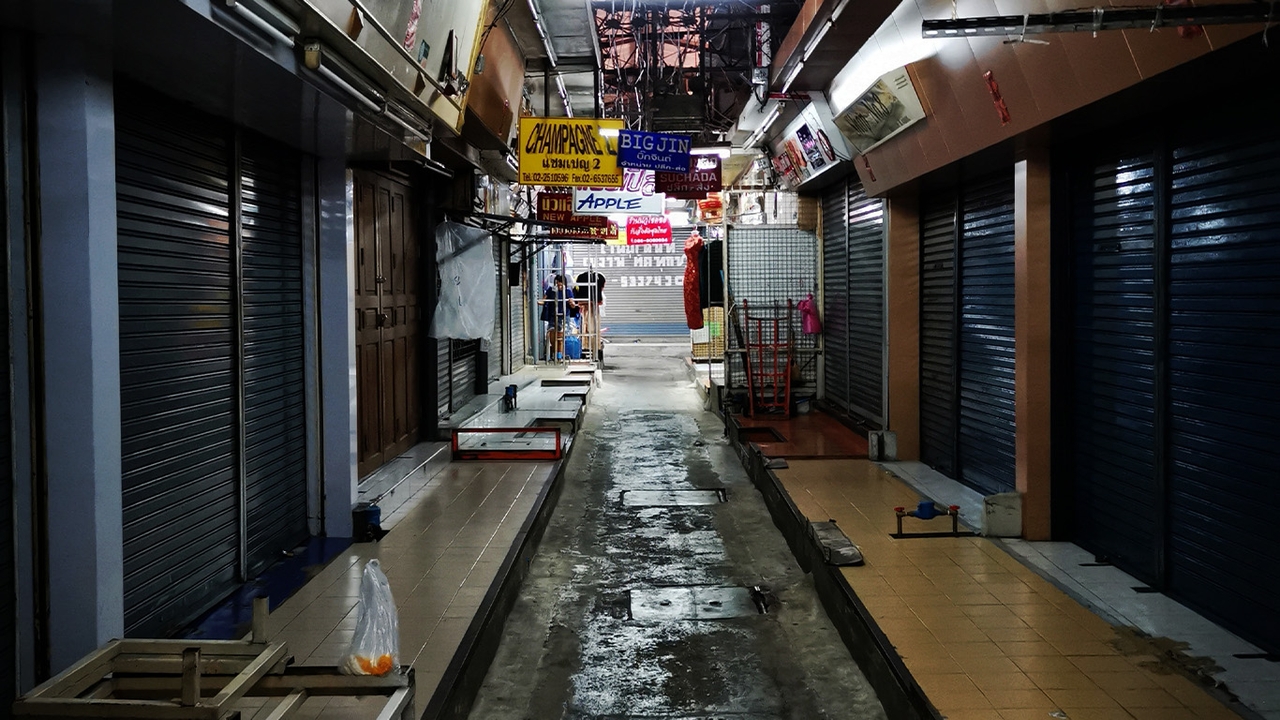
“People aren’t spending much these days.” This phrase is increasingly heard from restaurants, online shops, small business owners, and entrepreneurs who have endured multiple waves of COVID-19 and economic crises.
Some stores report declining sales; others accept lower profits to keep customers. Meanwhile, some have decided to close because continuing operations only adds to their costs.
The silence isn’t limited to storefronts. In the entertainment industry, some artists and concert organizers face unsold tickets and must quickly adjust plans and event sizes to match purchasing power. Of course, unsold concert tickets can have many causes and cannot be attributed solely to economic factors.
However, when many sectors simultaneously feel that “selling is harder,” the question arises: Are Thai people imagining this, or is the economy genuinely troubled?
According to the latest data from SCB EIC, Thailand’s economy in 2026 is still growing, but growth isn’t reaching everyone. Some large companies report increased revenue and profits, while many smaller businesses struggle with slowing income, high costs, and profits that do not recover in line with sales. Some continue operating and paying salaries normally, but their profits are insufficient to cover interest payments for years. These are called “zombie firms.”

SCB EIC defines “zombie firms” as companies operating for over three years that have an interest coverage ratio below 1 for at least two consecutive accounting periods.
Simply put, their operating income isn’t enough to cover interest expenses. While not bankrupt or closed, these companies lack resources to invest, develop products, increase wages, or expand. Most of their income goes to servicing debt and maintaining company status.
In 2025, zombie firms made up about 11.6% of all Thai businesses, up slightly from 11.4% in 2024. This level is still below the peak of 15.1% during the COVID-19 crisis in 2021. However, after a steady decline post-crisis, the figure has started rising again.
Among SMEs, the trend is clearer. The proportion of zombie firms rose from 12.1% to 12.3% between 2024 and 2025, nearly three times higher than among large companies.
These figures partly explain entrepreneurs’ feelings, as many businesses remain registered but have little room to grow.
By industry, SCB EIC finds the highest shares of zombie firms in residential real estate, hotels and accommodations, restaurants, healthcare, telecommunications, and rubber businesses. Residential real estate is worst hit, with about 30% zombie firms—more than twice the system-wide average.
This situation is evident in recent business news, including project development delays, stock clearance efforts, price reductions, asset sales, and debt restructuring negotiations.
In May 2026, over 350 employees of a real estate company submitted a letter to the Labor Commission after wages were delayed for months. The company explained it was urgently selling assets to pay employee salaries. This made liquidity problems, once only financial statements’ content, a very immediate issue for workers.
The manufacturing sector shows similar signs, with reduced shifts, overtime cuts, layoffs, and closures. A notable case involved a plastic factory operating for about 40 years that decided to cease operations due to unsustainable costs.
These cases don’t represent entire industries but reflect that pressures are not confined to small or new businesses. Some large companies also face liquidity problems affecting employees and creditors.

SCB EIC data comparing 2025 revenue and profit margins against the 2022–2024 average show a clear gap between large firms and SMEs. Many large companies in various industries have recovered both revenue and profits, such as:
These companies benefit from capital, technology, supplier networks, and large customer bases, enabling them to handle costs and competition better. They also link to growth drivers like investment, technology, foreign markets, digital transformation, green energy, and electric vehicles.
SMEs, however, paint a different picture. Many industries have rising revenues but falling profits, meaning “selling more but earning less” because raw materials, labor, rent, interest, and price competition drain earnings. SMEs in automotive parts, chemicals, crop production, and computer and electronics sectors face this. Meanwhile, wholesale and retail, food, and residential real estate sectors face pressure on both revenue and profit.
Hotel, restaurant, and healthcare SMEs show some profit improvement but revenues haven’t fully recovered, so they remain far from robust. This explains why national economic growth can occur alongside many entrepreneurs feeling the economy is poor. Income gains concentrate in certain groups, while small shops and businesses must compete intensely for a limited spending pool.
If zombie firms are those just surviving, official business closure data from the Department of Business Development shows another side. From January to August 2026, 11,420 registered companies closed, up from 9,729 in the same period in 2025—an increase of 1,691 or 17.38%.
The registered capital of closed businesses rose faster than the number of closures—from 63.033 billion baht to 112.668 billion baht, an increase of 49.635 billion baht or 78.74%.
This signals that closures are not only among small firms; larger capitalized companies are also exiting the market more frequently.
SCB EIC describes Thailand’s current economic recovery as K-shaped. The upper arm represents large companies and industries linked to investment, technology, and foreign markets, which still have opportunities to increase revenue and maintain profits.
The lower arm represents SMEs relying on domestic consumption, informal workers, and households with slow income recovery. Many have income but little leftover money; many have jobs but fewer work hours and less purchasing power. As household income recovers slowly, consumers prioritize essentials, intensifying competition among shops, restaurants, luxury goods, and entertainment for the existing spending.
Stores reporting fewer customers are not imagining it entirely. Artists seeing empty seats face both industry competition and tightening audience wallets. SME owners with sales but no profit stand near the line between “businesses that can continue” and “zombie firms.” These businesses must cut costs, delay investment, freeze hiring, delay creditor payments, or accept lower profits to buy time.
If the economy and purchasing power recover, some companies may bounce back. But if income growth remains slow, costs don’t fall, and access to financing tightens, some zombie firms may face debt restructuring, asset sales, layoffs, or ultimately market exit.
Source: Department of Business Development, SCB EIC
Read economic news and state policies with ThairathMoney for "Better Finance, Better Life" at
Follow the Facebook page: Thairath Money at this linkhttps://www.facebook.com/ThairathMoney