

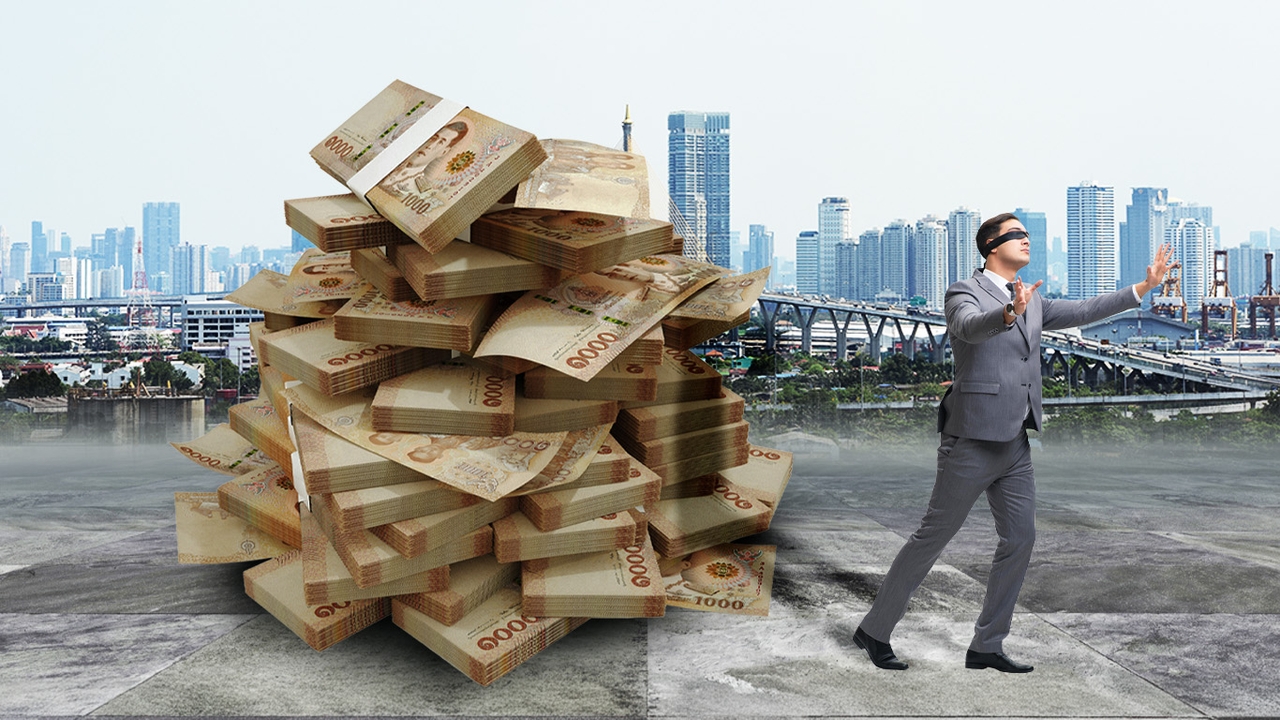
Thailand has long been caught in the cycle of being a "middle-income country," but with strong commitment from both public and private sectors, a new goal has been set: within 11 years, by 2037, Thailand aims to become a "high-income country." Before reaching this point, what obstacles and challenges must Thailand face? Let's hear perspectives from the Asian Development Bank (ADB). Tags: [Thailand economy, high-income country, ADB, economic development, challenges]
Responding to Thairath Money's question about the likelihood of Thailand becoming a high-income country by 2037 if its economy continues growing at the current pace with the same factors in place, Tags: [Thailand economy, growth prospects, high-income status] Chidchanok Annonchar, an economist at the Asian Development Bank (ADB) office in Thailand, Tags: [ADB economist, Thailand, economic analysis] offered the view that while achieving this goal may be difficult because reforms and actual ecosystem results take time, there remains a possibility that Thailand could reach high-income status as targeted.Tags: [economic reform, Thailand, high-income goal, ADB]
"Over the next 11 years, if Thailand undertakes serious reforms and avoids any major accidents, and if high-tech industries come to Thailand — which we can adopt quickly as we did 50-60 years ago when the automotive industry built local suppliers, creating real employment and a ready ecosystem," Chidchanok said.Tags: [economic reform, high-tech industry, employment, Thailand economy]
The opportunity for Thailand to become a high-income country "has arrived," but it depends on how it is built—especially attracting new economy sectors and new technologies to Thailand, whether in healthcare, emerging technologies like Data Centers, or agriculture, where Thailand has strengths in traditional resources and distinguished food industry innovations meeting high standards. However, agriculture remains weather-dependent. In tourism, the challenge is to increase value to boost efficiency and generate quality employment, differing from traditional service models.Tags: [new economy, technology, agriculture, tourism, Thailand economy]
However, a major issue for Thailand is opening up to new technologies while maintaining standards for regulation and organization to avoid adverse impacts on people. For example, in Singapore, although investment in Data Centers is welcomed, strict oversight controls resource use. Some countries are considering higher taxes for high resource consumption or requiring increased local content, which Thailand may not yet enforce due to lack of domestic local content in some areas. Nonetheless, new technologies entering Thailand should create employment domestically.Tags: [technology regulation, Data Centers, local content, employment, Thailand]
The main challenge for Thailand remains raising productivity amid an aging society with a declining population. Thus, the key issue may not just be population size but how to enhance the efficiency of the existing workforce—improving productivity so people can work more while feeling less fatigued.Tags: [labor productivity, aging society, workforce efficiency, Thailand]

Anna Fink, senior economist at the Asian Development Bank (ADB) office in Thailand,Tags: [ADB economist, Thailand, economic forecast] discussed ADB's latest forecast revision in September 2026, stating that Thailand's GDP growth for this year is now projected at 2.0%, up from 1.8% forecast in July 2026. This upward revision is due to improved exports driven by technology-related products, private sector investment, and government measures to mitigate the impact of rising energy prices.Tags: [GDP growth, exports, investment, government policy, Thailand]
However, the GDP forecast for 2027 has been lowered to 1.9% from the previous 2.0%, as government stimulus effects are expected to fade and export momentum normalizes, slowing growth. Nevertheless, tourism is projected to recover to 35 million visitors, sustaining growth.Tags: [GDP forecast, economic slowdown, tourism recovery, Thailand]
Regarding inflation, despite rises due to higher energy prices, it remains within the central bank's target range. General inflation is expected to be 2.5% in 2026, down from the previous forecast of 2.9%, and slow further to 1.3% in 2027 as energy prices ease, reducing supply-side pressures.Tags: [inflation, energy prices, monetary policy, Thailand]
Finally, amid various uncertainties, ADB highlights four critical factors to watch that could impact Thailand:Tags: [risks, Thailand economy, ADB]
Follow economic and government policy updates with ThairathMoney atTags: [economic news, government policy, Thailand]https://www.thairath.co.th/money/economics/thai_economicsTags: [ThairathMoney, economic news]
Follow the Facebook page: Thairath Money at this link https://Tags: [social media, Thairath Money]www.facebook.com/ThairathMoneyTags: [Facebook, Thairath Money]