

What new economic engine will Thailand build as its population ages, traditional industries face fierce competition, and economic growth can no longer rely on cheap labor as before?
One answer may not be starting entirely new industries but leveraging Thailand's existing strengths—agriculture, manufacturing, medicine, tourism, and scientific personnel—enhanced with advanced technology to create higher-value products and services.
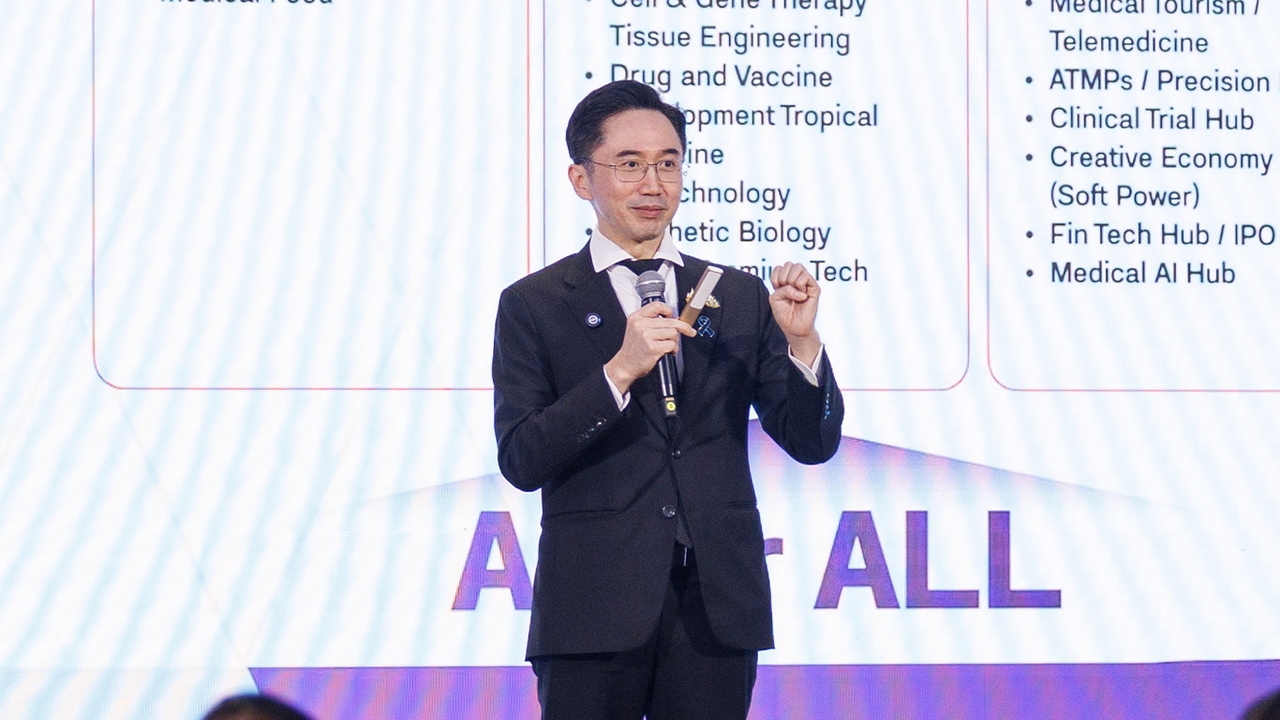
This is the key concept that Professor Dr. Yotsanan Wongsawat, Deputy Prime Minister and Minister of Higher Education, Science, Research and Innovation, presented at the Thailand HealthTech NEXT forum organized by TISCO Bank, highlighting the strategy to drive Thailand's economy.

He positions the health and wellness industry—or Wellness Economy—as one of the country's new growth engines, linking it to AI, semiconductors, medical devices, biotechnology, and scientific infrastructure development.
The core of this concept is not just generating income from health businesses but improving Thai people's health, reducing economic burdens from illness, and building a technology industry where Thailand owns the knowledge and intellectual property independently.
Professor Dr. Yotsanan began by explaining that HealthTech development should not be seen merely as profit-making but must balance economic growth with improving public health.
Especially as Thailand enters an aging society, facing challenges in labor productivity and increasing healthcare costs.
Thailand must simultaneously improve public health to reduce illness and apply science, technology, and AI to enhance productivity in existing industries.
However, increasing productivity only maintains growth in existing sectors; to generate new income, Thailand needs to develop industries with higher added value.

This approach is divided into two levels.
Professor Dr. Yotsanan wants to shift the perception that wellness is limited to spas, hotels, or health tourism; it also includes disease prevention, drug and vaccine development, medical devices, genetic analysis, biotechnology, health food production, and electronics and AI industries.
He cited McKinsey Global Institute’s study estimating that poor health costs the U.S. economy about 16% of GDP annually due to premature death and lost labor potential.
Nearly two-thirds of health improvement potential comes from prevention, behavior change, and managing social and environmental factors, not just treatment. Economic opportunities in HealthTech arise not only when people are ill but also from technologies that help prevent illness.
For example, instead of focusing only on treating advanced cancer, the health industry can develop early risk screening tools and technologies that help people modify behaviors before disease onset.
This strategy covers interconnected industries and services, including herbal and cosmeceutical technology, pharmaceuticals and vaccines, medical devices and diagnostics, advanced therapy medicinal products (ATMPs), synthetic biotechnology, genomics and precision medicine, clinical trial centers, rehabilitation medicine, traditional Thai medicine, future foods, functional foods, and personalized nutrition.
All require critical support systems such as funding sources, medical innovation frameworks, legal and safety standards, and environmental goals like Net Zero.
Another key idea is using health market demand as a driver for domestic advanced technology development—a Demand-Pull Catalyst.
Instead of asking which chip Thailand should produce to compete globally, Professor Dr. Yotsanan suggests starting with what technology the Thai health industry needs.
For example, health monitoring wearables include various technologies like sensors, semiconductors, wireless communication, batteries, and AI. If Thailand can develop devices that meet health market needs, it will create domestic demand for components and technologies.
This opens opportunities for Thai companies to design products, develop technologies, and hold their own intellectual property without competing head-on with large global manufacturers.
Thailand’s advantage may lie not in mass low-cost production but in manufacturing specialized, precise, high-value technologies.

To turn this vision into a clear strategy, the Ministry of Higher Education, Science, Research and Innovation proposes three flagship projects, each linking high-value industries.
These three projects are interconnected: Siam Terra provides raw materials and bio-bases; Siam Silica offers advanced technology and components; Siam Medica creates high-value health products and services.
In other words, Thailand can use Wellness as a lead market to generate technology demand in other industries.
A vital part of the strategy is developing AI not just by importing foreign technologies but by creating knowledge and innovations based on Thailand’s needs.
Professor Dr. Yotsanan proposes shifting from asking how to use existing AI in healthcare to how Thailand can use AI to make new scientific discoveries.
Under the National Strategic AI: Seven Strategic Missions concept, seven key missions are defined as follows.
Ultimately, Thailand must create its own innovations rather than just buying technology. Professor Dr. Yotsanan emphasized, "Thailand has capable scientific and technological personnel but lacks a system to unite these talents to achieve national-level results."
The challenge is not only increasing researchers or technology investment but building an ecosystem where researchers, universities, investors, businesses, and government collaborate effectively.
Within this concept, Thailand should leverage its domestic advantages as a starting point for innovation development, especially in health industries with medical personnel, manufacturing capabilities, agricultural base, and health service markets.
Then use AI, science, and Deep Tech to enhance capabilities across the value chain—from research, technology design, production, testing, certification, to global market entry.
Read economic news and government policies with Thairath Money to help you achieve “Good finances, good life” athttps://www.thairath.co.th/money/economics
Follow the Facebook page: Thairath Money athttps://www.facebook.com/ThairathMoney