

Recently, reports have indicated that Thailand's economic figures, such as GDP for 2026 and beyond, will improve following revisions to the Manufacturing Production Index (MPI) to better reflect the current economic structure. However, the question remains whether adjusting these details will translate into real improvements in the national economy and the livelihood of Thai people as reflected by those numbers.
Let us delve into the economic outlook and potential impacts on Thailand as presented in Monetary Policy Forum 3/2026, which summarizes the latest perspectives from the Monetary Policy Committee (MPC).
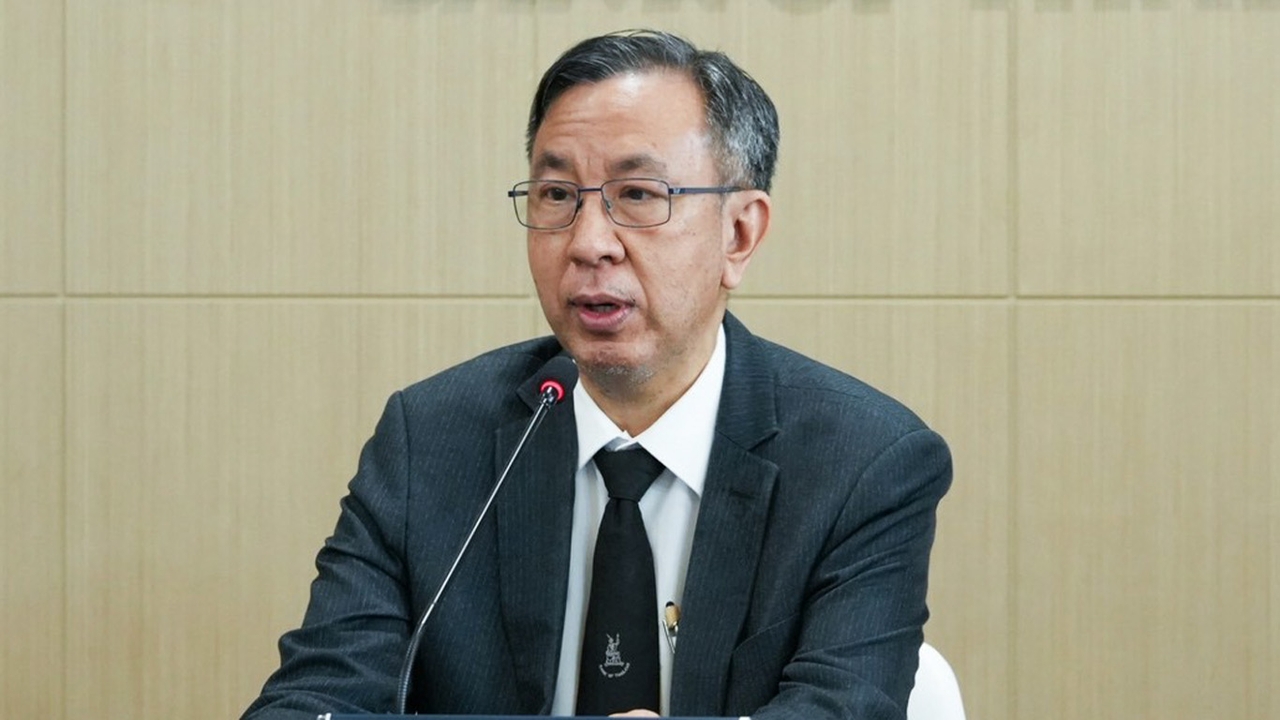
Don Nakornthap, Assistant Governor for Monetary Policy, Bank of Thailand (BOT). He stated that in the most recent MPC meeting, economic growth forecasts were revised upward, with GDP projected to expand by 2.4% in 2026 and 2.1% in 2027.
The main driver of Thailand's economy is its participation in technology and artificial intelligence (AI) supply chains, alongside various AI-related economic activities including exports and business investments in service sectors such as Data Centers and Cloud services. This reflects that approximately half of Thailand's economic momentum is powered by AI trends, with AI-related contributions accounting for about 1.2% of GDP in 2026 and 0.9% in 2027.

Nonetheless, Thailand's economy is experiencing K-shaped growth: businesses linked to AI continue to grow steadily with consistent income, whereas other sectors grow more slowly. This leads to a concentrated recovery. Additionally, the Thai labor market is becoming more fragile, as indicated by a high proportion of unemployment benefit claims and low income growth prospects. Some groups, such as farmers, face income contraction due to rising costs. Total labor income is expected to grow only 1.7% in 2026 but is anticipated to gradually recover in 2027.
A key reason is that AI-related businesses may require less labor than other industries, while AI export sectors rely heavily on imported raw materials, with import content reaching 68%, limiting domestic value added. Consequently, private consumption is pressured by household debt and weak purchasing power.

At the latest MPC meeting, the committee decided to keep the policy interest rate steady at 1.00% per annum, aiming to maintain price stability while supporting sustainable economic growth. The MPC reaffirmed its commitment to accommodative monetary policy alongside targeted financial measures to support an uneven economic recovery that still grows below potential.
However, risks remain that require close monitoring, including global geopolitical uncertainties, monetary policy developments, and potential trade policy impacts on Thailand's economy.
Inflation risks should also be watched carefully, particularly the possibility of temporary spikes due to supply-side factors such as energy prices, uncertainties from the Middle East conflict, and El Niño effects. Nonetheless, headline inflation is forecast at 2.1% in 2026 and 1.3% in 2027.
Additionally, the side effects of prolonged low interest rates must be considered, including the accumulation of vulnerabilities within the financial system and possible inefficient resource allocation. Low financial costs may undermine long-term economic growth potential.
For ongoing economic data and government policy updates, follow ThairathMoney athttps://www.thairath.co.th/money/economics/thai_economics
Follow the Facebook page Thairath Money at this link: https://www.facebook.com/ThairathMoney