

"Affordable items are easy for people to buy." Tags: [consumer behavior, pricing, retail]
In an era where online shopping is as simple as a fingertip tap and sometimes cheaper than buying in-store, many people even wait longer to buy tissues because imported ones are less expensive than domestic options. Yet these small everyday items are changing the business sector's structure and affecting Thailand's economy.Tags: [e-commerce, consumer goods, economy impact]
Data fromTags: [] the Puey Ungphakorn Institute for Economic Research (PIER Research)Tags: [economic research, PIER] has noted that low-value imported goods (not exceeding 1,500 baht) have rapidly expanded over the past decade. In 2025, this market was valued at 37.5 billion baht, with about half—around 20 billion baht—comprising consumer products used daily.Tags: [low-value imports, market growth, consumer products]
One reason the low-value import market has grown is the e-commerce and logistics trend that reduces shipping costs, combined with the de minimis rule that exempts imports valued under 1,500 baht from import duty and value-added tax (VAT). These goods represent 5% of total online sales from three major e-commerce platforms: Shopee, Lazada, and TikTok.Tags: [e-commerce, logistics, tax exemption, de minimis]
Looking closer at the 2023–2025 period, over 80% of low-value imported goods originate from China. Detailed data shows this trend across all product categories; for example, in 2025: 1) 90% of consumer goods came from China, 2) 75% of raw materials and intermediate goods were Chinese, and 3) 65% of capital goods were from China.Tags: [import origins, China, product categories]
It can be concluded that Chinese goods, especially low-value items under the de minimis rule, have penetrated every level of Thailand's market, overtaking Japan, which was once the top supplier years ago. Back in 2016, Japan held 35% market share, followed by China at 20%.Tags: [market share, China, Japan, import trends]
The influx of foreign goods has forced Thai SMEs to adapt, but their higher costs make competition difficult. Even intermediaries who used to import Chinese goods for resale have closed businesses because manufacturers now sell directly through platforms.Tags: [SMEs, competition, direct sales, intermediaries]
Simply put, Thai SMEs selling domestically usually pay taxes and possibly VAT, whereas foreign companies selling via apps avoid these costs. Thus, the government has sought to address this unfairness between foreign and domestic sellers.Tags: [tax fairness, SMEs, foreign sellers, VAT]
The first wave started on 5 Jul 2024, when the government began collecting VAT on imports valued under 1,500 baht—meaning VAT was charged from the first baht. The second wave involves import duty collection, with Customs Department canceling exemptions on low-value imports from 1 Jan 2026, with rates typically between 10–30% depending on the product category.Tags: [VAT, import duty, tax policy, customs]
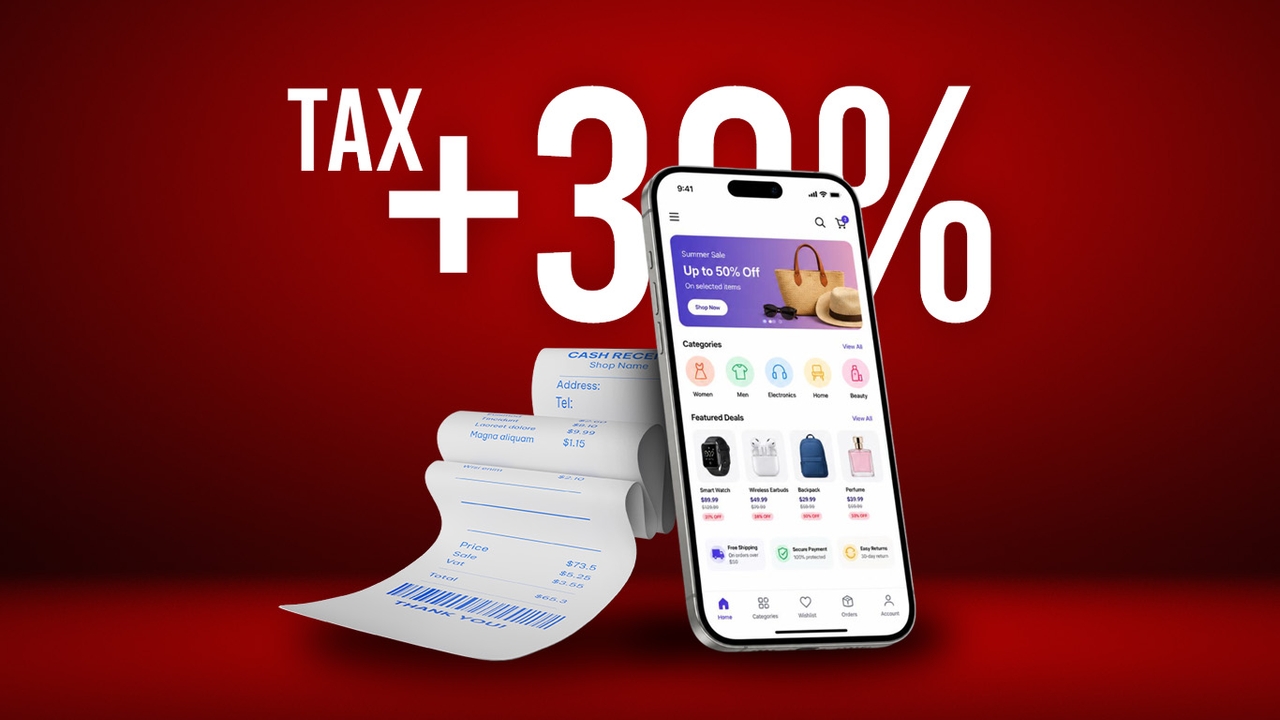
Now the third wave has arrived: the Cabinet has approved revised rules for import duties on e-commerce goods entering through express and international mail channels, with customs rates capped at 30%.Tags: [import duties, e-commerce, customs, government policy]
Of course, the government's goal is to create fairness so Thai SMEs can compete better, but how much this will support them remains to be seen.Tags: [government goals, SME support, market fairness]
Policy changes are positive, but deeper analysis is needed. An insightful perspective comes fromTags: [] Professor Dr. Athiphat Muthitacharoen from the Economics Faculty, Chulalongkorn University.Tags: [expert analysis, economics, academia] He highlights three main observations on the government's latest policy adjustments:Tags: [policy analysis, government, tax]
1. Not all goods become 30% more expensive.Tags: [pricing, tax impact] This latest measure cancels the general reduced tariff for goods imported via specified channels and reinstates the standard tariff rates per product category. Thus, impacts differ by product, for example:Tags: [tariff policy, product variation]
- Mobile phones and screen protectors may see tariffs rise from 5–10% to 30%.Tags: [tariffs, electronics]
- Clothing and apparel usually already pay 30% tariffs, so no change.Tags: [tariffs, apparel]
"Although tariffs increase, selling prices might not rise proportionally because sellers may absorb some costs by reducing profits or platforms may offer discounts. Therefore, the key question is not just how much tax rises, but ultimately who bears the increased tax burden," Prof. Dr. Athiphat said.Tags: [tax burden, pricing strategy, market response]
2. Products competing most with Thai SMEs may not receive additional support.Tags: [market competition, SMEs, tax policy] In 2025, Thailand imported about 37.5 billion baht of low-value goods. While this is small relative to total imports, examining specific products reveals clearer impacts. For example, women's clothing imports constitute 45% of this segment and are already taxed at 30%, yet this is a highly competitive area for Thai SMEs.Tags: [import data, product segments, competition]
The government should consider how tax rates actually change for each product group and assess competition with domestic producers. Therefore, focusing only on tax ceilings is insufficient; it is essential to identify which products truly compete with Thai producers.Tags: [policy recommendation, tax analysis, market competition]
3. Importers may not raise prices but alter import methods.Tags: [import strategies, pricing] A case study from Temu in the U.S. shows that after authorities tightened rules on goods from China and Hong Kong, Temu changed its approach from shipping goods directly from China to customers to importing them into the U.S. first, then distributing domestically. This situation could happen in Thailand, with sellers relocating warehouses locally and selling from within the country.Tags: [case study, import logistics, market adaptation]
"When evaluating these measures, we should not only look at how many packages from China decrease or how much customs revenue rises but also consider how much more consumers pay, how well Thai SMEs compete, and how foreign sellers adjust import methods. The policy goal should not be merely to make imports more expensive but to create a fairer playing field without excessively increasing consumer costs," Prof. Dr. Athiphat said.Tags: [policy evaluation, consumer impact, SME competitiveness]
References:Tags: [references]Athiphat MuthitacharoenTags: [author], Ministry of Finance,Tags: [source]PIER ResearchTags: [source]
Follow economic and government policy information at ThairathMoney:Tags: [information source, economics]https://www.thairath.co.th/money/economics/thai_economicsTags: [web link]
Follow the Facebook page: Thairath Money at this link https://Tags: [social media]www.facebook.com/ThairathMoneyTags: [social media]