

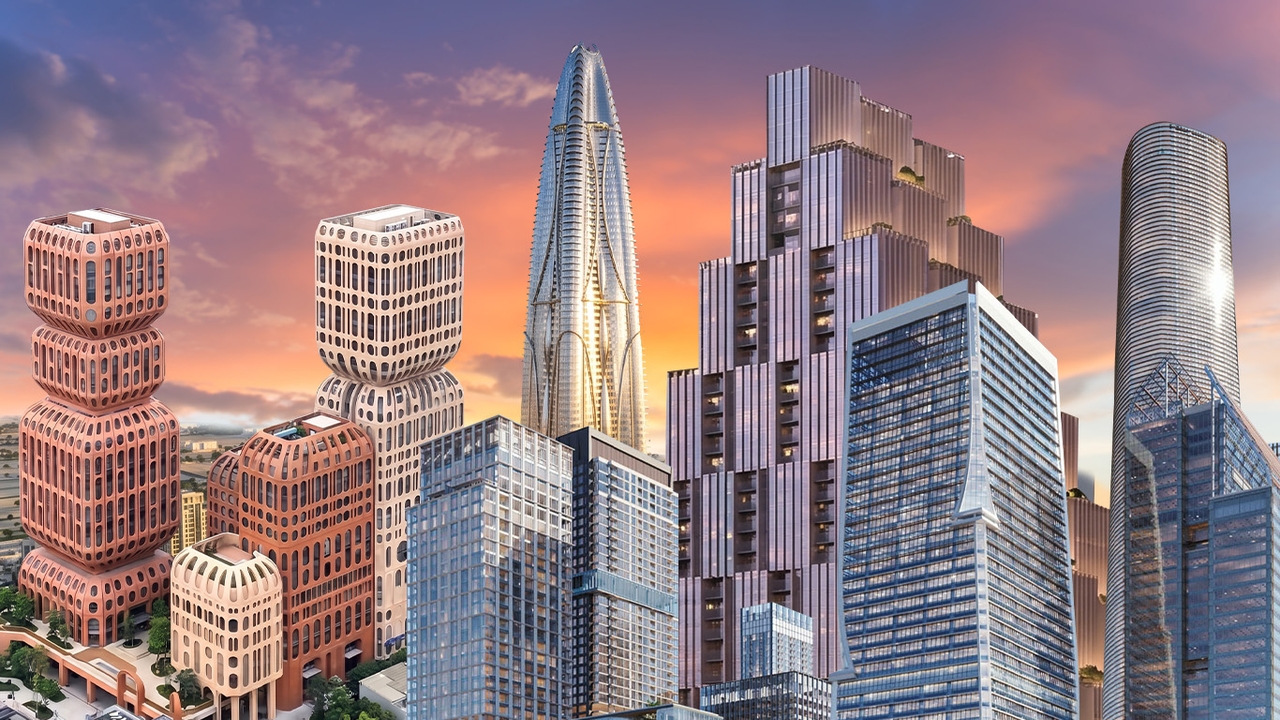
Bangkok is once again under close watch as a global real estate investment hub, with major capital signaling progress on mega-projects—from creating towering landmark skyscrapers and expanding super-luxury retail and residential empires to transforming historic hotels into new city destinations.
The latest development began with Mohamed Alabbar, Dubai's real estate magnate and founder of Eagle Hills and Emaar Properties, known for developing the Burj Khalifa, announcing interest in a mixed-use project in Bangkok valued initially at around 160 billion baht, aiming to create world-class architecture that could become the tallest building globally if feasible.

The project envisions a comprehensive real estate development including residences, hotels, retail spaces, and office buildings. Eagle Hills will drive initial investment, with Emaar possibly taking a role later in hotel and retail operations.
Although the official location remains unannounced, reports link the project to the former TOT office land near BTS Chidlom station, covering just over 18 rai. However, this is less than the 20-30 rai site size Alabbar mentioned, so clarity on location and Thai partners is still awaited.
A photo with Sorapoj Techakraisri, PACE Development’s executive and former developer of the Mahanakhon skyscraper (now King Power Mahanakhon), has fueled speculation about potential cooperation between foreign investors and Thai developers, though no joint venture structure has been confirmed.
What’s intriguing about these moves is not just the attempt to build the world’s tallest building but that foreign capital views Bangkok as a global destination for real estate development, using architecture, hotels, retail, and upscale residences to generate value.

Around the same time, Central Group and Central Pattana Public Company Limited (CPN) announced a major joint venture to connect Central Embassy with its extension Central Embassy 2, creating a super-luxury mixed-use landmark in central Bangkok with total investment exceeding 83 billion baht.
This plan combines Central Group’s international luxury retail network with CPN’s expertise in large-scale real estate development and management.
Under the new structure, the joint venture will hold 51% by Central Group and 49% by CPN, acquiring all shares held by Hongkong Land in Central Embassy 2, increasing the joint venture’s stake in the extension project from 51% to 100%.
Simultaneously, the joint venture will invest in a 30-year leasehold of the original Central Embassy project, excluding the Park Hyatt Bangkok hotel. Once connected, the combined projects will have approximately 600,000 square meters of floor space—150,000 from the original and 450,000 from Central Embassy 2—covering retail, office, and residential areas.

A key point is Central Embassy’s transformation from a leading luxury shopping center into a large-scale asset integrating shopping, work, and living spaces, boosting control over prime Bangkok real estate to generate long-term multi-business income and maintain competitive advantage in the luxury market.
Data from Savills Thailand shows that the Ploenchit-Chidlom area still holds multiple high-potential land plots slated for upscale development, which will shape the future direction of the real estate market.
Continued investment by major developers in this area reflects confidence in the upper-end purchasing power, despite overall real estate market pressures from economic challenges and fragile demand.
If Dubai’s mixed-use project worth 160-170 billion baht materializes here, it would further strengthen Bangkok’s role as a regional business and tourism center, with opportunities to ascend as a global destination attracting international investors, operators, and tourists.
However, success of large projects depends not only on building height or investment size but on balancing hotels, retail, offices, and residences to support each other and sustain economic activity throughout the day.

Looking at Bangkok’s real estate trends, competition to build landmark skyscrapers continues and is increasingly used as a differentiator for large mixed-use projects.
An important example is the Signature Tower in One Bangkok’s second development phase, planned to be about 436 meters tall with 92 floors, becoming a key Bangkok landmark. Meanwhile, AWC plans a new phase for Asiatique, proposing a 450-meter, 100-floor tower to elevate the riverside area as an international tourism and entertainment destination.
Dubai capital’s entry adds a new dimension to competition—not just for Thailand’s tallest building but possibly the tallest in the world.

Yet, constructing super tall buildings in Bangkok faces constraints from urban planning, floor area ratio (FAR), setbacks, aviation safety, engineering, and environmental impact assessments, so feasibility cannot be judged by investment figures alone.
From a business perspective, tall buildings are more than grandeur symbols; they help create recognition, attract tenants, buyers, and tourists worldwide, and raise surrounding property values if they generate real economic activity.
Another reflection of Bangkok’s real estate transformation is the Hatai Bangkok project on the former Narai Hotel site on Silom Road, which opts to demolish and redevelop completely rather than renovate the old hotel.
Narai Hotel opened in 1968 and was once a key hotel symbolizing Silom’s prosperity. Narai Hospitality Group has announced a new chapter for this asset by collaborating with Heatherwick Studio, a renowned British design firm.

The Hatai project is planned as a mixed-use development blending two luxury hotel brands:
According to released information, the two hotels will offer over 300 rooms combined, with facilities for meetings and events. The lower floors will include retail shops, restaurants, and public spaces accessible to visitors.
A notable feature is the design of public spaces with a restored canal flowing through, green areas, event plazas, and elevated walkways, totaling approximately 5,200 square meters of public space.
The design concept draws inspiration from Thai artisan lantern crafts, reinterpreted architecturally as layered lantern forms to create a new identity for Silom’s skyline. The project is scheduled to open in the first quarter of 2028, according to the latest information on Hatai’s website.
What makes this project interesting is revitalizing a historic asset over 50 years old by integrating hotel, retail, and public spaces to redevelop highly valuable land that meets modern tourist demands.
Going forward, the key focus will not be which project finishes first or which building is tallest but the ability to convert investment into real economic activity—attracting multinationals, creating jobs, boosting tourism revenue, and sustaining space demand.
Becoming a Global Luxury Destination requires more than tall buildings, luxury hotels, or expensive malls; it demands a city ecosystem that attracts wealthy people worldwide to live, invest, do business, and return repeatedly. A major challenge for Bangkok is ensuring these mega-projects truly add value to the city and that growth is not limited to the luxury market alone.
Read economic news and government policies with ThairathMoney to help you "Good Finances, Good Life" at
Follow the Facebook page: Thairath Money at this linkhttps://www.facebook.com/ThairathMoney