

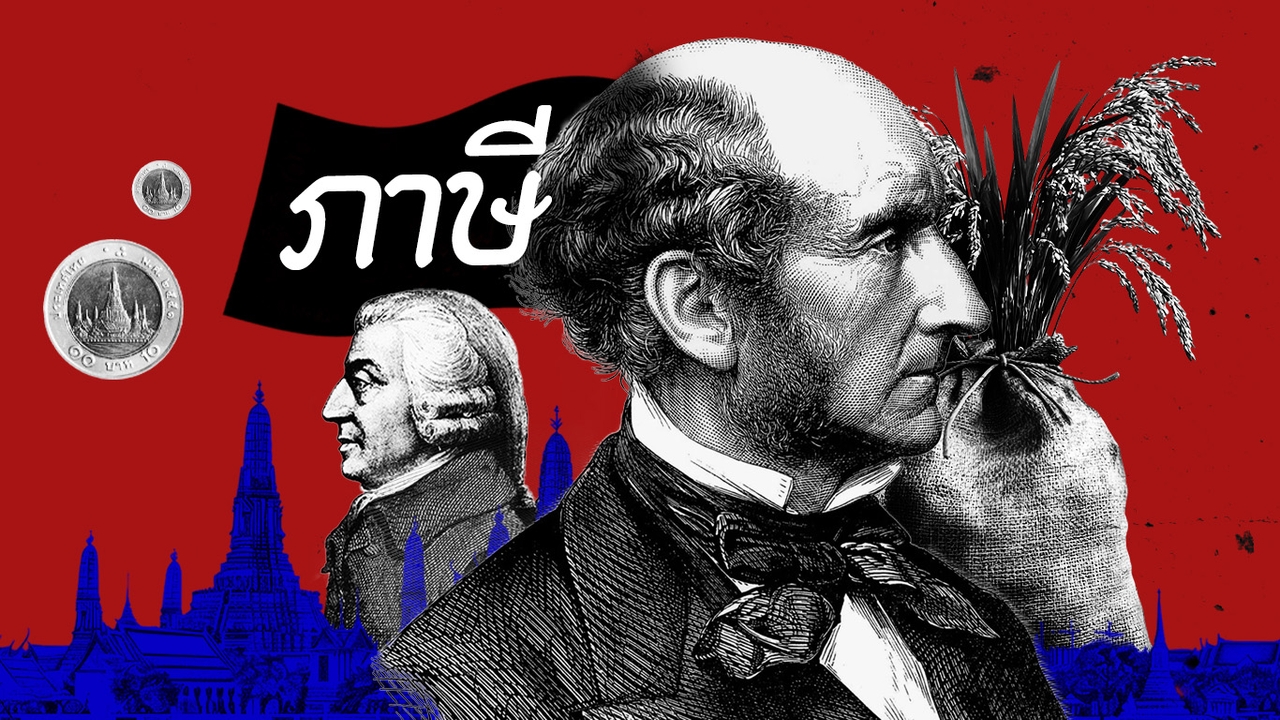
At the end of the year, it is time to calculate your own taxes: how much income you earned, how much tax you owe, what deductions you qualify for, and how to prepare for filing your personal income tax early in 2027 for the 2026 tax year. Those required to file paper returns must do so by 31 March 2027 GMT+7.
For salaried employees, "tax" is a familiar concept since monthly withholding tax appears on their pay slips. Meanwhile, freelancers, business owners, or those with multiple income sources must gather income and expenses to calculate their own tax obligations.
In Thailand, the year 2027 is a noteworthy timeline as the Ministry of Finance is advancing the Negative Income Tax (NIT) approach, which will change the rules for tax filing among Thai people from previous practices.
But before getting there, have you ever wondered why we have to pay taxes, when the state's right to collect money or property from citizens began, and why those with higher incomes should pay taxes at higher rates?
According to Bnomics by Bangkok Bank, going back thousands of years, taxes have been a key tool enabling states and kingdoms to survive, gradually evolving into revenue collection systems with rules, debates about fairness, and significant economic roles as we see today.
Before the terms "income tax" or "VAT" existed, ancient civilizations already had systems to collect resources from their people.
In ancient Egypt, farmers had to give part of their produce to rulers, while Mesopotamia, China, and Rome had forms of collecting resources in produce, money, or labor.
The rice farmers gave might be used to feed armies, conscripted labor could build roads or irrigation systems, and collected money helped sustain kingdom administration.
Simply put, early taxes were resources rulers used to build and maintain state power, but the problem was collection depended on rulers' power, leaving people little say or certainty about how much to pay.
As economies and trade grew, the tax question shifted from "What can the state take from the people?" to "How should the state collect taxes fairly?"
A key turning point was in 1776 when Scottish economist Adam Smith published The Wealth of Nations, proposing four tax collection principles still influential in tax system design today.
The first principle is Equity: citizens should share tax burdens proportionally to their income and benefits received from state protection.
The second is Certainty: taxpayers must know how much, when, and how to pay, not subject to arbitrary decisions by collectors.
The third is Convenience: paying taxes should be easy and timed when people have income.
The last is Economy: tax systems should minimize administrative costs and unnecessary burdens.
Smith’s ideas brought clearer tax rules and raised key questions still debated today: how can states collect money without taxpayers feeling unfairly treated?
In the 19th century, the Industrial Revolution rapidly expanded factories, large businesses, and wage labor, while income and wealth disparities gained social attention.
Economists like David Ricardo and John Stuart Mill focused on tax impacts on production, capital accumulation, and tax burden distribution.
A key question: if two people have vastly different incomes, is a flat tax rate fair?
Imagine one person earns 20,000 baht monthly, another 200,000 baht. If both pay the same tax proportion, the tax amount differs, but their remaining living funds and ability to bear the tax differ greatly.
This gave rise to the Ability to Pay concept, suggesting higher earners should bear a greater tax share.
This concept underpins progressive income tax systems used in many countries, including Thailand, where higher net incomes face higher tax rates in steps.
However, fairness questions persist since high earners may have more tax planning options, including investments, financial products, or legal deductions.
Thus, even if rich people face higher rates, they may use benefits to reduce their tax burden more than average taxpayers.
Looking at Thailand, tax fairness is a close concern. Revenue Department data from 2025 filings for the 2024 tax year shows 12.57 million returns filed, but only 5.14 million actually paid taxes.
This shows that filing a tax return does not always mean owing tax, as deductions and expenses can reduce net income below the taxable threshold.
For 2027 filings on 2026 income, taxpayers should first gather all income information, including salary, wages, bonuses, freelance income, rent, royalties, or investment returns.
Then check expenses and deduction rights before calculating net income tax according to progressive rates.
Those with multiple income types should consider tax calculation methods per income category and legal conditions, not apply one formula to all.
Another key 2027 focus is the Negative Income Tax (NIT) approach, which the Ministry of Finance plans to push alongside linking citizen income databases.
The main idea is to integrate citizens into the tax filing system to give the state clearer income data. Those with net income above the threshold pay regular progressive taxes, while those below may receive assistance or welfare under set conditions.
Simply put, NIT means the tax system not only collects from those above thresholds but also connects with helping low-income people.
If successful, the system could give the state a more comprehensive income picture and enable better-targeted assistance, based on income data as the key foundation.
However, details on income thresholds, eligibility for aid, and compensation calculations are still pending official clarity, so the public should not assume all below-threshold earners will automatically receive help.
Ultimately, whether income tax withheld from salaries, value-added tax included in prices, or taxes on specific goods, government-collected money becomes revenue allocated through the national budget.
These budgets fund many areas: public hospitals and healthcare, education and schools, roads, transport systems, electricity, water, economic development, security, justice processes, public servant salaries, and public debt payments.
In other words, tax money is part of the cost of shared services and infrastructure. While we may not see our exact payments returned directly, the benefits appear in public service quality and social opportunities.
However, having budgets for hospitals, schools, or roads does not guarantee every baht is used efficiently. Citizens have the right to question whether tax collection is fair, whether budgets address actual problems, and how transparent and effective spending is.
From ancient Egyptian farmers paying tributes to rulers, to today’s salaried workers checking income and deductions before filing online, taxes have traveled through history for thousands of years, changing roles with economic and social forms.
What remains relatively constant is that thousands of years ago, people had little choice about paying tributes, but today, citizens should confidently ask whether their tax money is collected fairly and used effectively to benefit society.
Sources: Revenue Department, Ministry of Finance, Bnomics by Bangkok Bank.
Read economic news and government policies with ThairathMoney to help you "Better Finance, Better Life" at
Follow the Facebook page: Thairath Money at this linkhttps://www.facebook.com/ThairathMoney