

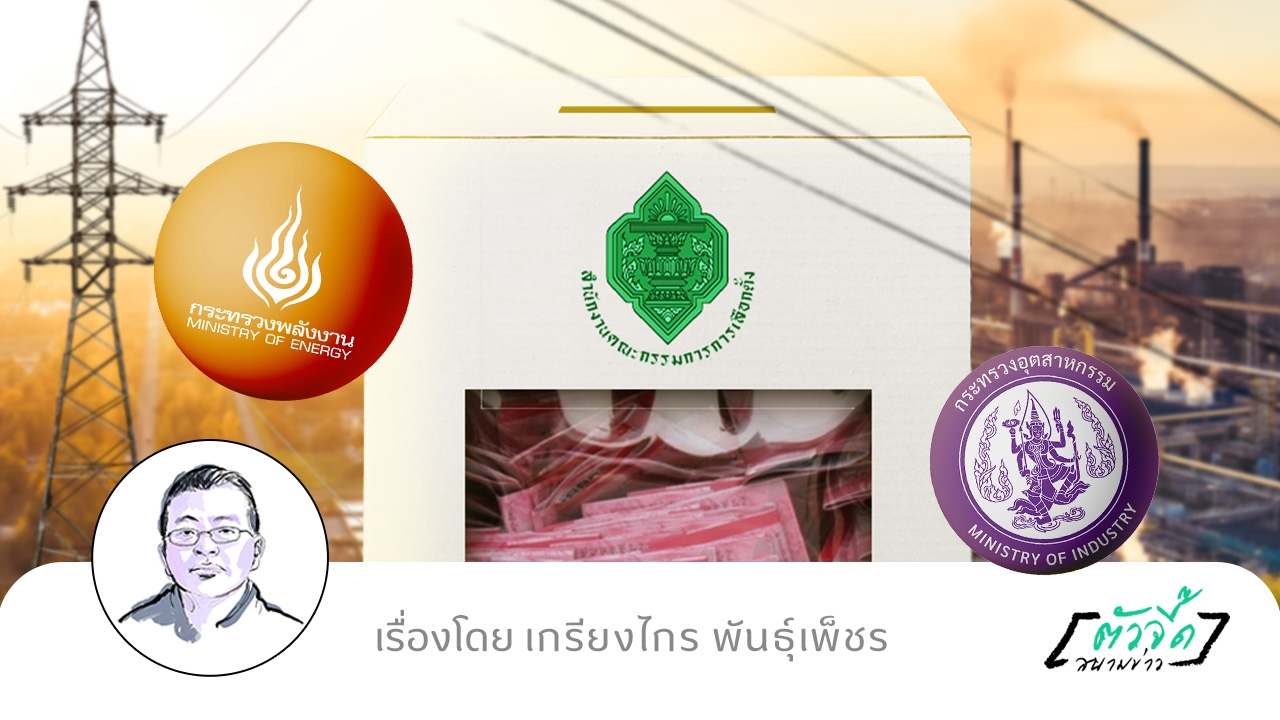
Following the 8 Feb 2023 election, the Thai public has begun to see indications of the political parties likely to form the new coalition government, which is expected to begin governing by June 2023 GMT+7 according to forecasted timelines.
The year 2026 is a pivotal year for Thailand's energy transition, occurring amid global volatility across multiple dimensions, including geopolitical security, the world economy, and environmental pressures stemming from the Net Zero 2050 target and other factors.
These factors inevitably influence the Ministry of Energy's policy direction, which must progress effectively and deliver benefits at all levels of society.
Although the Ministry of Energy is a relatively small economic ministry with an annual budget of 3,000-4,000 million baht, it is effectively a Grade A ministry due to its vast energy concession resources and interests, far exceeding a treasure trove in value. It is highly coveted by politicians from all parties seeking to manage this valuable asset.
Therefore, the difficult challenge for the new Energy Minister is to revive and activate the ministry's flagship policies to drive forward the concept of a “balanced energy transition,” which consists of four main policies.
1. Increase domestic energy supply this year. The Ministry prioritizes diversifying fuel sources to mitigate risks from global volatility. This includes accelerating the 26th round of petroleum exploration and production in the Andaman Sea, advancing the announcement of winners of the 25th onshore exploration round pending Cabinet approval, and expanding cooperation in the Thailand-Malaysia joint development area (JDA) to establish a secure, flexible, and systematically managed energy base for both the short and long term.
2. Announce and implement the new Power Development Plan (PDP), currently under preparation to align with rapidly changing global contexts. The new PDP incorporates key factors affecting the country's electricity production and consumption, such as emerging energy technologies, accommodating data centers, growth in electric vehicles (EVs), consideration of reasonable electricity prices to maintain national competitiveness, and increasing the share of clean energy to achieve the Net Zero target 15 years ahead of schedule. The PDP will be a critical mechanism for establishing the country’s power system foundation and sustaining long-term economic growth.
3. Revise energy regulations to support the energy transition. A key element is enabling all sectors to participate flexibly and fairly in producing and using clean energy. This year, the Ministry is developing legal frameworks to support direct power purchase agreements (Direct PPA), allowing clear traceability of clean energy sources.
"This point is considered a key to attracting new investment to the country and is clearly a new strength for Thailand," the ministry emphasized.
4. Accelerate allocation of funds to promote energy conservation in 2026. Energy investment is a crucial factor for an effective and tangible energy transition. The Ministry must allocate conservation promotion funds as a primary mechanism to support the energy transition across government, private sector, and public participation, representing one channel to support national adaptation to new global environmental targets.
All of these represent the homework the new Energy Minister must undertake for the benefit of all Thai people.
Meanwhile, the Ministry of Industry, considered a Grade C ministry in political party views, faces urgent tasks with no time to learn on the job. The new Industry Minister must restart the country's overall competitiveness through key strategic initiatives, including:
1. Urgently revive the Manufacturing Production Index (MPI) and industrial capacity utilization (CapU) to become economic engines again, as MPI has contracted below Thailand’s production potential for many years.
CapU remains below break-even levels in several industries. Factories have orders but hesitate to invest in expanding capacity due to production cost volatility from factors like exchange rate issues, U.S. import tariffs, and geopolitical uncertainties.
Urgent measures might include segmenting industries into groups based on recovery speed or risk of decline and applying targeted policies; using Super Tax Deduction incentives to stimulate production line startups and upgrades; attracting government procurement (Local Content) to domestic factories to boost short-term CapU.
Additionally, coordination with the Board of Investment, the Office of Industrial Economics, and the Department of Industrial Promotion is necessary to stimulate new investments. Investment growth will increase industrial capacity utilization, which in turn generates new employment, stimulating the economic cycle and encouraging further investment.
2. Unlock SMEs to enable Thai SME products to compete with low-priced imports, especially by improving access to financing.
3. Implement measures to counteract the influx of cheap imported goods undermining Thai producers. This is a major problem with products from China and other countries flooding the Thai market, causing price undercutting and damaging domestic production structures. As a result, Thai factories are closing, leading to job losses.
4. Restructure industries toward the New S-Curve and Green Industry, a new challenge since the global market demands not only low prices but also clean products with advanced technology and traceability. The mission includes accelerating target industries such as electric vehicles, batteries, semiconductors, and advanced electronics; supporting factories transitioning to Green Factory and Net Zero standards; and establishing an Industrial Transformation Fund to provide loans for upgrading older factories.
For more economic information and government policy updates, follow ThairathMoney.https://www.thairath.co.th/money/economics/thailand_econ
Follow the Facebook page: Thairath Money at this link.https://www.facebook.com/ThairathMoney