

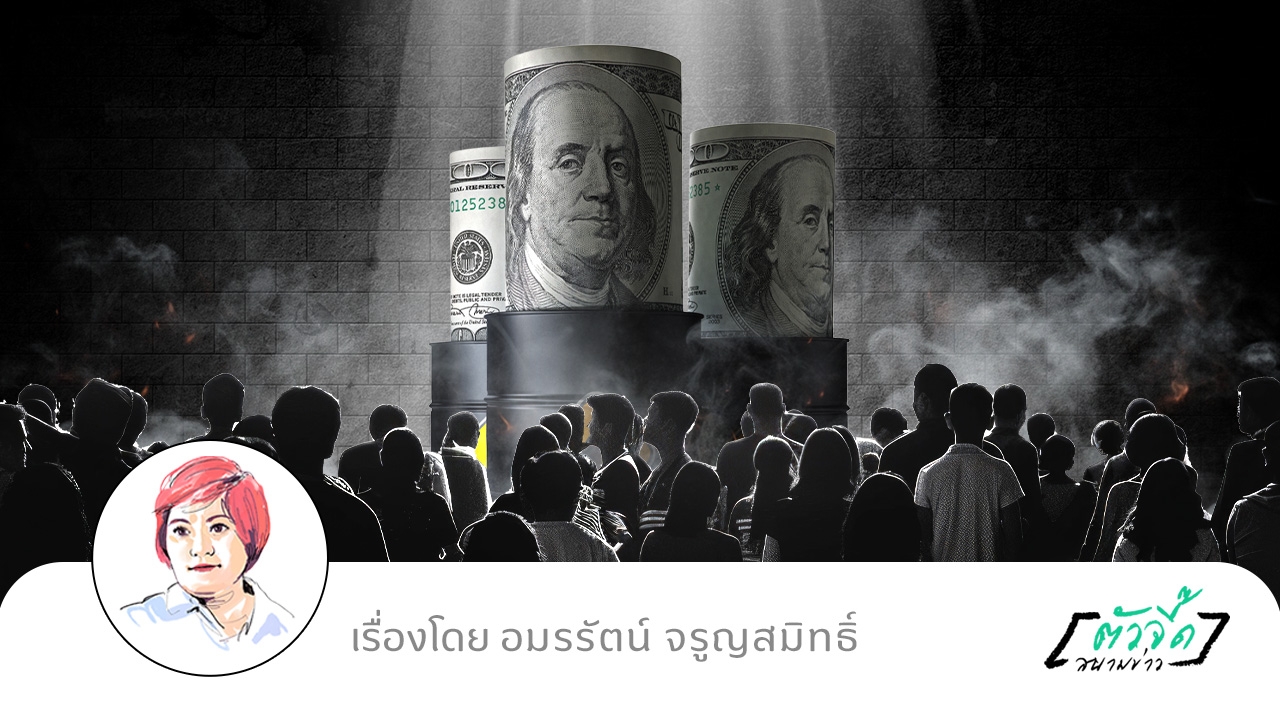
"There is enough oil reserve for 101 days." This is the key phrase proclaimed confidently by the Ministry of Energy and the Center for Managing the Middle East Conflict Situation (CMCMES) in front of every camera in March 2026.
Recently, the reserve was raised to 104 days. Yet the reality for Thai citizens is a long line of fuel cans stretching kilometers, exhausted pickup and truck drivers waiting overnight just to refuel, repeatedly encountering "Diesel Sold Out" signs prominently displayed at provincial gas stations—and now spreading into Bangkok.
The pressing question nationwide is, "If fuel is not lacking, then where has it gone?" More importantly, if the government insists there are no "masked hoarders" stockpiling fuel and that all is just public panic, is this a fact-based solution or an evasion of responsibility challenging the public’s trust at its greatest?
When paper figures contradict fuel gauge readings at the pump.
However, Deputy Prime Minister Pipat Ratchakitprakarn, also director of CMCMES, revealed deeper irregularities: some gas stations previously allocated 15,000 liters now receive only 5,000 liters.
The question is whether these missing 10,000 liters daily truly "evaporate" amid villagers' anxiety or are diverted into more profitable channels?
The theory of "illegal maritime exports" to profit from global prices over 10 baht higher than domestic rates remains an unresolved mystery no one dares to openly investigate individually despite threats.
"The two-market problem": The wound caused by blanket subsidy policies.
With pump prices cheaper than depot prices, industries and large trucks rush to grab fuel intended for villagers and farmers, causing the distribution system to collapse. Although the government recently ordered OR to pilot a single price for Jobbers, is this a mere stopgap or an admission that the "price cap policy" has become a poison undermining market mechanisms?
Voices from the grassroots economy: Who bears the consequences?
This crisis even penetrates religious rituals, with crematoriums in several provinces halting services due to a lack of fuel for cremation. This reflects that "trust" cannot be restored merely by officials apologizing with gestures or government claims of existing solutions and repeated assurances of no fuel shortage. Trust must be rebuilt through tangible, transparent measures.
The unresolved conclusion: Political science or economics?
This matter must be asked of the public: Do you believe fuel shortages are due to villagers hoarding? Or do you think there is a real "masked hoarder" the government dares not confront? Will the "single price" policy truly shorten queues?
Raise your voices louder, because the people's voice is the answer the government must hear!
Follow the Facebook page: Thairath Money at this link -
https://www.facebook.com/ThairathMoney