

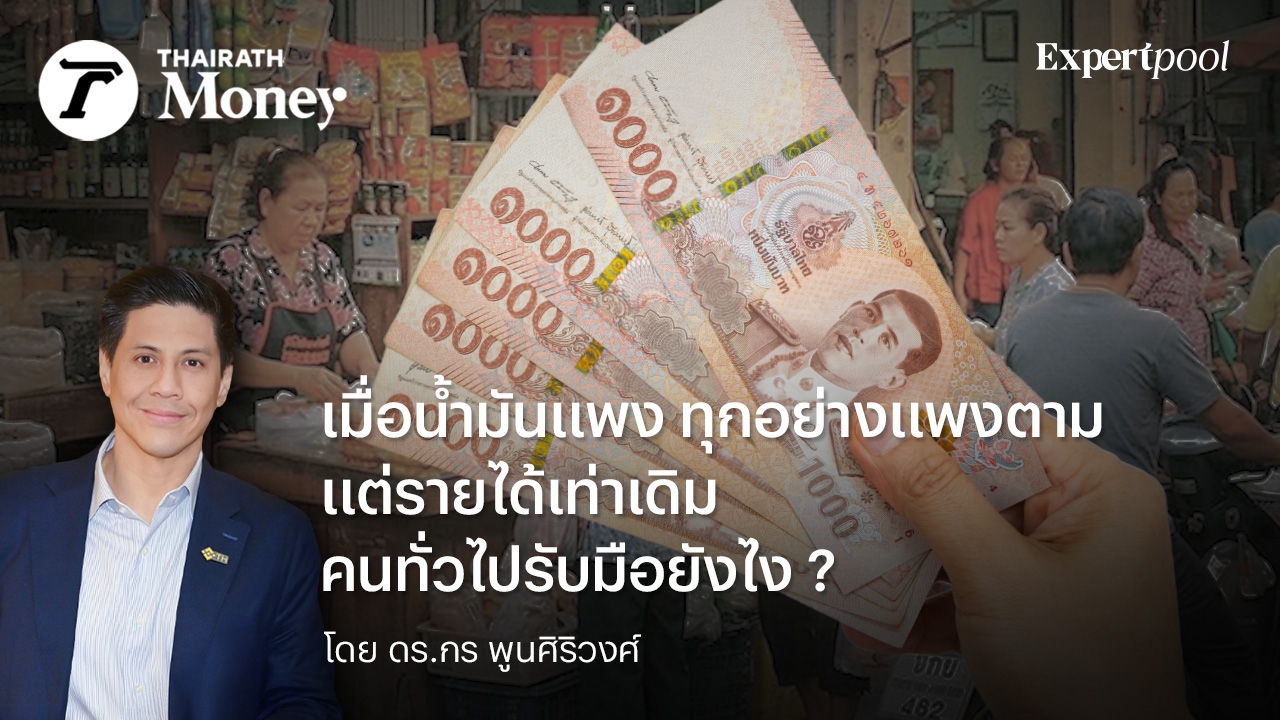
Gas stations, supermarkets, electricity bills, taxi fares, even lunchbox prices outside offices—these seemingly unrelated daily expenses are actually linked by one key factor: oil prices. Geopolitical tensions, especially the conflict erupting in Iran this year, have pushed this variable to rise rapidly, sending shockwaves throughout the entire economy. In the short term, higher oil prices increase production costs, causing goods and services prices to rise and triggering inflationary pressure, while economic growth tends to slow. This directly affects consumers’ purchasing power and living standards. More worryingly, economists warn of the risk of "stagflation," a condition where the economy slows while inflation surges—one of the most challenging situations for economic policy management.
Most people think high oil prices only affect refueling their vehicles, but in reality, oil permeates every stage of production and transportation. Rising oil prices raise transportation costs, meaning nearly all goods become more expensive, including shipping fees, gas, electricity, and agricultural product prices. Imagine the chain reaction: farmers use diesel to power water pumps and tractors; fertilizers, made from natural gas whose price also rises, become more costly; food processing factories pay higher electricity bills; trucks transport goods using diesel; and finally, consumers bear all these accumulated costs.
Economists say that for every $10 increase in crude oil prices, gas prices at the pump rise about 30 cents per gallon. Low- to middle-income groups—making up the bottom 60% of the population—spend nearly 4% of their after-tax income on fuel, while the top 10% richest spend only about 2%. This means rising oil prices hit poorer and middle-class people almost twice as hard as the wealthy. When prices of groceries, transportation, and electricity all rise but wages remain unchanged, workers’ real purchasing power shrinks daily.
Stagflation is economists’ nightmare because the combination of high inflation, rising unemployment, and economic slowdown means no policy can fix everything at once; solutions to one problem often worsen another. It may take years to end. History offers clear lessons: during the 1970s stagflation, inflation rose from 1% in 1964 to over 12% within a decade, peaking at 14.5% in the summer of 1980, while unemployment exceeded 7.5%, lasting more than a decade. For the current crisis, the key question isn’t "will it happen?" but "how long will it last?" Economists and Wall Street analysts agree the main factor is "duration." If the Iran conflict resolves in weeks, stagflation’s impact will remain limited. Vanguard’s analysis states that if tensions ease and oil prices drop, the economy could recover relatively quickly. However, prolonged conflict would deepen effects and seriously test investors’ and consumers’ patience. Analysts are watching first-quarter GDP figures, due late April; if numbers remain low, stagflation talk will intensify.
The CEO of deVere Group warned, "Complacency is the biggest risk. Stagflation is not hypothetical; warning signs are already visible in real data." The Federal Reserve kept interest rates at 3.50–3.75% in March because there is no clean solution: lowering rates risks worsening inflation, while raising rates risks pushing the slowing economy into recession.
This is the core challenge of our lives now. While institutional investors have tools to hedge risks, ordinary workers with stagnant incomes but rising expenses are the most vulnerable group.
First: Build a liquidity buffer above all else. Bankrate analysts advise that the most important thing now is having sufficient liquidity because uncertainty is the only certainty. Practically, this means having an emergency fund covering 3–6 months of expenses in an account that allows immediate withdrawals and offers reasonable interest.
Second: Cut flexible expenses first. People often cut costs in the wrong order when money is tight, reducing meals but maintaining unused subscriptions. Instead, review all subscriptions, reduce home energy use, and change travel habits. In stagflation, every baht saved truly matters.
Third: Diversify income sources and assets. During the 1970s stagflation, the S&P 500 fell over 40% amid oil crises and recession. In such conditions, assets that retain value are those with intrinsic worth, such as gold, commodities, or assets independent of any government’s policies. Analysts recommend increasing holdings in assets that generate real returns during inflation. In stocks, focus on companies with pricing power that can pass rising costs to customers without losing demand.
Fourth: Investing in personal skills offers the highest return. When wages are fixed but living costs rise, the only way to increase income is by becoming more valuable—whether through AI, digital finance skills, or foreign languages. Investing in oneself yields returns that inflation cannot erode.
Stagflation is not an inevitable disaster but a test of who prepares best. In this economic war, victory does not go to the richest but to the smartest and most prepared.