

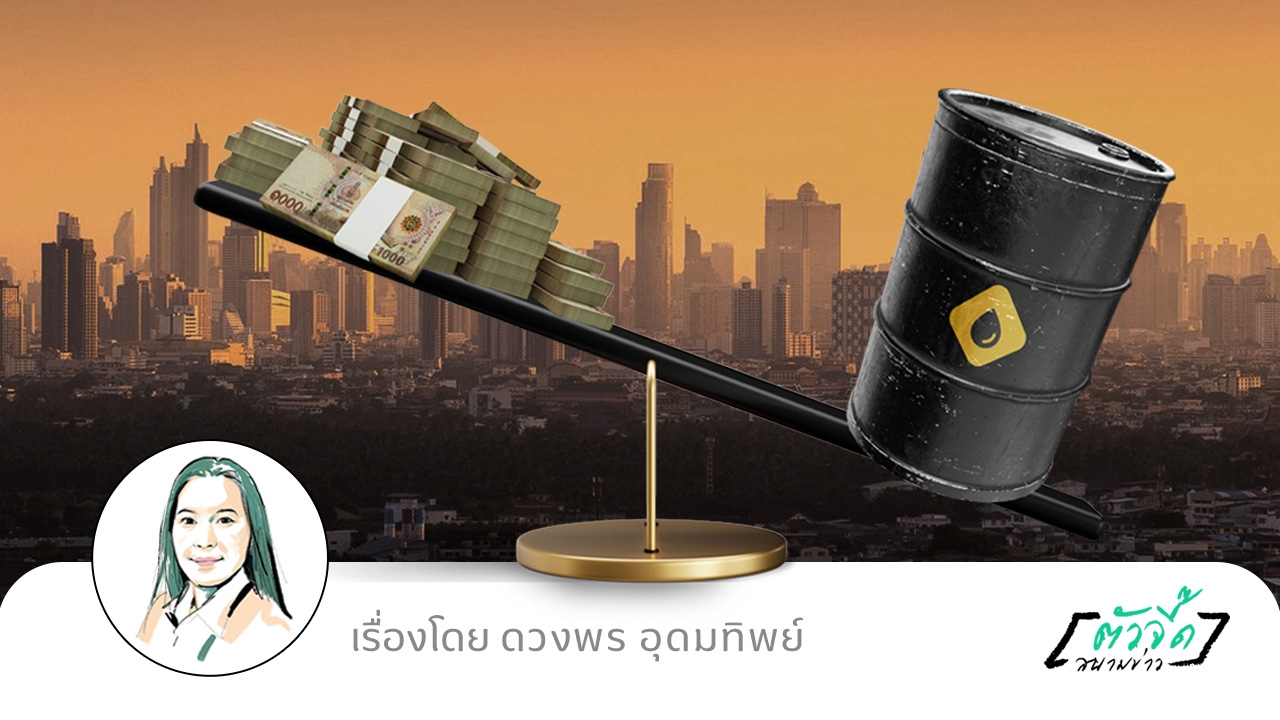
Every time there is an "oil crisis," the issue of reducing excise taxes on diesel and gasoline is invariably raised for discussion.
Similarly, in this current "oil crisis," Prime Minister Anutin Charnvirakul has tasked the Ministry of Finance to study the possibility of reducing taxes. Currently, diesel is taxed at 6.90 baht per liter, and gasoline at 6.75 to 7.50 baht per liter. Each year, the Ministry of Finance collects about 200 billion baht in taxes from oil and petroleum products.
During 2022-2024, the Russia-Ukraine war caused energy prices to rise sharply, prompting the government to gradually reduce oil taxes by 1 baht per liter up to 5-6 baht, in phases such as three months at a time. Overall, these tax reductions led to a government revenue loss of approximately 120-130 billion baht.
Reducing oil taxes must follow legal procedures, starting with drafting a ministerial regulation on excise tax rates (specific edition and year to be determined) for Cabinet approval. Once approved, it must be reviewed by the Office of the Council of State and then published in the Royal Gazette to become effective. This tax reduction process takes about 2-3 weeks.
However, it remains unclear whether the government will implement the tax reduction, as the Ministry of Finance argues that the costs may outweigh the benefits. They fear it could undermine the country’s fiscal position amid an economic downturn, rising living costs, high unemployment, and multiple business closures, all of which hinder government revenue collection targets. There is concern that the oil crisis could escalate into a more severe fiscal crisis.
In the first five months of fiscal year 2026 (Oct 2025–Feb 2026), government revenue totaled 1.04 trillion baht, exceeding targets by 1.28 billion baht, a very narrow margin. If the diesel tax is cut by 1 baht per liter, monthly government revenue would decline by 2.8 billion baht. Over three months, this totals 8.4 billion baht lost; over six months, 25.2 billion baht.

Using the Oil Fuel Fund mechanism offers more flexibility and can be implemented immediately to stabilize oil prices. Additionally, the Ministry of Finance is prepared to enact a Loan Guarantee Act with a 150 billion baht limit, as there is still room to increase public debt.
As of February 2026, the public debt-to-GDP ratio stood at 66.09%, leaving a 3.91% margin before reaching the 70% ceiling allowed under fiscal discipline laws according to the Financial Discipline Act of 2018.
Opponents of reducing oil taxes argue that the measure only benefits vehicle users, while those without cars receive no subsidy, as public transport fares and other goods prices remain unchanged. This increases inequality in social support.
Moreover, it distorts market mechanisms and consumer behavior, weakening incentives to use fuel efficiently or shift to clean energy. This contradicts government policies promoting clean energy use and the goal of achieving net-zero greenhouse gas emissions by 2050. There are other ways to assist without cutting oil taxes.
Meanwhile, supporters advocate for reducing oil taxes to ease public hardship. They argue that any tax cut should directly benefit citizens to alleviate their financial burden—even if only temporarily.
Therefore, the government must carefully weigh whether to "reduce" or "not reduce" oil taxes, as these choices represent a clear crossroads between "reducing" for short-term economic survival and "not reducing" for fiscal stability, credibility, and long-term economic benefits.
The decision to "reduce or not reduce" oil taxes awaits the Cabinet’s resolution on 11 April 2026.
Follow economic news and government policies with ThairathMoney at
Follow the Facebook page Thairath Money at this link https://www.facebook.com/ThairathMoney