

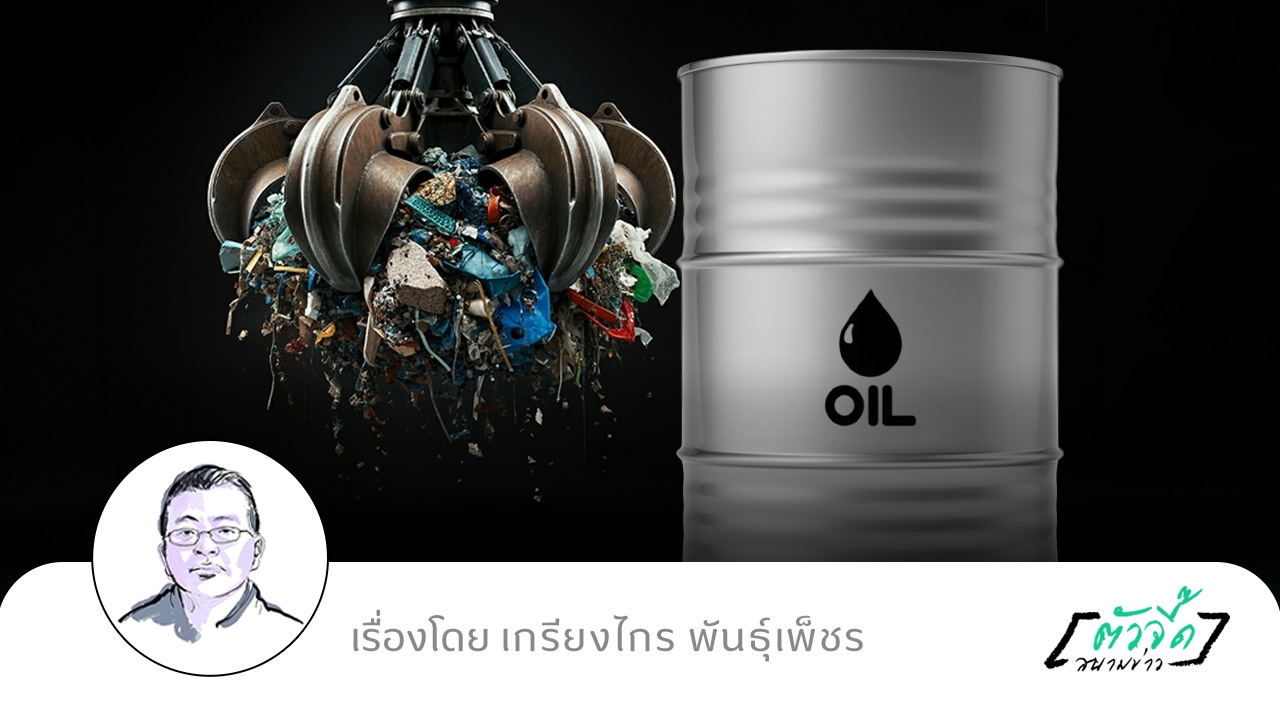
Recently, I joined a delegation from the Energy Conservation Promotion Fund Office (ENCON Fund) to monitor progress on the "Decentralized Integrated Community Waste Management Pilot Project" at Suranaree University of Technology (SUT) in Nakhon Ratchasima. The project involves four local administrative organizations in Nakhon Ratchasima Province and applies technology to tackle the city's waste overflow crisis. The results will be further developed to convert plastic waste into fuel and electricity in the future.
This represents another option to address the energy crisis and introduce innovation for the agriculture and transportation sectors to access affordable fuel amid volatility caused by conflicts in the Middle East.
Amarin Wongphan, Deputy Director of the Energy Conservation Promotion Fund Office (ENCON Fund), explained that the Decentralized Integrated Solid Waste Management System pilot project at SUT received a budget allocation of 588,425,000 baht from the 2015 Energy Conservation Promotion Fund. The aim is to demonstrate and expand comprehensive waste management technology in Nakhon Ratchasima to local administrative organizations (LAOs) facing waste management crises, who are ready to adopt and manage the system.
The pilot involves four key districts: Sikhio Municipality in Sikhio District, Muang Pak Municipality in Pak Thong Chai District, Dan Khun Thot Subdistrict Municipality in Dan Khun Thot District, and Chae Subdistrict Municipality in Khon Buri District.
As a case study, SUT's community waste management project uses Mechanical and Biological Treatment Technology (SUT-MBT) to process waste received from each LAO, about 25 tons per day, totaling 100 tons per day. The process produces high-calorific-value refuse-derived fuel (RDF). When passed through pyrolysis, plastic waste is converted into pyrolysis oil, which can be further refined into diesel and gasoline.
Importantly, producing fuel from plastic waste provides an alternative to address the current energy crisis. This case study of decentralized integrated community waste management combines MBT technology to maximize waste sorting and processing, producing various waste fuels: solid fuel (RDF), plastic fuel (RDF-3), and mixed fuel (Reject). These fuels can be used to generate electricity or converted into pyrolysis oil using airless combustion technology (pyrolysis), which can then be refined into diesel and gasoline for agriculture and transportation sectors.
Pyrolysis technology can convert 4-5 tons of plastic waste daily into up to 5,000 liters of crude oil, which can be refined and practically used in the transportation sector.
“From a policy perspective, producing fuel from plastic waste offers a national-level alternative to address the energy crisis, reducing reliance on imported oil and enhancing energy security amid global market volatility,” he said.
Therefore, expanding this through local administrative organizations, such as the approximately 8,000 Subdistrict Administrative Organizations nationwide, could distribute energy access to communities—especially the agriculture sector needing low-cost energy. It also helps reduce waste accumulation, environmental impact, and establishes a tangible circular economy linking energy and environment. This is a strategic solution for sustainable energy crisis management.
Amarin further explained key innovative efficiencies of SUT-MBT technology, including:
Urgent moisture reduction: It can lower the moisture content of fresh waste from 60% to below 30% within 15–30 days, faster than natural composting. This addresses environmental issues such as odor and disease-carrying insects.
High-quality fuel production (RDF): Processed waste is converted into refuse-derived fuel with high calorific value, suitable for industrial plants and power plants. Organic fractions separated are used to produce fertilizer to return to local agriculture, achieving 100% resource recycling within the community.
Pyrolysis technology: Beyond solid fuel (RDF), the project processes 4-5 tons of plastic waste daily through airless combustion at 300–500 degrees Celsius to produce up to 5,000 liters of pyrolysis oil daily. This oil can be refined for agricultural machinery, transportation, or industrial use. Additionally, plasma gasification power plants build on clean, efficient combustion technology to generate 1.2 megawatts of electricity using RDF fuel produced by the project, creating one of Thailand’s most comprehensive self-sufficient energy systems.
Currently, the four decentralized integrated community waste management centers help alleviate Nakhon Ratchasima’s waste crisis by over 180 tons daily, or 21,600 tons monthly.
Moreover, the university has established factory management systems and conducted training and technology transfer for LAO staff, covering theoretical and practical aspects. They have planned business management for by-products, including RDF fuel, organic fertilizer, and soil amendments, through community enterprises and other suitable forms, while supervising and consulting on quality control of RDF fuel products.
He emphasized that the SUT project serves as a tangible example reducing dependence on imported fossil fuels. The Energy Conservation Fund focuses on supporting projects that are prototypes with proven success and sustainable management plans to maximize benefits for the public and the nation.
Follow economic news and government policies with ThairathMoney at
Follow the Facebook page: Thairath Money at this link https://www.facebook.com/ThairathMoney