

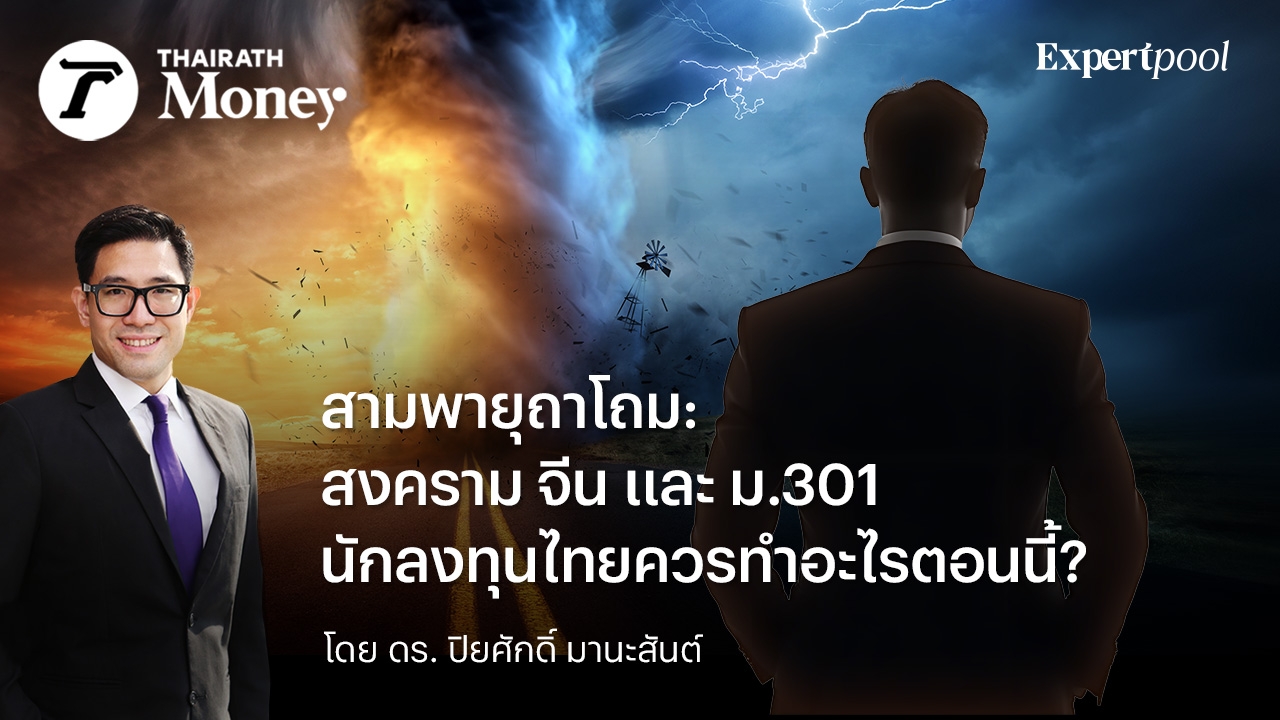
Last week brought significant news from three directions, all directly impacting investment portfolios. INVX will decode each issue to provide the clearest picture.
First, developments in the war: The Epic Fury operation, which began on 28 Feb 2026, entered its seventh week. Although the first negotiation round in Islamabad under Pakistan's mediation has yet to yield an agreement, a key positive sign is that diplomatic channels remain open. Both sides are considering extending the ceasefire for two more weeks to allow a second round of talks. Meanwhile, President Trump expressed optimism, stating the war is "nearing its end."
The market is clearly pricing in this hope, reflected by a steep backwardation in the oil market. Brent Futures trade around $90–95 per barrel on financial markets, significantly below the physical market price exceeding $120 by $25–30. This indicates investors view the current supply crisis as "temporary" and believe energy prices could fall substantially if negotiations lead to an agreement. This optimism has driven the MSCI All Country Index to reach an all-time high for ten consecutive days. However, nuclear issues remain complex and require extended negotiations, presenting ongoing risk.
Second, China's Q1 2026 GDP expanded 5.0% year-on-year, accelerating from 4.5% in the previous quarter. This exceeded the market expectation of 4.8%, positively supporting market sentiment. Yet, a deeper look reveals a more complicated picture. March retail sales grew only 1.7% YoY, significantly below forecasts. Exports sharply slowed to 2.5% YoY from 21.8% earlier in the year, and the real estate sector continued contracting by 11.3%, similar to the prior two months. Based on this, INVX has revised down China's full-year 2026 GDP forecast from 4.5% to 4.2%.
Third, the U.S. has launched an investigation into Thailand under Section 301 of the 1974 Trade Act. The probe targets two main allegations: excess production capacity in automotive, machinery, and rubber industries, with utilization rates below 60% for two consecutive years—leading the U.S. to suspect deliberate overproduction to flood markets—and imports from sources using forced labor, including fish, fish oil, and apparel. Although Thailand submitted a rebuttal to the U.S. Trade Representative on 15 April, the investigation continues through May to July, coinciding with the expiration of a temporary 10% tariff. This period represents the highest uncertainty and pressure on investment sentiment. INVX has therefore revised Thailand’s export forecast from -1% to -2%, reflecting dual pressures from Section 301 and the Middle East energy crisis.
On fiscal policy, Dr. Anek Niti Tuntiprapas, Deputy Prime Minister and Finance Minister, signaled readiness to consider raising the public debt ceiling above 70% of GDP if necessary. INVX views this as appropriate for three reasons: public debt is already likely to exceed 70% due to energy subsidies; infrastructure investments yield higher economic returns than direct cost-of-living subsidies; and large-scale projects in mass transit, renewable energy, and future industries will determine Thailand's potential growth in the next decade.
However, a key risk lies in revenue. Although Thailand's VAT at 7% is much lower than the OECD average of 19%, political obstacles make increasing it difficult. Without real revenue increases, Thailand's fiscal discipline credibility, already downgraded to Negative outlook by Fitch and Moody's, could deteriorate further.
Regarding investment strategy, we expect the SET index to trade sideways awaiting clarity on the U.S.–Iran peace talks, with limited upside near 1,530 points until an agreement is confirmed. Since the market has partly priced in positive expectations, INVX recommends a “Selective Buy” approach based on investors’ risk tolerance and outlook, as follows:
For investors with higher risk tolerance expecting a lasting peace deal, INVX advises portfolio adjustments by time frame. In the short term (1–4 weeks), focus on speculative trades in stocks benefiting from oil price corrections and supply chain recovery, such as airlines (AAV, THAI), small power producers (GPSC, BGRIM), tourism groups (CENTEL, ERW, MINT), premium hospitals (BH, BDMS), and automotive (AH, SAT), as well as SET50 stocks likely targets for short covering—MINT, BTS, LH, BDMS, AWC—which have dropped more than the SET since the crisis began. In the medium term (3–6 months), gradually accumulate defensive stocks with strong pricing power to withstand high inflation, including telecommunications (ADVANC, TRUE), healthcare (BDMS, BH, CHG, BCH), and commerce (CPALL, CPAXT, BJC, CPN). In the long term (6–12 months and beyond), focus on clean energy and industrial estates supporting the transition to alternative energy, such as GULF, GPSC, BGRIM, GUNKUL, WHA, and AMATA.
For investors with low risk tolerance worried about negotiation failure, INVX recommends holding cash or short-term bonds to maintain liquidity, and strategic hedging with stocks benefiting from rising oil prices such as PTTEP and PTTGC, given wider spreads. Additionally, accumulating high-dividend stocks yielding over 5% from 2025 earnings before their ex-dividend dates between April and May is advised, including KBANK, KKP, TISCO, BAM, AP, and TLI.
Wishing investors good luck.
For stock and investment news, visit Thairath Money at
Follow the Facebook page: Thairath Money at this link