

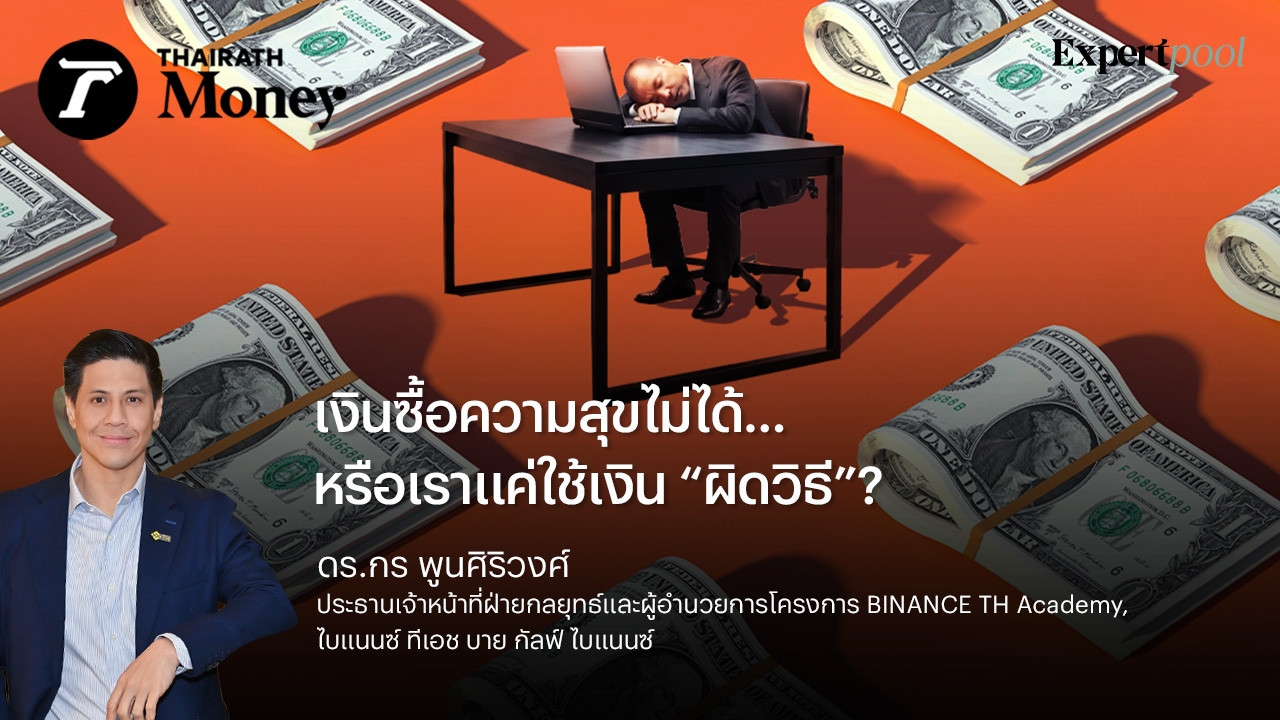
What is happiness? This question may seem simple, but in reality, there is no single answer because happiness means different things to different people. Some see happiness as life stability, others value freedom, while many just seek peace of mind in a world that spins faster every day. However, one clear observation in today’s society is that many people try to attain happiness through "money," whether by buying bigger homes, better cars, or living a seemingly more successful life. The key question is why, as we have more, our sense of satisfaction does not increase accordingly.
Arthur Brooks explained this point interestingly: “Money doesn’t buy happiness. But you can use money to buy things that lead to happiness.” This sentence clearly reflects the truth that the problem is not how much money one has, but rather the "way money is spent."
Numerous studies in behavioral economics and consumer psychology have found that spending money on “experiences” — such as traveling, spending time with family, or activities that create shared memories — can produce significantly longer-lasting happiness than buying “things.” The main reason is that possessions often provide short-term satisfaction; over time, the excitement fades and becomes ordinary, whereas experiences tend to be “embedded” in memory and can be recalled to evoke positive feelings repeatedly.
Arthur Brooks once said, “Experiences become part of who you are. Possessions do not.” That is, experiences are not merely something we own but become part of our identity, whereas possessions cannot. Behavioral economics further explains that humans tend to “adapt” quickly to possessions — known as hedonic adaptation — which causes happiness from new purchases to decline rapidly. Conversely, experiences often involve uncertainty, stories, and interaction with others, which add emotional value and make those memories clearer over time. Moreover, experiences can be shared and retold, creating shared meaning with others, something most possessions cannot do.
Another major reason money often fails to create the happiness it should is that people tend to use money to “compare” themselves to others rather than to meet their true needs. In the age of social media, others’ lives are presented in ways that seem perfect, unintentionally raising standards of success and happiness. Therefore, one’s income or assets are not just evaluated quantitatively but constantly compared to those around them.
This phenomenon aligns with the economic concept called the “relative income effect,” which explains that human satisfaction depends not only on one’s own income but on one’s position relative to others. Arthur Brooks clearly warned, “If your happiness depends on being richer than others, you will never be happy.” Because in the game of comparison, there is no end and no true winner.
Although money cannot directly buy happiness, spending money purposefully and wisely can significantly increase happiness levels. Many studies show that spending money on “others” — such as giving, helping, or creating social value — affects happiness more than spending money solely on oneself. Additionally, spending money to buy “time,” such as reducing work burdens or creating life balance, is another factor that improves long-term quality of life. Arthur Brooks summarized this idea interestingly: “Happiness is not about having more. It’s about wanting less and loving more.” This reflects that happiness does not come from accumulating possessions or wealth alone but from understanding what to truly value in life.
In a world where everything seems measured by numbers — whether income, assets, or material success — asking “What are we spending money for?” might be more important than “How much money do we have?” Ultimately, money is just a tool, but happiness results from life choices. Sometimes, the answer is not having more but using what we have... more wisely. An interesting question is whether we need “things” to prove our existence in society. Having more, ranking higher, or gaining more recognition may create a temporary sense of achievement, but can these things become meaningful memories to reflect on? Or are they just symbols of status at a moment in time? Owning valuable possessions may bring happiness to some, but for others, it is not the answer at all. It all depends on each person’s “life priorities,” on whether we value external image more or lasting inner feelings.