

According to data from the Bank of Thailand (BOT) released earlier this week, despite the BOT raising its economic growth forecast for Thailand this year from 1.5% to 2% due to government stimulus measures—especially the "Thai Chuey Thai Plus" 60/40 spending incentive and increased welfare card funds,
BOT Governor Vithai Ratanakorn emphasized the need to closely monitor the flow of debt, which may increasingly become "non-performing loans" in the near future. The BOT is preparing measures to address this and plans to gradually introduce policies to mitigate the rise in bad debt as necessary.
Under the current constrained economic conditions, moving forward is difficult, but retreating risks failure. Today, "non-performing loans" are no longer limited to low-income earners and SMEs but are increasingly evident among the middle and upper-middle classes earning over 50,000 baht per month, as well as showing financial weaknesses in large companies.
Krungthai COMPASS Research Center of Krungthai Bank surveyed listed companies regarding the impact of the Middle East conflict. In the first quarter, 335 companies—about 40%—reported being affected: 80% listed on the SET and 20% on the MAI.
They identified three main channels through which the impact was felt:
1. Rising costs, reflected in most companies reporting effects from higher oil prices, energy, freight rates, and increased logistics expenses.
2. Reduced revenue due to consumers delaying purchases amid higher living costs, decreased tourist numbers from flight cancellations, and reduced exports to the Middle East; and 3. Shortages of raw materials, especially plastics and oil, due to import disruptions from the Middle East, potentially directly affecting production lines.
Importantly, over 90% of affected companies expect the situation to either prolong or worsen during the remainder of 2026, which could severely impact their financial health going forward.
The "rising continuous risks" have led businesses to demand increased working capital and ongoing financial support. However, commercial banks are currently in a "credit caution" mode.
Although recently there has been additional lending to large businesses to bolster liquidity affected by the conflict and loans to SMEs under the SMEs Credit Boost program—BOT reported approvals totaling 5.4 billion baht within just over two months since the program's launch,
overall SME lending remains in negative territory and has been declining continuously for over three years.
For the rest of the year, BOT expects approximately 80 billion baht in new loan approvals under the SMEs Credit Boost and the relaxed collateral requirements under the SMEs Secure+ program, aiming to partially support SME financial stability.
Meanwhile, consumer loans declined by 0.7% in the first quarter this year, and given the current economic conditions, commercial banks are unlikely to accelerate consumer credit issuance. Additionally, banks are beginning to reduce deposit costs by scaling back special deposit campaigns, which were previously a good income source for depositors, especially middle-class retirees.
Data from commercial banks indicate that those earning 30,000–50,000 baht per month are the most likely to become non-performing borrowers, while those earning 50,000–100,000 baht show a significant increase in loan defaults. The National Credit Bureau also reports that over 25% of current bad debts are "mortgage loans" that borrowers cannot repay.
"The crossroads of Thailand’s financial system" today reflect that "ordinary people, SMEs, and the business sector" are facing income declines and rising living expenses, alongside the potential for increased unemployment due to AI adoption. Meanwhile, borrowing to manage cash flow, spending, or debt refinancing—which was previously easy—is becoming harder or even impossible.
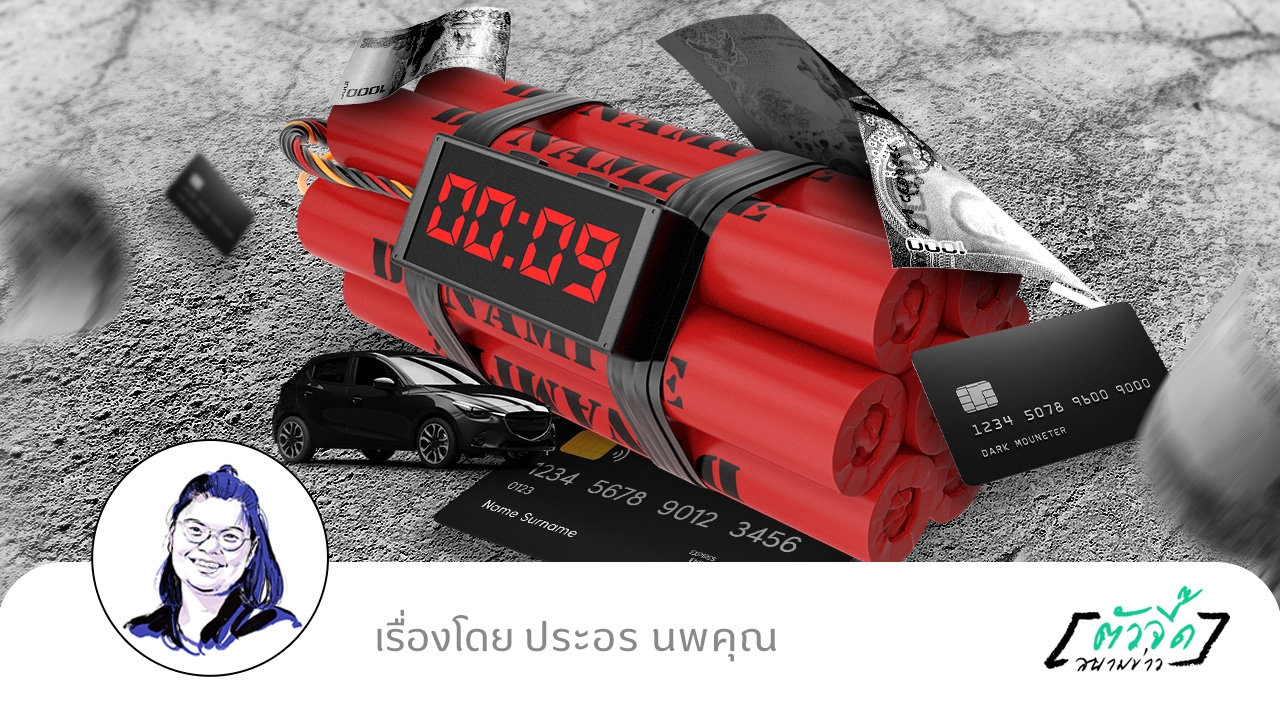
As a result, the financial status of Thai people is nearing a "breaking point," with 25.5 million individuals—or 38% of the population—currently in debt potentially facing an increase in non-performing loans.
Interestingly, although the BOT has mandated commercial banks to expedite debt restructuring to reduce and relieve debt for borrowers beginning to default, aiming to cut problems early, restructuring is feasible only for cooperative debtors. Many non-performing borrowers remain uncooperative, and evidence shows that allowing bad debts to persist beyond three years makes recovery nearly impossible.
This is evident from the "Quick Debt Settlement, Move Forward" program targeting small debtors, which identified 1.2 million eligible accounts. After five months, as of 31 May 2026, only 102,277 accounts had signed restructuring agreements, with a target of 200,000 by year-end—still far from the goal. Similarly, the earlier "You Fight, We Help" program saw lower-than-expected participation in debt resolution.
So, what are the reasons that indebted individuals are reluctant to restructure their debts?
Data collected by debt resolution companies suggest part of the reluctance stems from physical factors—"insufficient income to pay"—leading to hopelessness, a lack of solutions, and the belief that struggling to resolve debt is futile. Especially those temporarily managing by borrowing new loans to pay old debts, causing interest to accumulate and total debt to spiral out of control.
Another part arises from psychological mechanisms: "burnout and fear of reality." Debtors feel stressed and exhausted, fearful of confronting the true extent of their debt, thus choosing to ignore and avoid the problem rather than face it.
Fear of debt collection and shame also play roles. Facing debt resolution usually involves contact with creditors or debt negotiations, which many find stressful, embarrassing, or fear criticism. Denial mechanisms lead them to rationalize that debts harm no one or that they will repay later, allowing problems to escalate.
Therefore, future debt restructuring efforts may need to address psychological factors to encourage more Thais to willingly and confidently engage in debt resolution.
Importantly, as global conflicts continue to impact the economy—both through actual warfare and anticipated intensification of trade wars—we may need to begin considering how to sustain our "financial standing" amid such changes.
Follow economic information and government policies with ThairathMoney at
Follow the Facebook page: Thairath Money at this link https://www.facebook.com/ThairathMoney