

The issue has immediately become a hot topic!!
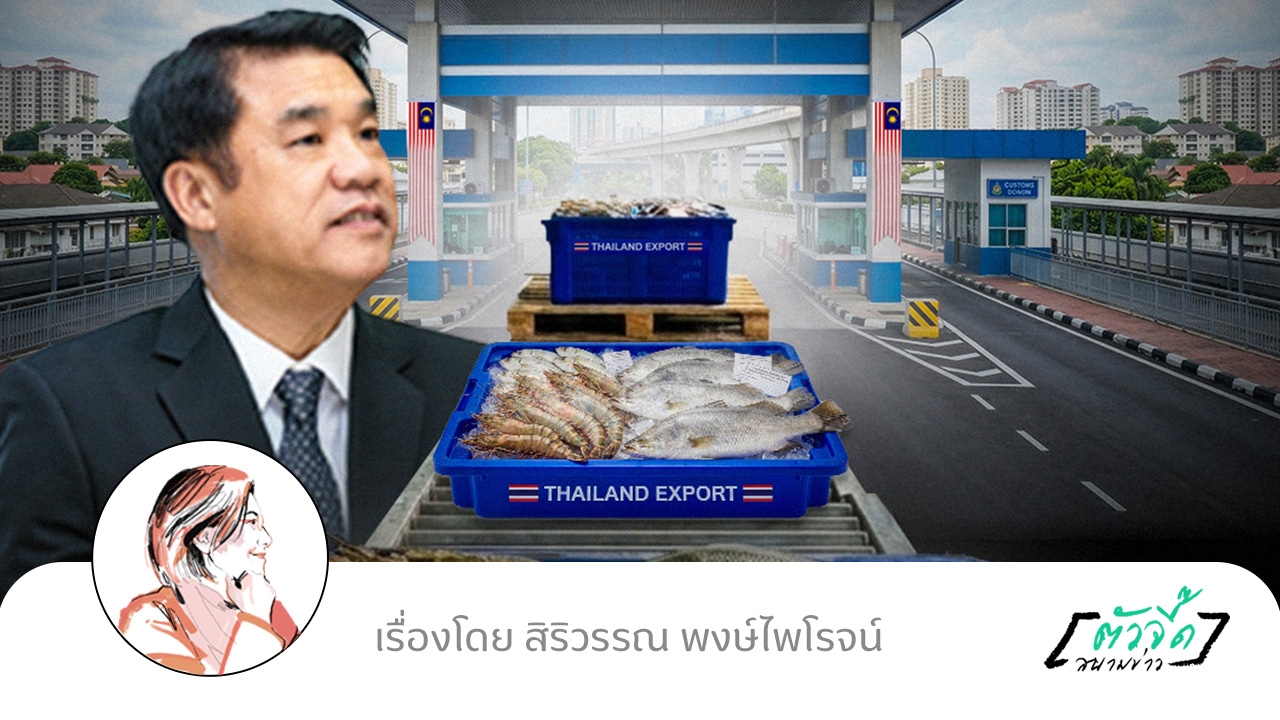
Malaysian authorities, a neighboring ASEAN country, have banned imports of "five shrimp species"—namely white vannamei shrimp, black tiger shrimp, tiger-striped shrimp, banana shrimp, and blue shrimp—and have tightened controls on imports of "white sea bass" from Thailand, effective from 1 Jun 2026 onwards.
This has caused a sharp drop in Thai shrimp prices since it coincides with the shrimp harvesting season. Malaysia is an important market where Thailand exports 300-400 tons monthly, valued at about 44 million baht per month, severely impacting shrimp farmers. The Thai government, including the Ministry of Agriculture and Cooperatives and the Ministry of Commerce, must urgently find solutions and support measures.
Malaysia claims these measures are "temporary" to enhance food safety standards in Malaysia and are a "reciprocal response" to Thailand.
Previously, Thailand launched a "100% strict inspection" operation on sea bass imports from Malaysia due to contamination with prohibited chemicals and antibiotics, which affected exports and Malaysian farmers as well.
However, Malaysia is willing to reassess these measures after Thailand has fully responded to Malaysia’s safety standards questionnaire, but whether this promise will be fulfilled remains to be seen.
The cause of this retaliation dates back to late 2025 when Thailand detected that sea bass imported from Malaysia contained " nitrofuran" residues, a prohibited antibiotic due to its carcinogenic effects.
The Codex Alimentarius Commission, organized by the UN's Food and Agriculture Organization (FAO) and the World Health Organization (WHO), has recommended a "zero tolerance" policy for contamination in livestock and aquatic products. Even minimal presence renders the product "unsafe for consumption" and "non-compliant with international standards."
Many countries worldwide, including the European Union and the United States, have banned nitrofuran use in animals destined for food for nearly 40 years. Thailand itself has ceased using both nitrofuran and chloramphenicol in livestock and aquatic animal farming for over 20 years.
Therefore, Thailand has the right to "100% detain" Malaysian sea bass shipments to ensure Thai consumer safety, rather than conducting random inspections. Thailand has conducted import inspections progressively and properly, coordinating with Malaysia throughout.
However, Malaysia’s ban on Thai shrimp imports, seen as a "retaliatory strategy" to pressure Thailand to lift or relax strict inspections on Malaysian sea bass, was implemented abruptly without advance notice, no opportunity for Thailand to explain, and with only a written notification dated 28 May 2026 from the Malaysian Embassy in Thailand to the Thai Ministry of Foreign Affairs, with copies to the Minister of Agriculture and Cooperatives.
This enables Thailand to file complaints with the World Trade Organization (WTO) and ASEAN because the measure was unannounced and lacked transparency.
Malaysia’s measures have caused Thai shrimp prices, especially in key southern farming provinces like Songkhla, Satun, and Trang, to drop sharply daily. Last week, the price of white shrimp size 65 per kilogram at Pak Bo was 120 baht per kg, down from the usual 150-155 baht per kg, while production costs remain at 135 baht per kg.
This aligns with the statement by Ekaphon Yodphinit, President of the Thai Shrimp Association, who said domestic shrimp prices have been severely impacted because Malaysia imports about 10,000 tons annually, mostly from the south.
He proposed that the government urgently negotiate with Malaysia to ease the measures and jointly establish appropriate, transparent, and international-standard inspection methods to prevent future use of safety standards as trade barriers.
Simultaneously, he urged the government to accelerate the "Action Plan to Elevate Marine Shrimp Problem-Solving as a National Agenda 2026-2030," aiming to reform the shrimp industry comprehensively, including breed development, disease control, cost reduction, and market expansion, to help distribute income and stabilize the supply chain involving over 2 million people.
"Currently, the Thai shrimp industry faces multiple challenges, including disease outbreaks, rising production costs, and order shortages due to wars in various countries. Promoting this action plan as a national agenda will sustainably solve structural problems and enhance Thailand’s shrimp export competitiveness to become a major income-generating export again," he said.
On 10 Jun 2026, Agriculture Minister Suriyasai Jungrungkit reaffirmed, after Malaysia canceled the originally scheduled 8 Jun talks, that he had contacted Dato' Sri Muhammad Sabu, Malaysian Minister of Agriculture and Food Security, to permanently resolve the issue and is ready to travel for negotiations on 17 Jun.
"If we can solve this problem, it will be a Win-Win for both sides because Thailand will be able to export shrimp to Malaysia, lowering prices for Malaysian consumers, while Malaysia will export sea bass to Thailand, lowering prices for Thai consumers as well," he said.
Meanwhile, before negotiations begin, the Ministry of Commerce has prepared support measures for shrimp farmers and affected businesses. Deputy Prime Minister and Commerce Minister Supachai Sutthumpun stated that 13 initial measures aim to absorb at least 400 tons of shrimp per month.
These include sourcing alternative imports, especially from key markets such as China, the U.S., and Japan, and finding new ASEAN markets, especially Myanmar and Singapore; promoting domestic shrimp consumption through the Blue Flag and Thai Help Thai Plus projects; cooperating with local stores to channel products from production areas to tourist spots; and organizing business matching activities for affected operators and exporters.
"If the two countries cannot resolve this issue through negotiation, the Ministry of Commerce is ready to escalate the matter to the WTO and ASEAN immediately," Supachai concluded.
Therefore, attention is on the 17 Jun negotiations between Thailand and Malaysia to see if a mutually beneficial Win-Win conclusion will be reached or if it will devolve into a trade war where neither side yields, damaging both parties!!
Follow economic and government policy information with ThairathMoney at
Follow the Facebook page: Thairath Money at this link https://www.facebook.com/ThairathMoney