

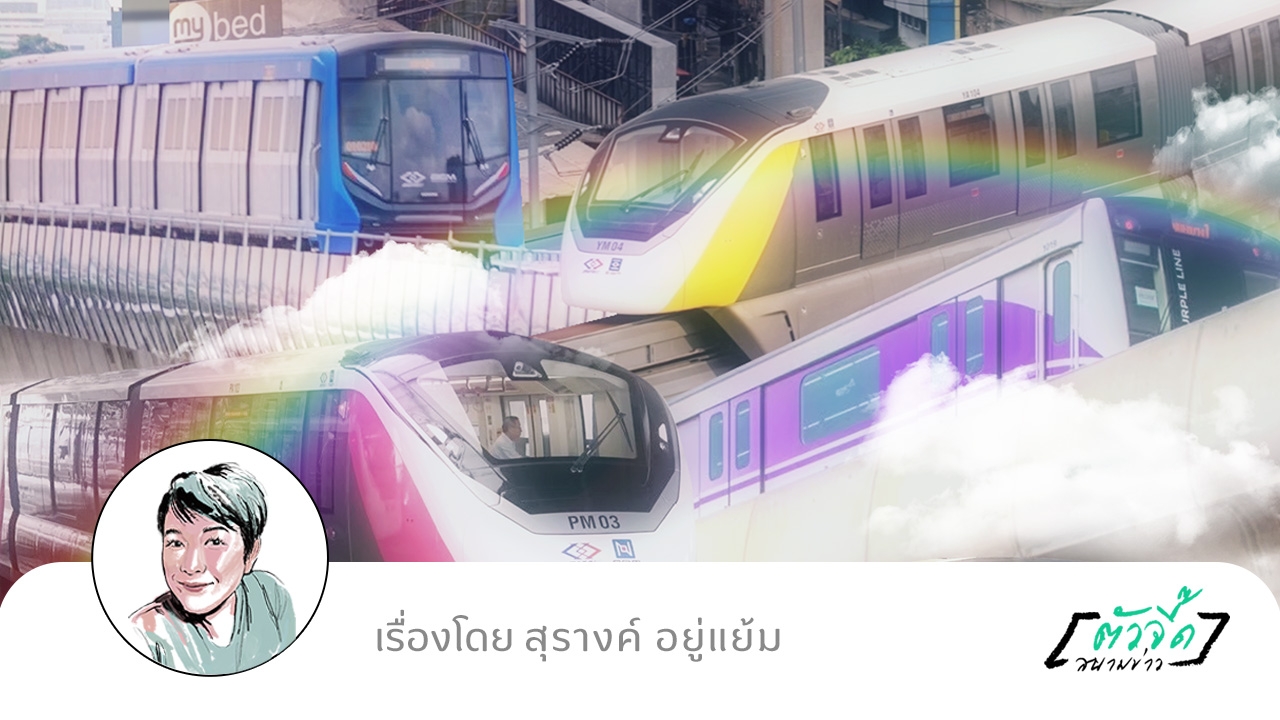
On 23 June 2026, the Cabinet resolved to repeal the previous policy of a flat 20-baht electric train fare across all lines, instead approving a new fare structure with integrated pricing to reduce citizens' living costs. The "integrated electric train ticket" will start with an entrance fare of 17 baht and a maximum fare of 45 baht per trip across all lines and colors, ensuring passengers do not pay duplicate entrance fees when transferring lines, unlike before.
Moreover, the government has set a retroactive implementation date of 1 January 2027 for universal public access to this policy, presenting it as a New Year's gift to the people, aiming to boost public approval as a flagship government achievement.
Beyond political gains, this policy has received considerable public support and effectively addresses issues faced by salaried workers starting their careers, students, and those living in suburban areas who commute long distances across lines. It directly helps them save on travel expenses.
For example, someone living near Bang Yai who commutes to work in the city around Siam Square must take the Purple Line train and transfer to the Green Line. Current average fares reach 90-100 baht per trip, so a round trip costs over 200 baht. This expense excludes additional costs for buses, motorbike taxis, or taxis from the train station to home.
However, under the new policy, train travel costs will be capped at 45 baht per trip, meaning a daily round trip will only cost 90 baht. This saving leaves commuters approximately 100 baht more in their wallets daily, which is a clear win for the public.
The policy of a 17-baht starting fare and a maximum of 45 baht per trip marks the first step by Prime Minister Anutin Charnvirakul and the Ministry of Transport, headed by Minister Pipat Ratchakitprakarn, toward expanding integrated tickets to connect other modes of transportation, offering hope for future developments.
Minister Pipat Ratchakitprakarn explained that promoting the integrated electric train ticket, with fares of 17-45 baht per trip and no duplicate entrance fees when transferring lines, along with the policy for the government to buy back train concessions, aims to enable the state to set fair fares and reduce travel costs for citizens.
The implementation will occur in two phases: Phase one involves the 17-45 baht fare policy for electric trains across all eight lines, allowing public use from early 2027 as a New Year's gift.
Simultaneously, the Ministry of Transport will proceed with transferring the Green, Gold, and Red Lines under the supervision of the Mass Rapid Transit Authority of Thailand (MRTA). However, the government currently faces public debt constraints, preventing immediate budget allocation to buy back train concessions from private operators.
As a solution, the Ministry of Transport has consulted with the Ministry of Finance to explore funding options that do not impact public debt, such as the Thailand Future Fund (TFFIF), targeting around 200 billion baht to purchase train concessions. The fundraising process is expected to take about 1.5 to 2 years.
Meanwhile, until the government can buy back the train projects, the Ministry of Transport will use MRTA funds to compensate approximately 4.698 billion baht annually. Concurrently, MRTA will negotiate with operators.
While buyback from private operators is pending, if additional revenue sharing or benefits need to be allocated to the government due to increased ridership from the 17-45 baht fare policy and integrated ticket system, arrangements will be addressed accordingly.

Currently, the Green and Gold Lines do not support EMV card payments because they use the Rabbit Card system. Once these lines are transferred to MRTA, MRTA will invest in installing card readers to enable integrated ticket use. In phase two, after raising funds, the government can buy back concessions before their expiry by negotiating to purchase the remaining concession periods.
Whether the buyback completes within this government term depends on funding readiness. Phase two will implement zoned fares based on travel distance—short trips pay one rate, longer trips pay a bit more to limit financial burdens on the government for compensation. Additionally, the Ministry of Transport plans to expand the integrated ticket system to buses and boats. If successful, this will comprehensively link all public transport ticketing systems.

Follow economic and government policy updates with ThairathMoney at
Follow the Facebook page Thairath Money at this link https://www.facebook.com/ThairathMoney