

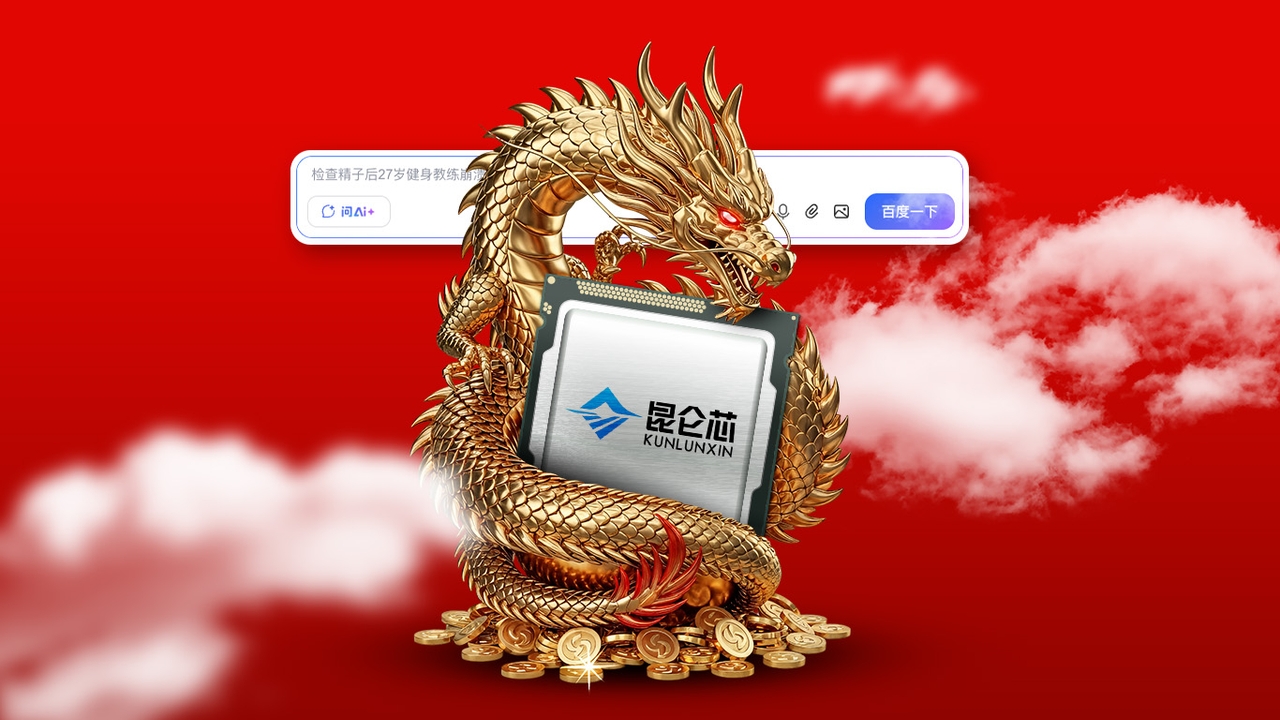
This news has generated significant excitement in China’s tech sector as Baidu, the country’s leading search engine, advances a major "value unlocking" strategy by preparing to list its cherished AI chip business Kunlunxin on the Hong Kong stock exchange amid a shift from traditional advertising to a full embrace of AI.
By 2026, Baidu is no longer just the "Google of China"; the company has structured its core business, called Baidu Core, which accounts for over 70% of its revenue, focusing heavily on full-stack AI technologies including an AI-native Search Engine that truly understands human context.
Additionally, Baidu provides AI infrastructure services for organizations requiring large-scale AI computing, a sector experiencing rapid growth, as well as Robotaxi services—driverless taxis—that have expanded to more than 22 cities, including international markets like Dubai and Abu Dhabi.
Importantly, Baidu’s AI chip business, specializing in high-performance processors designed specifically for AI tasks, operates under the subsidiary Kunlunxin.
Currently, Baidu is a dual-listed company trading on two major global stock exchanges: Nasdaq in the U.S. under the ticker "BIDU," its most liquid market, and the Hong Kong Stock Exchange (HKEX) under the ticker “9888.”
According to recent documents filed with the Hong Kong Stock Exchange (HKEX), Baidu submitted an application on 1 January 2026 to list its AI chip business unit Kunlunxin (Beijing) Technology through an initial public offering (IPO).
This move is seen as a critical step in spinning off the business to raise capital and increase agility in competing with giants like Nvidia in China’s AI chip market.
Kunlunxin is preliminarily valued at at least $3 billion USD (about 100 billion baht). This news immediately drove Baidu shares higher in both U.S. and Hong Kong markets as investors began recognizing the hidden value within the company’s advanced technology businesses.
Looking at Baidu’s recent share price performance on the U.S. market, the stock has steadily risen to $150.50 USD per share, detailed as follows:
Although Baidu’s Q3/2025 financials showed weakness from declining advertising revenue and a net loss due to asset impairment, the decision to push Kunlunxin toward an IPO clearly signals its intent to compete aggressively in the AI chip market.
Asia Plus Securities’ research team noted Baidu’s U.S. shares rose over 15% after announcing the Kunlunxin spin-off on 1 January 2026. Kunlunxin develops high-performance chips for AI processing.
In 2025, the company launched the KUNLUN P800 chip, which has been adopted by many Chinese tech firms with diverse customers including internet platforms, telecom providers, financial institutions, airlines, and government agencies.
Moreover, Kunlunxin plans to release new products: the KUNLUN M100 chip in early 2026 aimed at cost-effective large-scale processing, and the KUNLUN M300 chip in early 2027, an upgraded version for comprehensive training and processing performance.
Despite prior downward pressure on shares from weaker-than-expected Q3/2025 revenue and profits, strategically the results show Baidu is seriously transitioning into the AI era. Strong growth in AI businesses is a positive sign for the stock’s medium- to long-term value, suggesting further upside potential.
Meanwhile, Pi Securities’ analysis highlights that although total revenue is pressured by a shrinking advertising business due to China’s economic slowdown, AI momentum remains very strong.
AI Cloud revenue grew 21% year-on-year, reaching 6.2 billion yuan, especially with outstanding growth in AI Infrastructure. Fully driverless rides from Apollo Go surged to 3.1 million trips, up 212% year-on-year, with expanding international presence.
Baidu’s Q3/2025 earnings indicate that while traditional advertising revenue declined, AI-native marketing services grew by 262% year-on-year, which will be key to offsetting the legacy business going forward.
For Thai investors interested in owning Baidu shares, there are now easier options through three main channels: direct purchase on U.S. and Hong Kong stock markets, investment via mutual funds, or buying Depositary Receipts (DR) on the Thai stock exchange.
Sources:Baidu,Asia Plus Securities,Pi Securities
For more stock and investment news, visit Thairath Money
Follow the Facebook page: Thairath Money at this link