

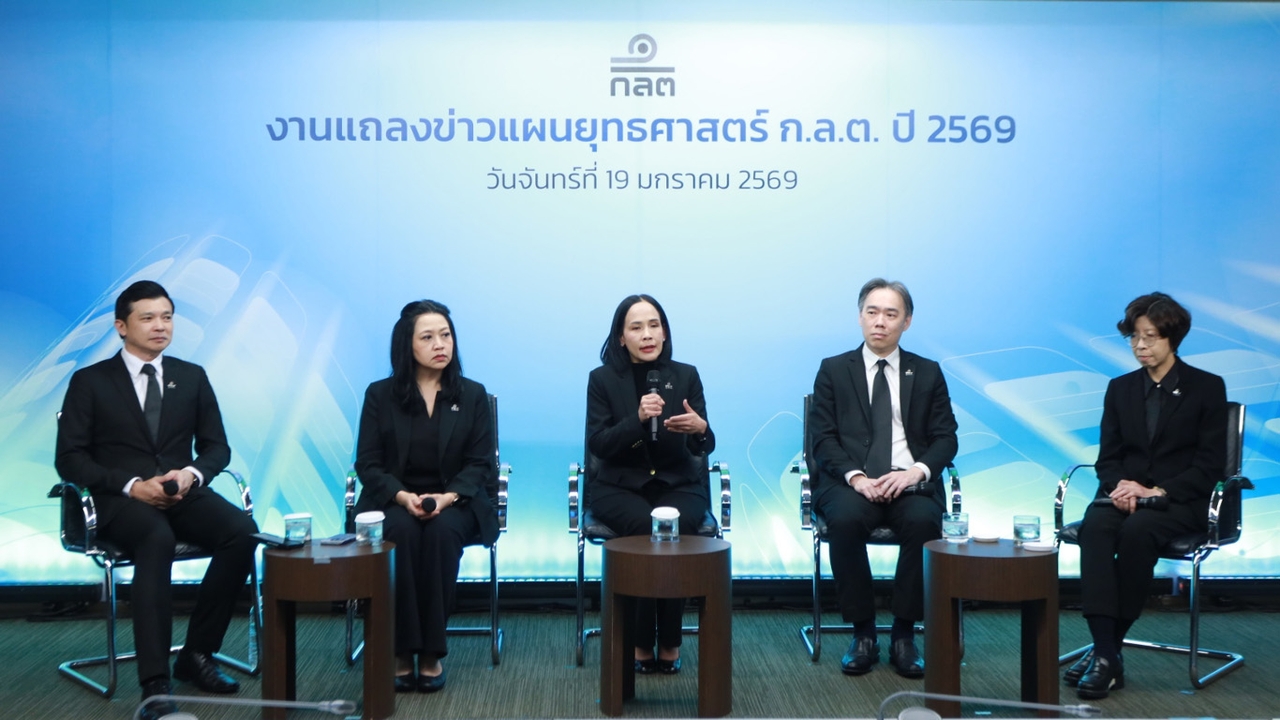
Amid various pressures on Thailand's capital market—including fragile investor confidence, global volatility factors, and questions about regulatory effectiveness—the regulator is under close scrutiny. The Securities and Exchange Commission (SEC) is being closely watched.
Thairath Money delves into the SEC's strategic 3-year plan (2026–2028) under the leadership of Prof. Dr. Pronong Bussaratakul, Secretary-General of the SEC. This plan continues and elevates previous initiatives, centering on “Building Trust, Powering Growth” to simultaneously build confidence and drive growth, positioning Thailand's capital market as a key economic driver.
Prof. Dr. Pronong Bussaratakul, Secretary-General of the SEC, said that regarding concerns about law enforcement effectiveness, the SEC is confident in continuous progress but remains committed to raising standards even higher—“better still”—by dedicating resources and applying advanced technology such as AI to enhance operational capabilities.
The SEC welcomes all expectations without dispute, but law enforcement operates as a value chain requiring coordination across multiple sectors, posing challenges at every step. Therefore, the SEC is ready to learn and develop to overcome these limitations.
In implementing the 3-year strategy (2026–2028), the SEC focuses on three main areas (3Ts):
1. Tie—linking with existing initiatives: continuing what works and promptly addressing obstacles, especially emphasizing law enforcement that is “swift, thorough, and impartial.” This proactive approach in 2025 resulted in 170 enforcement cases involving 409 offenders.
Lessons from major cases like MORE and STARK have led to concrete measures such as revising NVDR rules to allow trading only by foreigners and promoting the Securities Bureau to ensure sufficient collateral information to mitigate risk.
2. Trends—responding to external challenges like technology waves, sustainability, and an aging society. Although Thailand’s capital market has proven itself over time, the main challenge is aligning with global markets and enabling small businesses and entrepreneurs real access to capital.
3. Trust—building confidence, the most fundamental element. Without investor trust, the capital market cannot progress. This year, emphasis is on enhancing the quality of companies entering the market from the start, attracting high-quality new listings, improving governance, and maintaining the quality of gatekeepers such as financial advisors and auditors to perform rigorously.
The SEC’s direction over the next three years under this strategy targets five clear objectives:
Regarding preliminary details on establishing Crypto ETF funds in Thailand, Jomkwan Kongsakul, Deputy Secretary-General of the SEC, revealed that the principle has been approved by the SEC board, with detailed criteria to be presented later, including amendments to custodian regulations. Clarity is expected between February and March, with criteria issued in the second half of the year. The SEC is engaging all parties—asset management companies, custodians, and digital asset providers—to drive this forward.
If Crypto ETFs are established and listed on the Stock Exchange, retail investors will be able to invest, unlike current UI Fund rules which limit participation to qualified institutional buyers. Retail investors can access through brokerage accounts and must undergo standard suitability assessments.
Only licensed asset management companies (AMCs) authorized for mutual fund businesses can issue Crypto ETFs. However, AMCs may collaborate with digital asset experts if lacking specific expertise.
Fund structures may include feeder funds investing abroad or funds directly purchasing coins, depending on each AMC's expertise. The SEC sees clearer acceptance of cryptocurrencies as alternative assets and seeks to integrate digital asset markets with traditional finance.
Futures crypto products are under consideration but require more time. The SEC aims to provide investment options for Thai investors while emphasizing investor education and cautioning against all-in speculative investments, advocating for appropriate portfolio diversification.
Prof. Dr. Pronong Bussaratakul, Secretary-General of the SEC, concluded that the SEC cannot succeed alone and sent a message to all capital market stakeholders—including related agencies, listed companies, and investors—to collaborate in making Thailand’s capital market a true engine of economic growth.
“We know the path we have taken and where we are going, but we are not walking alone. If anyone has doubts about their steps, the SEC is confident in our direction, but achieving these goals cannot be done alone,” Pronong said.
Regarding efforts to block grey capital groups and scammers, the SEC has intensified oversight in two main areas: on the fundraising side, focusing on shareholder structure verification and accurate reporting, collaborating proactively with the Anti-Money Laundering Office, police, and DSI to prevent the capital market from becoming a money laundering channel; and on intermediaries, enforcing strict KYC/CDD to provide appropriate advice compliant with law.
The SEC confirmed that the Thai Individual Savings Account (TISA) will definitely launch this year, designed with flexibility and openness to invest in stocks with good returns according to risk tolerance. Discussions with the Ministry of Finance will proceed following the formation of the new government.
Regarding the Market Maker concept being studied by the Stock Exchange to address liquidity issues in small- and mid-cap stocks, the SEC views it as an interesting tool but stresses that methods must be finalized before issuing regulations.
It is essential to ensure fairness, effectiveness, and avoidance of unintended negative impacts. The most crucial factor is an effective detection system to prevent misconduct or price manipulation. If these risks can be mitigated, Market Makers can positively support the capital market.
For stock and investment news, visit Thairath Money at
Follow the Facebook page Thairath Money at