

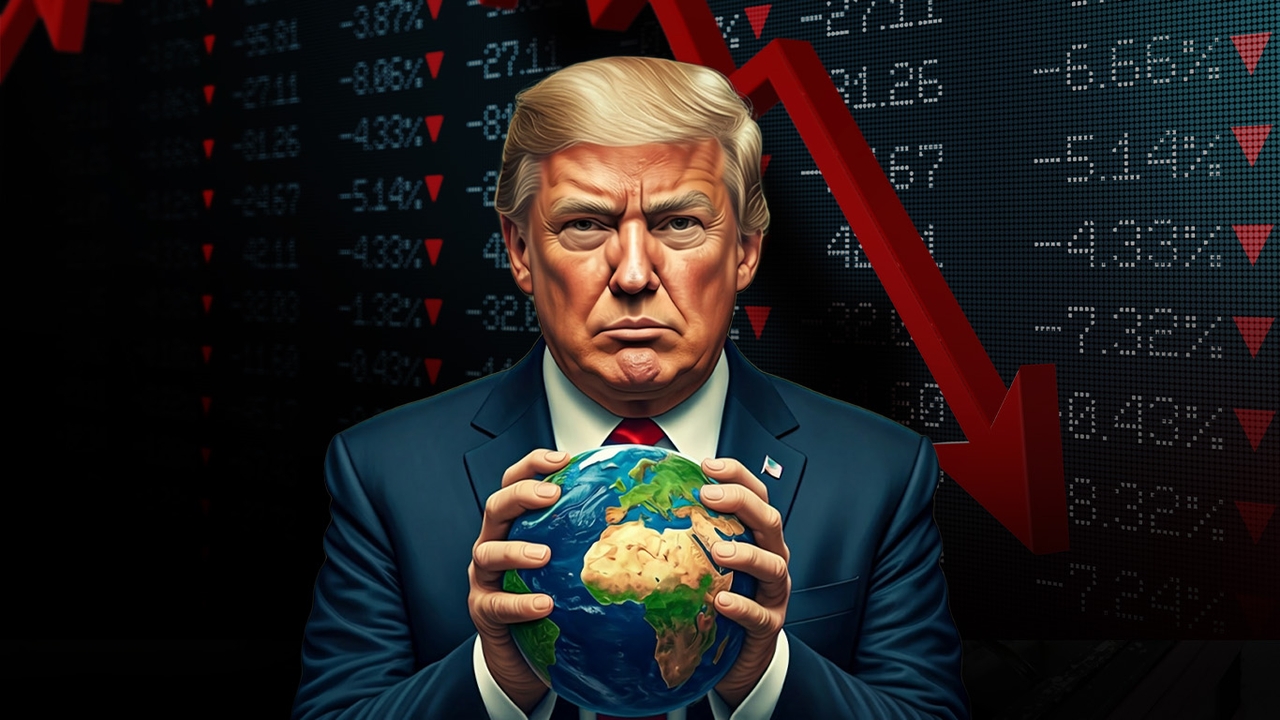
Today, global CEOs and investors no longer focus solely on economic growth, innovation, or global interest rate trends. At the 2026 World Economic Forum (WEF) in Davos, the prevailing discussion centers on the degree of uncertainty the world is facing.
As the financial and investment sectors confront multifaceted pressures from geopolitical conflicts, great power rivalries, and volatile international trade policies, the investment equation is undergoing transformation.
Recently, global financial markets have had to manage volatility not only stemming from economic data, interest rate policies, inflation, and corporate earnings but increasingly from political and geopolitical factors—from Middle Eastern conflicts to power struggles among major nations.
Events such as the Ukraine war, the U.S. intervention in Venezuela, economic sanctions, and U.S. trade tax policies have swiftly disrupted stock markets, bonds, energy sectors, and currency values worldwide.
With geopolitical risks rising to the forefront of investment decision-making, investors and asset managers are placing greater emphasis on scenario-based risk assessments and geopolitical dimensions to understand how global politics will reshape financial markets and investment opportunities.
Reuters news agency reported that demand for geopolitical risk analysis has increased significantly, becoming especially apparent earlier this week when the U.S. signaled potential tax measures against European countries if no agreement is reached regarding its role in controlling Greenland—causing financial market shocks and short-term volatility.
Previously, major events such as Russia's invasion of Ukraine in 2022, significant trade barriers under President Donald Trump, and U.S. political maneuvers in Venezuela underscored that geopolitical risk is no longer a distant concern for investors.
Mehill Marku, senior geopolitical analyst at PGIM Fixed Income, stated that geopolitical factors were historically secondary compared to macroeconomic data or central bank monetary policies. However, since the Ukraine war, the importance of this analysis has surged rapidly.
Before 2022, geopolitical factors were not seen as core to portfolio management. Now, client inquiries and consultations have increased sharply due to interconnected crises making the environment more challenging.
Rishi Kapoor, Vice President and Chief Investment Officer of Investcorp, said at the World Economic Forum in Davos that organizations must "build new capabilities" to cope with faster and more severe risk changes.
Pandu Patria Sjahrir, Chief Investment Officer of Danantara Fund, Indonesia's sovereign wealth fund, noted that this year, the fund prioritizes political leadership and geopolitical risks more than before. "We now consider worst-case scenarios in our financial risk assessments; in fact, my baseline case is the worst-case."
Marc Gilbert, head of the BCG Center for Geopolitics, said that Trump administration policies propelled geopolitics from around 20th place a decade ago to the top of clients’ priority lists.
With rapid, volatile, and intense changes, he has met with senior executives and corporate boards 235 times in the past 18 months on these issues.
Ultimately, both the business sector and analysts must adapt swiftly to these changes. The key topics discussed at the World Economic Forum (WEF) may also require significant attention from Thailand.
Source:Reuters
For stock and investment news, visit Thairath Money at
Follow the Facebook page: Thairath Money at this link