

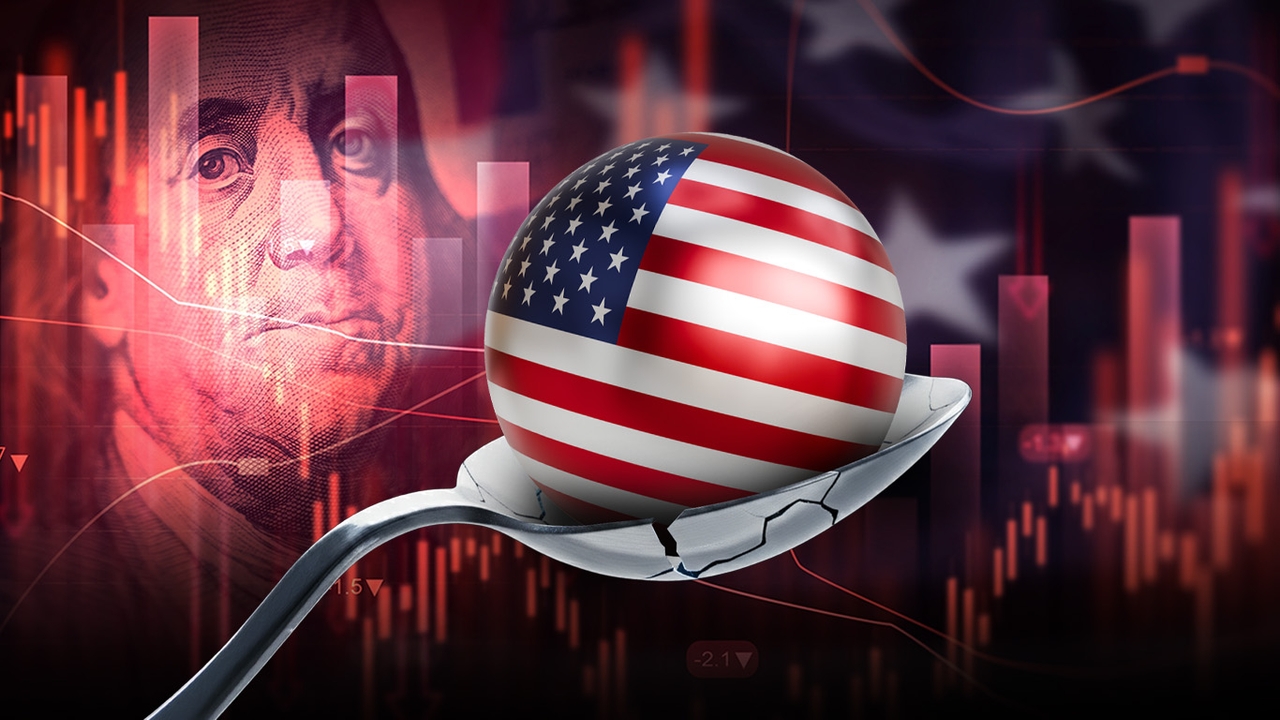
The US stock market is beginning to face a critical test of the AI technology investment theme as heavy selling pressure hits many big tech stocks. Although earnings remain strong, analysts believe the market is "intolerant" due to overly high expectations.
In particular, massive investments in AI infrastructure may pressure short-term cash flows, prompting investors to reduce risk before clear proof emerges that AI spending can translate into real growth and profits.
US tech stocks faced heavy selling pressure, pushing the S&P 500 down 1.23% and the Nasdaq down 1.59% yesterday. Both reflect the same picture: investor expectations are extremely high under the AI investment trend. Even a single underwhelming figure can immediately cause stock prices to plummet.
For example, Amazon reported Q4 2026 revenue of $213.4 billion, a record high exceeding analyst forecasts. Yet its stock dropped more than 10% in after-hours trading. The main reason was not past performance but future spending plans.
Amazon revealed a 2026 capital expenditure (Capex) plan of about $200 billion, a 60% increase over the previous year. Most of this will be invested in AI infrastructure, processing chips, automation, robotics, and low-earth orbit satellite projects. Although reflecting a long-term vision, this large Capex raised investor concerns that it could significantly pressure cash flow, leading the market to "reduce risk" immediately despite the core business still growing strongly.
On the AMD side, the company reported Q4 2025 revenue of $10.3 billion, a 34% increase year-over-year, with Data Center business growing 39% due to strong demand for EPYC chips and Instinct GPUs. However, its stock plunged 17% in a single day.
The sell-off in AMD resulted from Q1 2026 revenue guidance that AI-focused investors deemed "not growing fast enough" compared to competitors like Nvidia. This shows the current market is not just seeking planned growth but expects exponential growth.
Korn Hathaisattha, Chief Investment Strategist and Economist at CGS-International Securities (Thailand) Co., Ltd. He told Thairath Money that although big tech stocks like AMD and Amazon both declined, their fundamental factors differ.
AMD's decline stems from concerns about potential revenue slowdown, while Amazon, Google, and Microsoft face the challenge of massive AI investment budgets this year, which seem at odds with the current competitive environment.
Currently, fierce competition comes from companies like Anthropic, owner of a newly launched AI model gaining great popularity abroad, raising questions about the necessity of traditional software stocks (SaaS) and causing sell-offs in that sector.
Moreover, questions arise about whether the hyperscalers' huge investments are worthwhile amid tightening competition, with this pressure likely to persist "for some time" until new positive factors emerge.
Korn added that investor expectations are currently "very high." For example, Microsoft’s Cloud business missed growth targets by just 1%, but its stock fell 11%. There are also concerns about Microsoft’s Remaining Performance Obligation (RPO), of which 45% belongs to OpenAI, which itself faces cash flow issues and competition, fueling ongoing worries and sell-offs.
However, despite short-term selling pressure, he maintains a positive long-term view on AI stock investment themes, believing the current technology demand and profit figures are real.
The US tech market currently faces obstacles including insufficient electricity supply, an unfriendly monetary policy, and overly high expectations.
For tech stocks to recover sustainably, two main factors are needed: economic data and new technology launches. While economic data might cause short-term rebounds, sustainable trend changes require technological developments that prove investments drive real growth.
Korn also advised investors that if they lack understanding or confidence in a company, they should avoid buying individual stocks. Instead, investing in index funds or ETFs is better. For example, while individual stocks like Microsoft or Amazon may drop 10-12%, the S&P 500 index might only fall 1-2%. Thus, funds help reduce risk more effectively.
Additionally, investors should consider diversifying into other assets. The new US Federal Reserve chairman is unlikely to support quantitative easing, reducing inflows into risky assets like tech stocks, Bitcoin, or gold. Hence, diversification into dollar-denominated assets, such as US bonds which have significantly declined recently, is recommended.
Read stock and investment news with Thairath Money at
Follow the Facebook page: Thairath Money at this link