

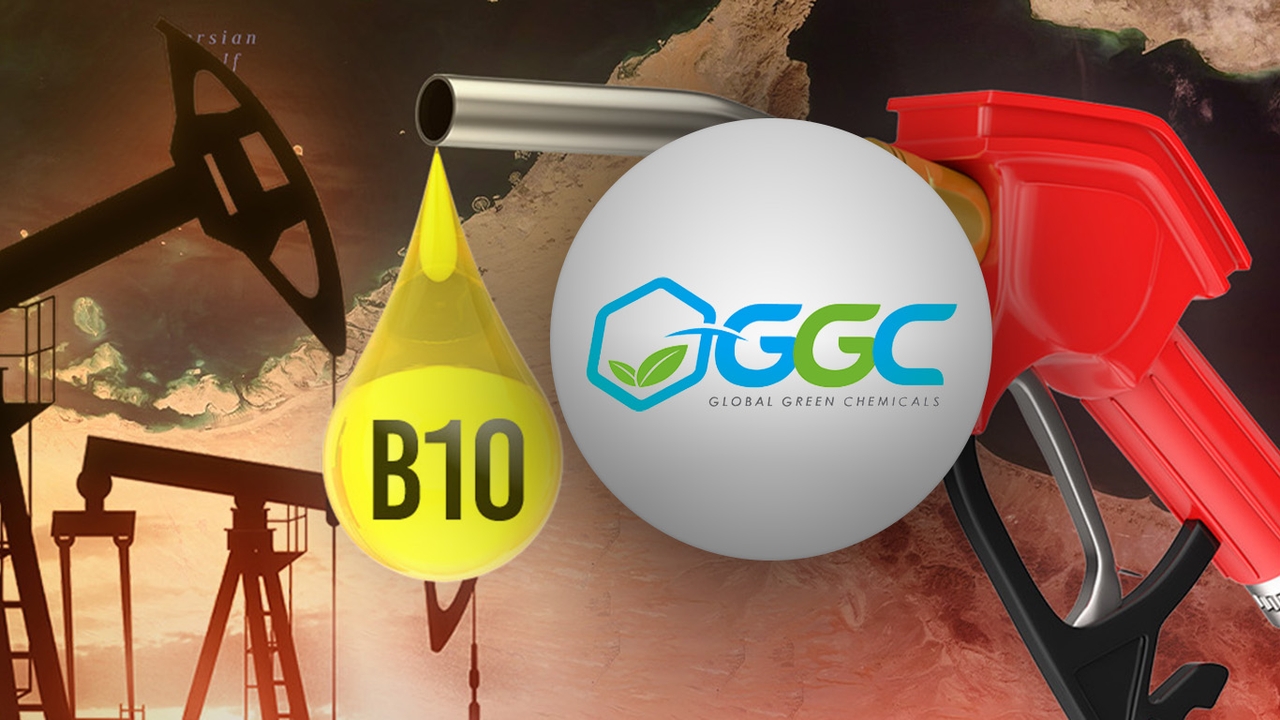
Geopolitical tensions in the Middle East are escalating, especially the risks around the "Strait of Hormuz," a major oil transit route. This poses a significant challenge for Thailand, as any escalation is likely to cause oil prices to fluctuate and rise inevitably.
Amid this crisis, Global Green Chemical Public Company Limited (GGC) sees a crucial opportunity to turn the energy challenge into a golden chance for "biodiesel," a clean energy source Thailand is advantaged in producing due to its domestic palm oil industry.
GGC points out that increasing the biodiesel blend ratio from 5% (B5) to 10% (B10) can reduce dependence on imported diesel, saving the country over 25 billion baht. This would not only help mitigate the oil price crisis but also strengthen energy security and sustainably drive Thailand's economy forward.
Kritsada Prasertsukho, Managing Director of Global Green Chemical Public Company Limited (GGC) He said the Middle East conflict and related geopolitical issues could affect global logistics and supply chains but were not unexpected for the company.
Although the group currently imports relatively little oil from the Middle East, overall Thailand still relies on crude oil imports through the Strait of Hormuz for up to 50% of its supply.
This conflict risk could push oil prices higher. In such conditions, biodiesel is seen as the "hero" to resolve the crisis, given Thailand's advantage of producing clean energy biodiesel from palm oil.
To manage the country's energy risk, GGC proposes raising the biodiesel blend from the current 5% to 10%, preliminarily estimating savings of about 25 billion baht from reduced oil imports.
Promoting this alternative energy will not only enhance energy security and extend operational time for the transport sector but also act as a key driver of the domestic economy during a crisis.
At the same time, the recent removal of the biodiesel (B100) price support from the Oil Fuel Fund in September is expected to have minimal impact on the company, as Thailand already mandates biodiesel blending and government subsidies are only about 0.50 baht per liter.
Kritsada added that preliminary discussions on increasing the biodiesel blend from B5 to B10 have been held with PTT Global Chemical Public Company Limited (GC), including talks on promoting ethanol use in the form of E20.
Next, GC's team will consolidate all points to present to PTT Public Company Limited (PTT), after which the PTT group will propose these measures to the government for consideration.
For 2026, the company aims to create business growth opportunities alongside sustainability efforts by enhancing structural efficiency, competitiveness, and expanding its high-value product (HVP) segment more clearly.
It targets 10% EBITDA growth by boosting competitiveness and business value, turning sustainability into business opportunities, with a goal of reaching 1.2 billion baht EBITDA by 2030.
Kritsada said that despite ongoing challenges faced by Thailand and the industrial sector—including geopolitical tensions, tariff policies, global economic volatility, and market-driven energy prices—
GGC is prepared to adapt and respond to these changes. With strong financial flexibility, effective liquidity management, consistently positive operating cash flow, and a debt-free status, the company is well positioned to support its long-term strategic growth.
The company plans to invest 400 million baht in 2026, using working capital focused on long-term return investments. Additionally, it manages liquidity through short-term deposits and efficient operational expense control.
Read stock and investment news with Thairath Money at
Follow the Facebook page Thairath Money at this link