

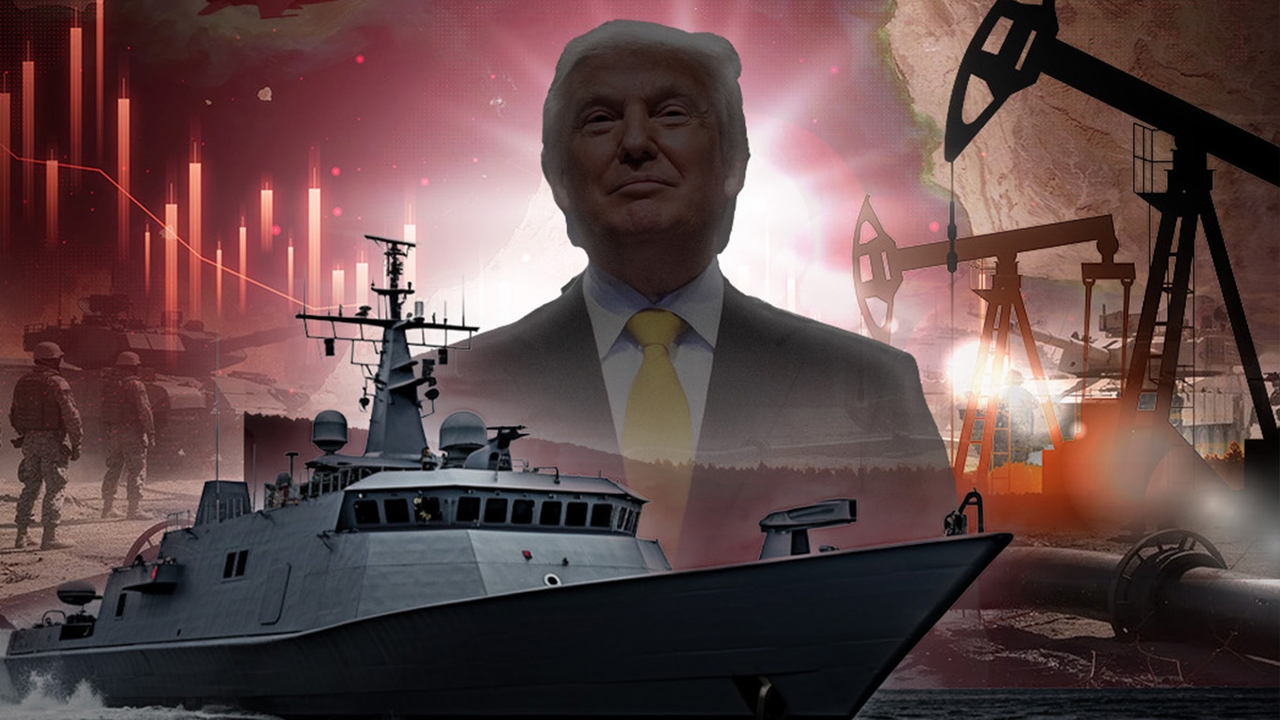
This week, global stock markets are closely watching the conflict between the US and Iran after Donald Trump set a deadline requiring Iran to open the Strait of Hormuz within a specified time. Failure to comply could lead to a major attack on critical infrastructure, marking a pivotal moment that may shape the future direction of both energy and stock markets.
Several analysts agree that 'uncertainty' is the main risk at present, as it is impossible to predict how the war will end. For investors with low risk tolerance, it is advised to delay investing and possibly focus on holding 'cash' or 'short-term bonds,' while waiting to buy quality assets when the situation becomes clearer in the near future.
Tensions between the US and Iran remain at a critical juncture, with the global market focusing on the crucial deadline set by Donald Trump requiring Iran to open the Strait of Hormuz by 8:00 p.m. US time. Otherwise, Iran faces the threat of large-scale infrastructure attacks, a condition that exerts significant military and economic pressure.
Meanwhile, the Strait of Hormuz, a vital global oil shipping route, remains restricted, accounting for about 20% of the world's energy supply. This blockade has significantly impacted the energy system and global trade, causing sharp increases in oil prices and triggering supply shocks in several regions.
Global crude oil prices remain high, recently trading above 110 US dollars per barrel amid concerns that if the deadline does not lead to an agreement, the risk of attacks on energy infrastructure will increase, potentially causing significant short-term disruptions to oil supply.
Although there are signs that both sides remain open to negotiations, distrust and differing conditions remain major obstacles, causing global financial markets, including the Thai stock market, to continue volatile movements in response to daily news.
Securities analysts at Dao Securities (Thailand) Public Company Limited commented that with Donald Trump setting a deadline alongside threats to destroy Iran's infrastructure and power plants if the Strait of Hormuz is not opened, trading will fluctuate according to war news and supply shocks. Therefore, they recommend 'delaying investment' to observe developments around the US deadline on Tuesday.
If a severe attack occurs, it will be a negative signal prompting investors to consider taking profits or reducing their portfolios immediately. Caution is also advised for refinery stocks, which may face government intervention affecting pricing structures.
They emphasized risk-limiting options, stating, "Currently, safe choices are diminishing, and investors must select stocks carefully." They continue to recommend holding PTTEP to hedge against energy crises, as well as petrochemical stocks like PTTGC, which stand to benefit.
For other highly volatile stocks, they suggest waiting for price dips before buying, including GULF, ADVANC, TRUE, CPALL, BDMS, and CPN.
Meanwhile, Innovest Securities Company Limited assesses that the Thai stock market remains volatile due to the Middle East situation. Investment strategies should therefore emphasize high flexibility, tailored to investors' risk tolerance levels.
For low-risk investors worried about negotiation failures, they recommend adjusting portfolios to hold 'cash or short-term bonds' to maintain liquidity and reduce impacts from rising bond yields, while waiting to buy quality assets once the situation stabilizes.
For short-term portfolio management, energy stocks benefiting from rising oil prices such as PTTEP and PTTGC are advised, with a recommendation to set trailing stop-loss points to limit losses if the situation improves.
Additionally, accumulating high-dividend stocks (with dividend yields over 5%) is suggested to generate cash flow before the ex-dividend period between April and May, including KTB, KTC, KBANK, and TISCO.
For investors with higher risk tolerance, the focus should be on short-term speculation in groups benefiting from supply chain recovery or gradually accumulating defensive stocks with strong pricing power to cope with long-term inflation.
Read stock market and investment news with Thairath Money at
Follow the Facebook page: Thairath Money at this link