

If you still believe that "not investing equals safety," this event might make you reconsider. In a world where inflation steadily erodes the value of money in your pocket every day, and AI is accelerating faster than expected to replace jobs, letting your money sit idle is no longer a safe zone.
To equip investors and prepare them to face these challenges, recently the Stock Exchange of Thailand (SET) organized an event "Stock Exchange on Tour in Rayong" on 25 Apr 2026 GMT+7, bustling with enthusiastic investors from Rayong and nearby provinces who attended in large numbers.
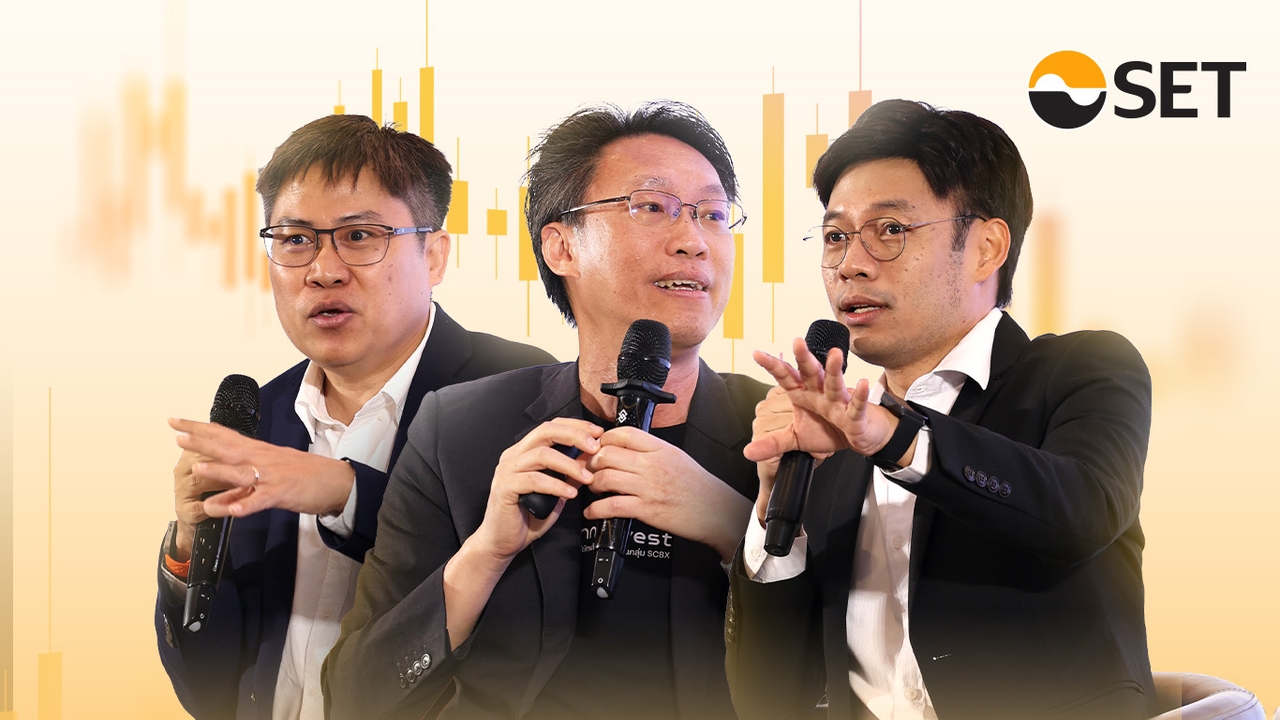
Especially highlighted was the opening session titled "Invest Wisely, Watch Your Portfolio Grow," packed with insights from three true experts in the field:
For those who missed the event, Thairath Money has summarized the key points here.
Many might think that working and simply saving cash is the safest approach. However, at this forum, all three experts unanimously emphasized that not investing at all is actually the greatest risk.
Pichai Lertsupongkit clearly illustrated that investing is a method to build long-term wealth through the mechanism called "compound interest." If we achieve returns of 7-8% annually, our money will double within 10 years.
Conversely, holding cash idle means our purchasing power is eaten away by "inflation." This year, the high oil prices may push inflation back up to 4%, so holding cash effectively reduces its value daily.
Jaroonpan Wattanawong expanded on this by saying that today we’re not just fighting inflation but also facing the threat of AI replacing jobs. While it was originally forecasted that businesses would adopt AI at around 10%, the actual figure has soared to 17%.
This has led to a trend of early retirement and increased unemployment. Investing is thus not just for the wealthy but a "necessary source of income" that everyone must urgently build as a cushion against job insecurity.
Meanwhile, Chatchawan Santhidet said to think of money as an employee who requires daily expenses—that is, inflation that reduces its value daily. If we don't send this employee to work or invest it, the result will be negative. Whether investing a lot or a little, we must get our money to work.
It's undeniable that the current global situation is full of uncertainties, from the prolonged Middle East war, persistently high oil prices, to interest rates that may not drop as previously expected. These factors cause stock market volatility, so what should investors do?
Jaroonpan noted that investment options have expanded, allowing investors to use tools like DWs or the TFEX market to profit even in falling markets. But the most important rule is "never invest beyond your knowledge," regardless of the asset or business. Without proper homework, investing beyond your understanding will inevitably lead to losses.
On the other hand, Pichai recommended a Barbell portfolio strategy to cope with uncertainty by dividing weights into two sides: sectors benefiting from the war, and those harmed but deeply oversold. Defensive sectors with strong business operations, such as those able to pass costs to consumers, serve as a core to stabilize the portfolio.
For those who find investing difficult nowadays, Chatchawan offered a value investor’s perspective that this is because we focus only on “today’s news.” Looking back 10-20 years, the world has faced far worse crises many times.
Yet, the 10-year historical returns of global stock markets, such as the S&P 500 (+235%), India’s SENSEX (+215%), Japan’s NIKKEI 225 (+115%), and even Thailand’s SET (+12%), which many consider tough, prove that long-term investing does not result in losses if one invests wisely and with discipline.
for investors at all levels begins with clearly "setting goals." Start by asking yourself what kind of life you want at retirement, your risk tolerance, and whether you have sufficient cash flow. With a clear “flag” in mind, you will know which tools to use to meet your needs.
Diversify risk across various assets, focusing on companies with solid fundamentals and undervalued prices. If the Thai stock market is insufficient, investing abroad through DRs or starting with ETFs is an accessible option today. Importantly, avoid over-concentrating on any single stock.
Investing is like building a "money-making machine" powered by the force of "compound interest." We must build this machine ourselves without copying others' portfolios. We must research, think, analyze, and decide independently. Those who act first always have the chance to get wealthy earlier.
This summary from the "Stock Exchange on Tour in Rayong" event reflects that no matter how volatile the economy or how technology changes the world, financial knowledge and investing remain the best protection.
If you finish reading and feel eager to deepen your knowledge and get detailed investment ideas like these, don’t miss out. Events like "Stock Exchange on Tour" are major occasions organized by the Stock Exchange of Thailand to deliver financial knowledge. The excitement doesn’t end here.
Northern residents can mark their calendars because the next stop will bring a wealth of knowledge to Chiang Mai. The content, insights from experts, and lively atmosphere will remain rich, comprehensive, and engaging as always.
Those who don’t want to miss these great opportunities can follow schedules and updates on the Stock Exchange’s website.www.set.or.th