

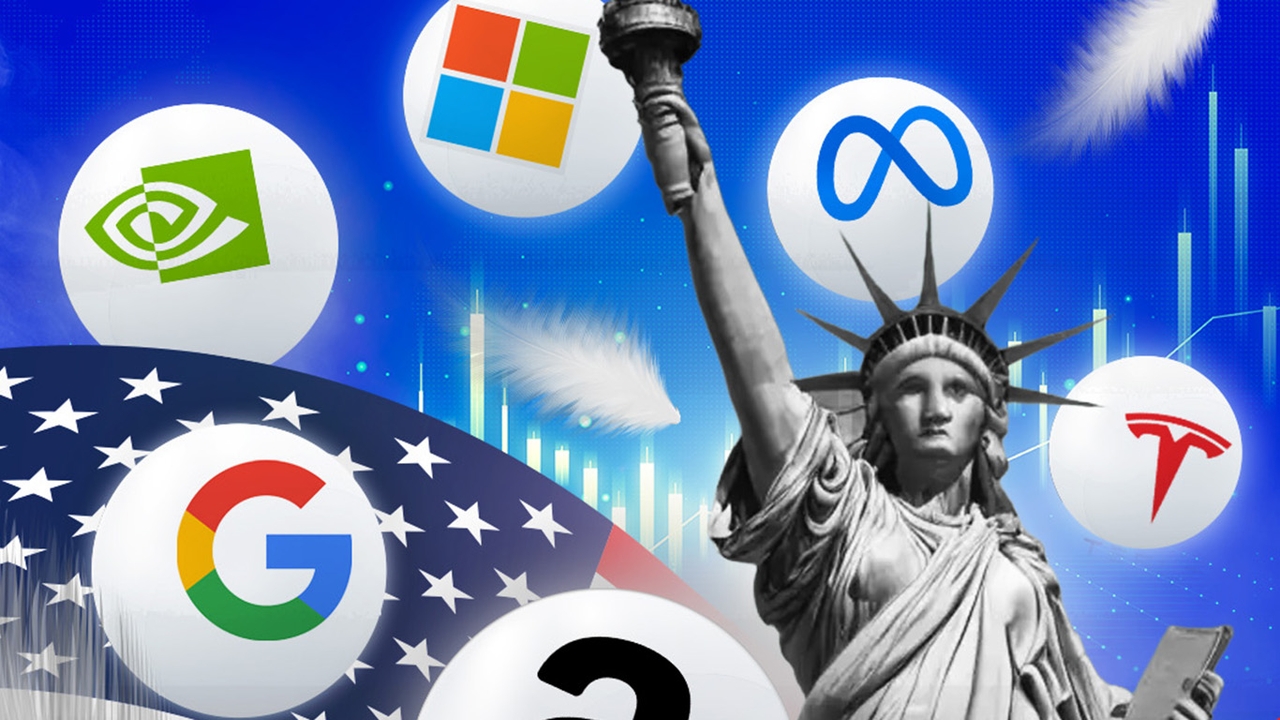
Although the Magnificent 7, or the seven leading U.S. tech stocks, continue to be at the center of the AI and global investment trends in 2026, it has become clear after the latest quarterly earnings reports that some companies have "good results" but their stock prices no longer respond as they once did. Why is this?
Thairath Money summarizes key points from the perspectives of Sitthichai Duangrattanachaya, Chief Investment Strategist at InnovestX, , and Wisakorn Keerivarn, Senior Investment Strategist at Yuanta Securities (Thailand). They shared their insights on the programMoney Issue EP. 59,which we bring to you here.
Starting with Wisakorn Keerivarn, Senior Investment Strategist at Yuanta Securities (Thailand), who explained that, in theory, markets always price in future expectations. Some tech stocks that have surged usually show strong earnings or financials, causing their share prices to rise in anticipation, such as Google and AMD. But currently, U.S. tech stocks are priced with very high expectations, so even good results may not be enough—they might need to exceed market forecasts.
“The U.S. stock market now expects earnings to beat guidance and show growth. It’s like a beauty contest where only first place counts—no second or third place allowed. Those ranked second or third get sold off,” Wisakorn added. Sometimes, a company’s financials look good, but after market close, the stock price can drop sharply by 9%.
Meanwhile, Sitthichai Duangrattanachaya, Chief Investment Strategist at InnovestX, noted that the Magnificent 7 group often shows a clear pattern: when a company reports strong earnings, its stock tends to rise until the earnings season ends, then waits for the next quarter's results. Stocks that perform poorly tend to underperform for another quarter before investors reassess the situation. However, some stocks depend on how the market chooses to react. For example, even if Nvidia reports strong earnings or positive news, its stock price might not rise much. This reflects a market that continuously tests companies to see how well they handle various challenges. U.S. tech stocks often need to constantly "prove themselves."
Following the release of first-quarter 2026 earnings, several tech stocks remain attractive. We delve into the fundamentals of each stock, highlighting strengths and weaknesses from Sitthichai's InnovestX perspective, dividing them into three groups.
1. Stocks currently standing out
Amazon is a highly adaptable company, evolving from selling books to e-commerce and now moving toward physical AI, notably "controlling costs effectively."
Google has a wide range of technologies, including AI and quantum computing, but its DNA is somewhat "hesitant." It starts initiatives without fully committing, often using a Tencent-like strategy: letting competitors battle fiercely first, then entering later to "dominate" at the end.
2. Stocks that need to prove themselves to the market
Nvidia is considered to have strong business fundamentals, and its first-quarter 2026 earnings are expected to be good as well. However, the market is believed to be cautious, as evidenced by the stock not rising despite positive news. This suggests the company still needs to prove itself on various fronts. Initially, it is recommended to buy if the price is below 200 U.S. dollars per share.
Microsoft has good earnings, but challenges in its collaboration with OpenAI have forced the company to adjust strategies and increase CapEx (long-term investment expenses). It may need to invest more than other tech companies. Since it operates in the same group as Google and Amazon, it is often compared, especially regarding stock price growth, making other stocks potentially more appealing.
Meta Although its AI investments have yielded good returns—for example, Facebook consistently curates content that interests users—Meta lacks a cloud business, which might make its business model more difficult than others, as it heavily relies on social media platforms, a challenging area.
3. High-risk stocks with unique factors
Tesla is suited for investors who can tolerate high risk because its business focuses on specialized expertise and future technologies that remain uncertain, such as space projects, Mars missions, robotics, and it is closely tied to CEO Elon Musk.
Apple had a very strong first quarter in 2026 due to soaring sales in China. However, concerns remain about rising memory component prices, which could eventually impact the smartphone business. Currently, it may be the least favored stock among the Magnificent 7.
All these insights reflect that investing in the Magnificent 7 in 2026 is no longer just about "which company is profitable" or "which grows fastest," but a competition between "market expectations" and "each company's ability to prove itself." In a time when AI is the main theme of global investing, U.S. tech stocks are not just about the future; it's about whether the market truly believes each company can reach the expected future.
For more stock news and investment insights, visit Thairath Money athttps://www.thairath.co.th/money/investment
Follow the Facebook page Thairath Money at this link:https://www.facebook.com/ThairathMoney