

Thairath Online
Thairath Online

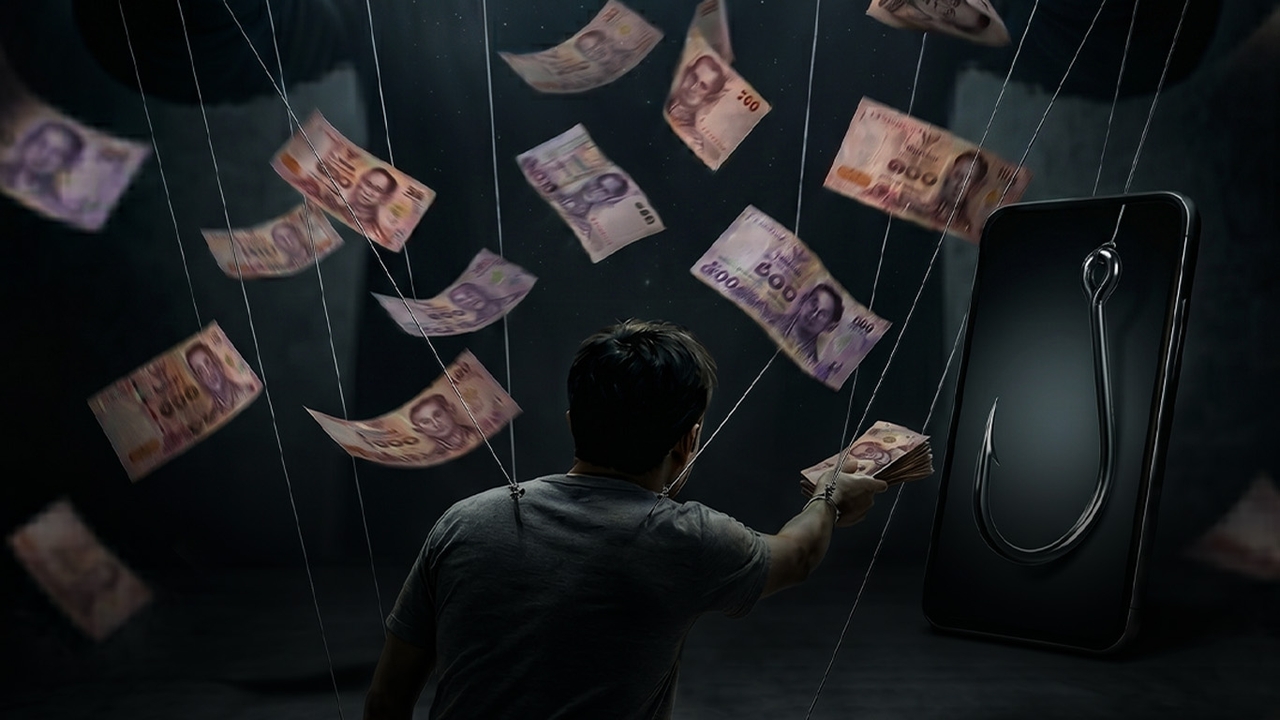
Sunk Cost Fallacy: The Psychological Bias Exploited by Scammers to Trick Victims into Repeatedly Transferring Money

Capital market02 Jun 2026 10:39 GMT+7

Share

Sunk Cost Fallacy: The Psychological Bias Exploited by Scammers to Trick Victims into Repeatedly Transferring Money

"Just transfer another 10,000 baht, and you’ll get all your money back."

"You’ve already invested 50,000 baht. If you stop now, you won’t be able to withdraw your money."

These phrases are the same old story scammers repeatedly use in daily financial crime reports. Many who hear these stories may wonder, "Why do victims keep transferring hundreds of thousands or even millions more money, knowing they are being scammed?" Some might simply think they are blinded by greed.

But did you know? In behavioral science, there is a deeper truth. Both novice investors and many ordinary people have fallen victim to a psychological mechanism called the "Sunk Cost Fallacy" many times before.

Painful yet unending! The bias that hides in everyday life.

The term "sunk cost" in economics refers to money, time, or effort already spent and unrecoverable. Proper decision-making principles say we shouldn’t consider these past costs when making future choices. However, the human brain is not a robot that always thinks 100% rationally.

Who has ever behaved like this? Check yourself:

  • Eating buffet to get your money’s worth: Even when you’re full to the point of discomfort, you keep eating because you regret the money spent.
  • Stuck with non-performing stocks: Buying stocks without thorough research, then when the stock plummets because the company has no future, instead of cutting losses, you keep "averaging down" by investing more money, hoping someday it will break even—though this actually wastes the chance to use that money for profitable opportunities elsewhere.

These behaviors arise simply from the feeling of "regret," which has become a massive loophole that scammers exploit to control our decisions—whether in digital asset trading scams, gold investment fraud, simulated stock trading scams, or foreign stock investment fraud.

How do scammers use the Sunk Cost Fallacy to drain our money?

According to analysis by Bangkok Bank, online investment scams and Romance Scams use a clever and stepwise psychological process to turn this bias into a tool for extorting money as follows:

  • Step 1: Implant the first "sunk cost." Scammers lure victims into transferring a small initial amount, such as group membership fees, account opening fees, or preliminary charges. Sometimes, they even return some profit in early rounds to build trust. Once this first sum is transferred, the victim’s first "sunk cost" is established mentally.
  • Step 2: Create a "problem" to pressure for a "fake solution." When victims start investing more, scammers suspend the system and impose conditions like "You can’t withdraw until you reach a minimum balance" or "You must pay taxes or unlock fees first." They then offer only one solution: "Transfer more money."
  • Step 3: Where reason collapses. At this point, the victim’s mind clashes violently between the reality of being scammed and the fear of losing the initial money. The brain rationalizes, "I’ve already invested 50,000 baht; stopping now means losing it all. But if I transfer just 10,000 more, I’ll get everything back with profit." This regret trap clouds judgment, making additional transfers seem like the only way to save the initial money.
  • Step 4: The vicious cycle drains all funds. Once the second transfer is made, the sunk cost rises to 60,000 baht, doubling the regret. Scammers repeat the same conditions, creating new problems continuously. The more you transfer, the deeper you fall into the trap, making it harder to withdraw. Losses can reach hundreds of thousands or millions within weeks, all from trying to win an unwinnable game.

Overcoming the Sunk Cost Fallacy before financial ruin.

If you or someone you know is caught in a situation of "constantly adding money" to fix financial problems or suspect an investment portfolio is being manipulated, follow these behavioral remedies immediately.

  1. Honestly acknowledge the feeling of "regret": Understand that regret is a normal human mechanism, but accept the harsh reality that the money already transferred is lost. Don’t let this feeling drag new funds down the drain as well.
  2. Reframe the question: Instead of thinking, "How do I recover the lost money?" ask yourself, "If I have to pay another new sum to this person today, would I still agree to transfer?" If the answer is no, stop immediately.
  3. Focus on the future, not the past: Money already sent is the unchangeable "past." Current decisions should protect the remaining money for the future. Remember, "Stopping transfers is not giving up; it’s cutting losses to save your life."
  4. Seek a second opinion from outsiders: This is the most crucial tactic. Scammers pressure victims to decide alone under time constraints. Talk to family, friends, or trusted people uninvolved financially. Their unemotional perspective will clearly reveal the abnormality and help snap you back to reality before it’s too late.

From a digital security and IT perspective, protecting yourself from unauthorized access to personal data involves two main approaches.

  • Avoid using the same password for all accounts, especially personal email, mobile banking, and social media accounts, to prevent cascading breaches if one account is compromised.
  • Enable systems to send one-time passwords (OTP) or use authentication apps whenever logging in from new devices to block remote access by scammers.

In investing and life, understanding your psychological state is as important as reading charts or analyzing financial statements. Don’t let regret bias become a tool others use to steal money from your pocket.


Sources: Bangkok Bank, Finnomena, Stock Exchange of Thailand, Krungsri