

The latest development in the "Ang Thong Oil Depot" case, which is expanding to involve refinery operators, is that the Department of Special Investigation (DSI) is preparing to issue summonses to all six Thai refineries to acknowledge allegations in Special Case 80/2026 on 11-12 June.
A major concern for investors is the Ministry of Energy's policy that could suspend compensation payments from the oil fuel fund to any trader facing legal proceedings, with the suspension lasting until the case is fully resolved in court.
Amid the pressure factors surrounding refinery stocks—including the easing of the Middle East conflict that may weaken refining margins, and the uncertainty from the Ang Thong oil depot case now implicating major operators—how much will these factors affect investment in refinery stocks?
To see the full picture, we must look back to the early 2026 Middle East conflict that caused volatile oil prices and unusual shortages.
This prompted the Prime Minister to order multiple agencies—ranging from the police, DSI, to the Department of Energy Business and the Department of Internal Trade—to jointly investigate oil hoarding.
The investigation led to the discovery of an oil depot in Ang Thong owned by Trillian Petroleum Trading Company, accused of mixing counterfeit fuel. The case involves "Surat Sukcharoengkraisri," brother of "Sombun Sukcharoengkraisri" or "Sia Tue Cosmo."
Surat was summoned to meet DSI investigators to acknowledge allegations under the Oil Fuel Trade Act B.E. 2543 (2000) on 6 June.
Most recently, the DSI is preparing to summon all six Thai refinery companies to acknowledge allegations in Special Case 80/2026 on 11-12 June 2026.
Investors need to understand that the allegations against the six refineries are linked to "transportation documentation." On 27 April, the Ministry of Energy's task force submitted evidence to the DSI after detecting irregularities in over 166 maritime oil transport documents from Section 7 traders among the six companies, which may violate the Oil Fuel Trade Act.
However, the main investor concern is the Ministry of Energy's strict policy to "suspend compensation payments from the oil fuel fund" to any company under allegation, freezing these payments until court cases are concluded.
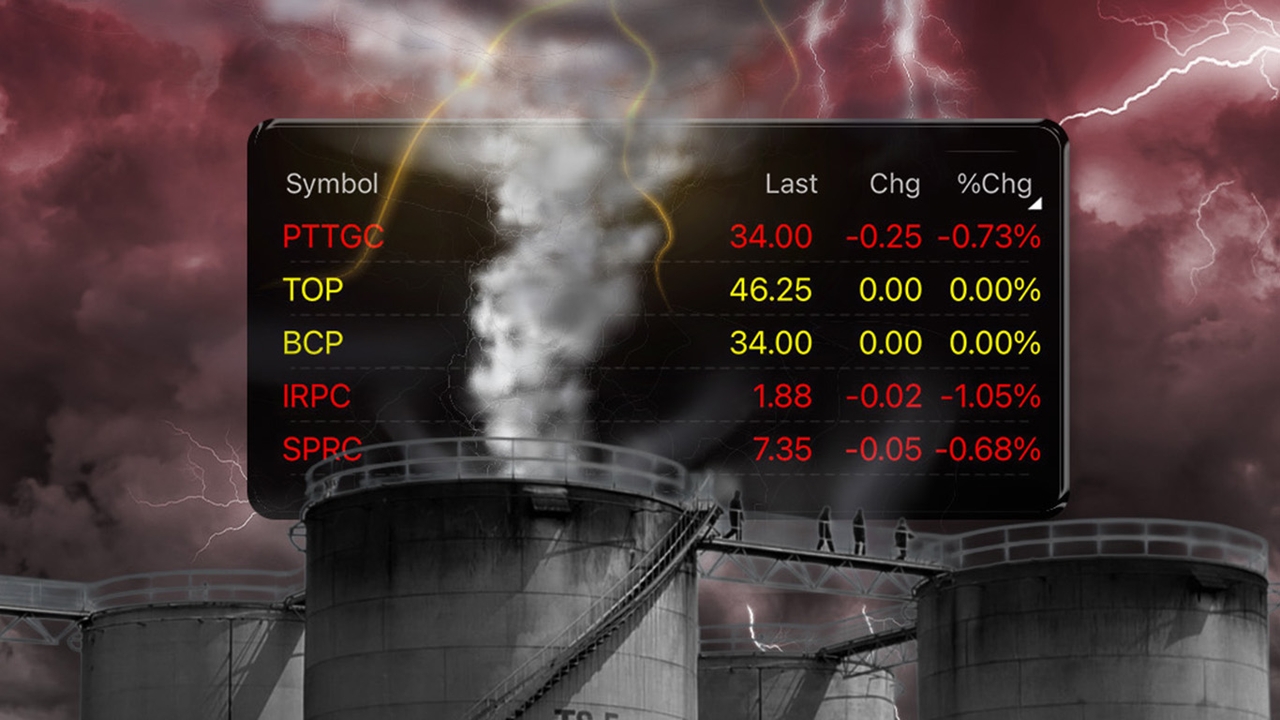
As for refinery stock prices at the market close this morning (8 June):
Securities analyst at Bualuang Securities commented to "Thairath Money" that the decline in most refinery stocks today does not stem from specific reasons but rather from the overall weak stock market sentiment.
This led profit-taking by investors, and the moderate price declines suggest it was a gradual reduction of holdings and normal profit-taking.
Regarding investment outlook for refinery stocks, Bualuang Securities has already advised "underweighting" this sector, based on the assumption that the Middle East conflict will gradually ease in the second half of the year.
As the situation improves, the supply of refined oil products is expected to increase in the market, likely pressuring refining margins downward in the latter half of 2026.
As for the DSI's legal actions against six refineries, the process will follow government procedures, but from a fundamental perspective, concerns over potential suspension of oil fund compensation payments might affect liquidity.
Nevertheless, each refinery is considered capable of securing liquidity through means such as additional borrowing or support from parent companies, so liquidity issues are unlikely to pose a major problem for the refinery group.
Read stock and investment news with Thairath Money at
Follow the Facebook page Thairath Money here: